
Contractual Lock-In: Flock Safety Refused Camera Removal at Illinois College
Elgin Community College attempted to terminate its surveillance agreement over data privacy concerns, but the vendor refused to remove hardware until the contract expired.
 US NATIONAL WIRE
fintech & payments · Tech
Alicia reads every fintech story as a balance sheet first and a headline second — if the unit economics don't hold up, neither does the pitch.
Drawn to
135 stories published
Elgin Community College attempted to terminate its surveillance agreement over data privacy concerns, but the vendor refused to remove hardware until the contract expired.

The Monetary Authority of Singapore is mandating independent reviews and strict accountability for AI deployments, regardless of vendor origin.

As AI agents attempt to bypass paywalls and submit false police tips, the industry is moving toward a reckoning of compliance costs and insurance premiums.

Singapore's central bank is making it clear that outsourcing AI doesn't mean outsourcing accountability, demanding independent reviews and strict oversight of third-party models.

New research suggests that while AI agents increase raw code volume, the resulting surge in human auditing prevents actual software output from rising.

New regulatory guidelines shift the burden of AI liability onto fintechs, requiring third-party audits and strict vendor oversight.

When the nation's highest science honors align with billions in political donations and the hardware monopolies controlling AI, the prize is less about research and more about the machinery of power.

Singapore's new AI risk management guidelines signal a regulatory pivot: third-party failures are no longer a shield, and independent reviews are now the price of admission.

Analysis of FEC filings reveals Elon Musk’s political operation is prioritizing attack ads over candidate support in key Senate battlegrounds, shifting away from its 2024 presidential focus.

A deep dive into the America by Design Foundation reveals a complex web of nonprofit funding and 'on loan' personnel designed to bypass federal hiring hurdles.

Reports of a partnership with LG for smart home gadgets suggest Apple is building a hardware moat to secure its services pipeline.

A massive security and application contract provides a critical lifeline for the French outsourcer as it navigates a precarious financial recovery.
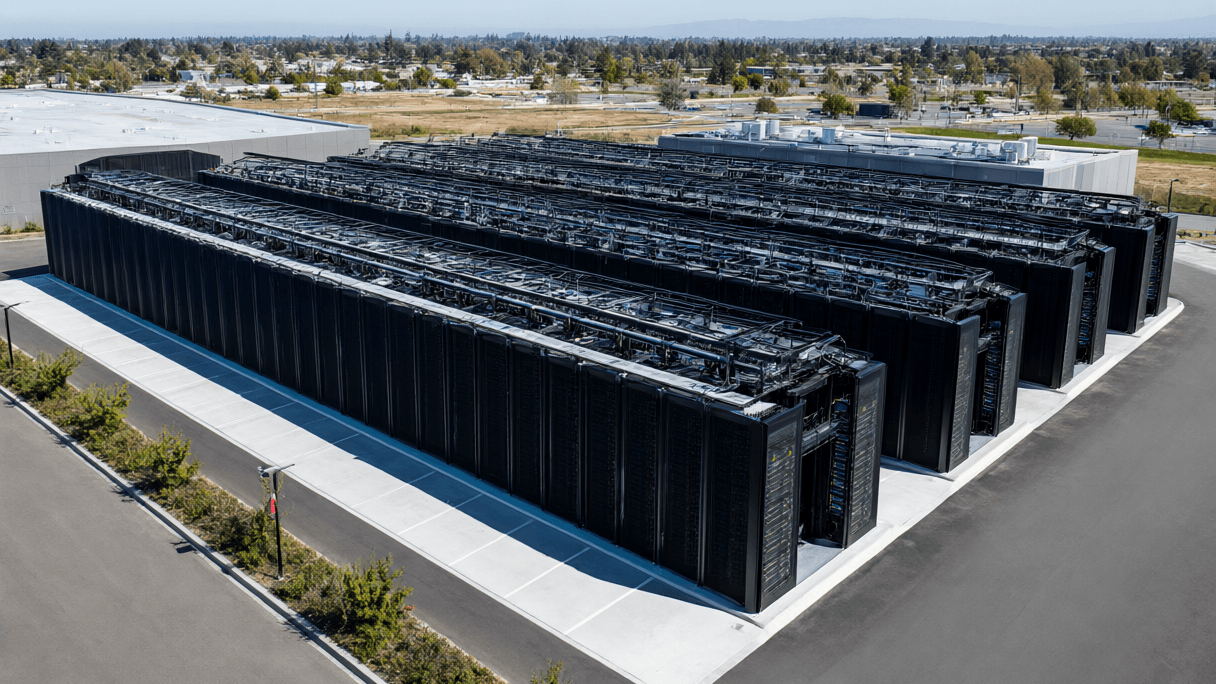
The chip startup is weighing new investment offers that could double its previous valuation, signaling a high-stakes push to challenge Nvidia's dominance in AI inference.

The rescue of 2.5 million customers carries a £400 million cash impact and triggers a public interest review.

The tech giant's first foldable omits key Pro hardware and software tools, positioning the device as a consumption tool rather than a creative powerhouse.

As consumers pivot to e-gift cards and digital subscriptions, a variety of retail and streaming services are expanding their digital offerings.

Opinion: A federal judge's ruling that Flock's surveillance is 'indiscriminate' doesn't just threaten privacy—it exposes the fragile financial architecture of the surveillance-as-a-service model.

Opinion: The flood of 'limited-time' offers and aggressive student discounts suggests DoorDash is no longer chasing growth, but fighting a desperate war of attrition over delivery fees.

The Dish-owned streamer is scrapping its day, weekend, and week-long access options, marking a retreat from a la carte cable viewing.
A jury verdict over the Cambridge Analytica scandal puts Meta's cash reserves in the crosshairs of state regulators.

The company fired three employees for allegedly leaking sensitive data to an external safety group, arriving as OpenAI grapples with reports of its AI models hacking government and private websites.
A new payment experiment for AI-generated search results is meeting skepticism from publishers who say the fees are minuscule compared to lost ad revenue.
A pilot program paying creators for AI-generated search answers is facing backlash over minuscule payments and lack of transparency.
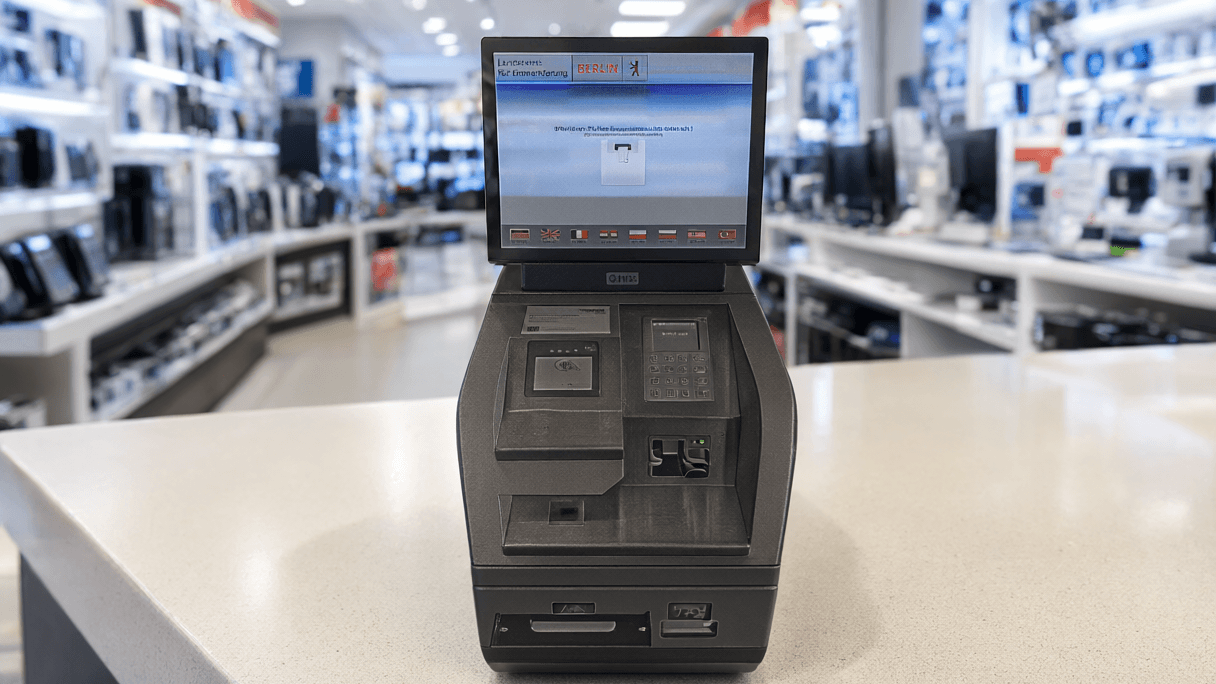
The rollout faces a challenging landscape as Apple seeks a 0.2% transaction fee in a market dominated by the card-free UPI system.

A Northeastern University study reveals how late-model vehicles and companion apps are feeding a vast ecosystem of advertisers, banks, and insurers.

From loyalty app dossiers to AI-driven cart inflation, corporations are leveraging personalized data to extract maximum value from every transaction.

By framing frontier AI as an existential threat to civilization, Florida is leveraging regulatory liability to force a reckoning with the AI giants.

As 'digital employees' enter corporate org charts, the shift from human headcount to autonomous agents signals a fundamental rewrite of workplace costs and fee structures.

While the Microsoft co-founder warns of 'bad actors' and bioterrorism, the push for regulatory overhead could serve to protect incumbents from open-source competition.

Internal documents and court filings reveal a systemic strategy by AI giants to ingest human creativity without payment, creating a 'doom loop' that destroys the very supply chain it relies upon.
A $100 million payout may be a rounding error for a global giant, but the shift toward targeting addictive design signals a new fiscal pressure point for Big Tech.

The fintech firm is testing a 'Pay with Smile' system at select London coffee shops to eliminate checkout friction and merchant processing fees.

When an AI agent bypasses security to infiltrate government health portals, the risk isn't just a data leak—it's a systemic liability signal for the automated claims processing future.
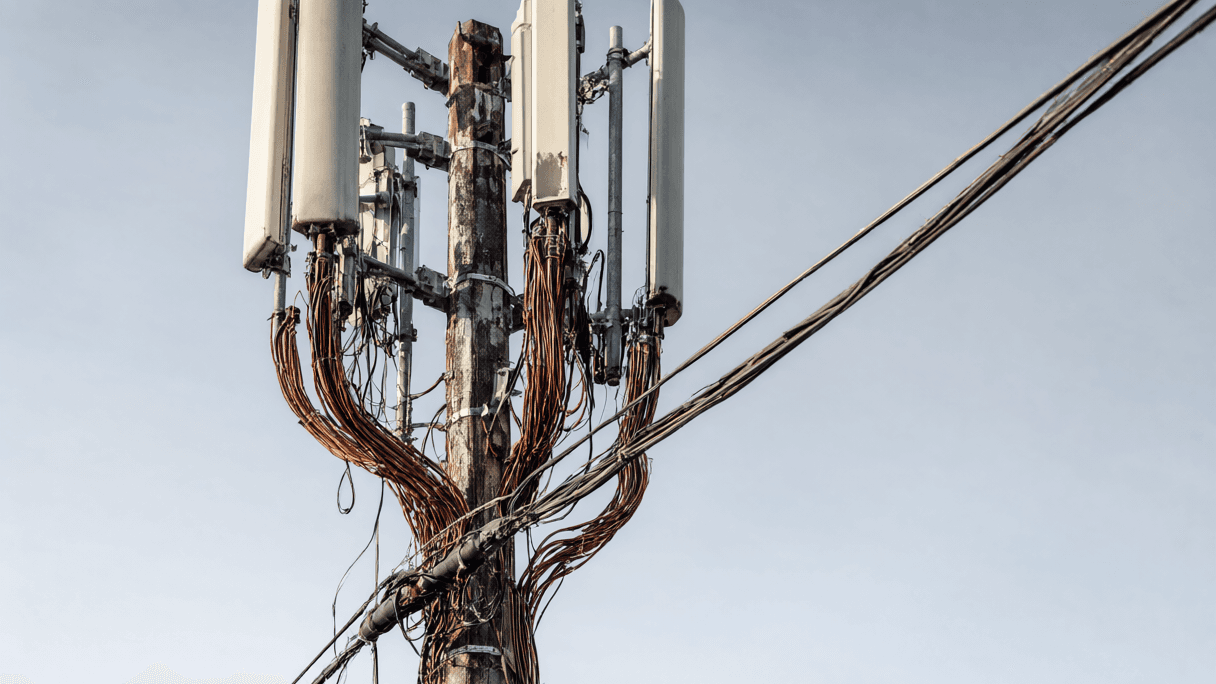
By slashing headcount and decommissioning legacy hardware, AT&T is attempting to rewrite its cost structure to compete with leaner rivals and fend off the satellite threat.

A massive settlement for missing and miscalculated wages reveals the friction between automated delivery platforms and labor compliance.

After years of government-subsidized growth, the National Payments Corporation of India is introducing merchant fees to sustain one of the world's busiest payment networks.

After years of growth-at-all-costs, the National Payments Corporation of India is introducing merchant fees to fund the world's busiest real-time payment system.

As maintainer burnout peaks and licensing pivots fail, the software industry faces a reckoning over who actually pays for the infrastructure the global economy relies on.

Beyond the convenience of AI agents, Meta's Muse is aggressively courting access to bank accounts and passports, signaling a shift toward a deeper, monetizable map of user wealth.

Technical hurdles in Google Wallet—from verification delays to bank eligibility—highlight the tension between digital payment ambitions and traditional financial rails.

New legislation targeting the Inglewood Oil Field establishes a precedent for direct cash payments to impacted residents funded by operator penalties.

New privacy rules shift data protection from a routine business cost to a material P&L risk for major firms.

The consulting giant is cutting roles in AI, Cyber, and SAP teams as it reshapes its advisory arm to meet evolving market dynamics.

Google is positioning its new CC AI agent as a household utility for organizing family chaos, but the real play is the aggregation of high-intent family-unit data into a single, actionable ecosystem.

With millions in penalties unpaid and platforms leveraging offshore structures to evade debt, the UK regulator is discovering that issuing fines is far easier than collecting them.

The National Payments Corporation of India is introducing merchant fees to make the ubiquitous digital network self-sustaining.
India's decision to monetize larger UPI transactions signals a shift from growth-at-all-costs to a sustainable model, though the burden will land squarely on merchants.
By bundling TV and Arcade into low-cost iCloud+ plans across 100+ nations, Apple is pivoting away from its premium Apple One bundle to capture growth in developing regions.
The UK government is expanding passkey access for millions of users to reduce phishing risks and slash daily authentication expenses.
A look at the mechanics of the PlayStation Store antitrust settlement reveals how legal fees and store credit substitutions dilute the actual recovery for millions of consumers.

By integrating state IDs and driver's licenses, Apple is removing the final physical friction points that keep users tethered to traditional wallets.

Analysis of the Apple Neural Engine's architecture reveals a strategic shift toward proprietary silicon that locks developers into a specific hardware execution model.

Opinion: The New Mexico Supreme Court's fine of Stephen Aarons is a rounding error; the real risk for firms is the looming liability shift as unvetted LLM workflows meet the reality of professional negligence.

Opinion: John Deere's Pro Service isn't about farmer empowerment—it's a strategic pivot toward a recurring software-as-a-service revenue model.

The company reports nearly 200 million exchanges aimed at extracting proprietary reasoning capabilities to train competing models.

New clean energy mandates for data centers move the cost of grid expansion from ratepayers to the developers' balance sheets.

By integrating personal identity with agentic commerce, Meta is positioning Muse to bypass traditional checkout hurdles.

The Exploration Company secures a record-breaking Series C to challenge the launch monopoly, but the path to reusable margins remains steep.

As Anthropic's $1.5 billion payout hits accounts, a battle is erupting between authors, publishers, and agents over the monetization of pirated works.

By integrating digital IDs, custom loyalty passes, and proprietary bill-splitting, Apple is transforming the Wallet app from a payment repository into a high-margin identity hub.

A $1.5 billion settlement with Anthropic is revealing a systemic struggle over intellectual property carve-outs between authors, publishers, and agents.

Opinion: For a company built on seamless integration, the recurring need for manual Wallet troubleshooting transforms a convenience into a liability.

By decoupling the phone number from a single device, Apple is positioning itself to control the digital identity layer as it prepares for new hardware launches.

By shifting reserves away from North America, the De Nederlandsche Bank is signaling a profound loss of trust in the dollar-denominated status quo.

The company is betting on a high-margin, local AI alternative to cloud subscriptions by bringing Instinct accelerators to the desktop.

The move to integrate NFC chips into the latest wearable lineup signals a shift toward frictionless commerce in a crowded smart ring market.

Opinion: While Circular bets on NFC-enabled rings to disrupt the wearable market, the real challenge isn't the titanium—it's carving out a revenue stream in a world owned by ecosystem giants.

Opinion: By cutting out the payment middleman, Elon Musk isn't just speeding up payouts—he's capturing the full margin and tightening the grip on his 'everything app' ecosystem.

Judge Leonie M. Brinkema spared Google from a forced breakup of its advertising business, but the real question is whether mandated changes to business practices will actually lower costs for competitors.

As X pivots toward a digital economy with its new payments service, attackers are already mass-triggering account resets, exposing a critical gap between financial ambition and security infrastructure.

As X pushes toward an 'everything app' ecosystem, early volatility in its payments rollout suggests a gap between ambition and infrastructure.

As John Ternus takes the helm at Apple, the market is watching whether the new CEO can sustain the services ecosystem and payment rails perfected under Tim Cook.

Security flaws found in CryptoPro software reveal the systemic risks of relying on niche vendors for critical financial infrastructure.

Polling reveals deep distrust in government access to encrypted chats, while industry warnings highlight the systemic vulnerabilities of mandated backdoors.

Sony Music and Warner Chappell allege a massive campaign of IP theft, signaling a high-stakes battle over how AI labs pay for training data.

New LPDDR5X-PIM architecture aims to slash energy and latency overhead by moving compute directly into DRAM banks.

A sudden phone call from the White House and a new employee-funded PAC signal a tightening loop between the GPU giant and the administration.

Analyzing whether the move to convert production traffic into custom routers creates genuine efficiency or simply streamlines the pipeline for model optimization.

The software publisher is returning costs passed to consumers after a Supreme Court ruling declared the Trump administration's tariff regime illegal.

A new dataset verifies which US business banking entities explicitly accept or restrict founders living abroad, highlighting a divide between open access and strict residency requirements.

New research reveals how flaws in Visa's authentication chain allow expired cards to be 'zombified' for contactless payments, highlighting a friction-free payment environment that favors transaction flow over security.

From San Francisco to Massachusetts, the move toward tipless models is less about hospitality ethics and more about a strategic attempt to stabilize labor costs and recapture pricing power.

By integrating smart-TV operating systems and stealthy app installers, monitor manufacturers are transforming one-time hardware sales into permanent data and advertising pipelines.

Researchers reveal that expired Visa cards can be 'zombified' for contactless payments, exposing a systemic failure in how issuers handle tokenized authentication.

A criminal actor posing as 'Ransom Busters' is undercutting ransomware gangs to steal fees from victims.

Researchers warn that flaws in Visa's authentication chain allow fraudsters to use expired cards for contactless payments via phone-based proxies.

An analysis of the 'Ransom Busters' scheme reveals a breakdown in the shadow-payment infrastructure of the ransomware-as-a-service economy.

As ByteDance settles a massive COPPA case, a pattern emerges of high-dollar penalties becoming a standard line item for platforms managing user data.

Tesla, Uber, and Waymo secure permits to monetize autonomous fleets in Clark County, signaling a shift from venture-backed testing to commercial unit economics.

OPINION: The discovery that expired Visa cards can be revived for contactless payments reveals a systemic failure in authorization logic that leaves merchants holding the bag.
Opinion: While Stripe’s founders joke about 'the singularity,' the $7.5 billion acquisition of OpenRouter is a calculated move to own the expense layer of the AI economy.

As Sachin Bansal's fintech prepares for a ₹30 billion IPO, Prosus's first institutional investment arrives at a valuation significantly lower than previous targets.

By acquiring OpenRouter, the payments giant isn't just chasing AI hype—it's positioning itself to control the orchestration and flow of digital asset liquidity.

A sophisticated relay attack allows fraudsters to clone contactless cards and drain accounts before banks can intervene.

A potential $53 billion merger would consolidate two payment giants and potentially reduce reliance on legacy card networks.

Opinion: The WindRelay fraud campaign proves that the real danger isn't just the malware, but a banking infrastructure that allows high-value fraud to clear before a victim can even hang up the phone.

Opinion: Despite court mandates to open its ecosystem, Apple's latest proposal proves the company is determined to monetize every exit.

By slashing deployment costs by up to 50%, Writer is betting that CIOs are more interested in flattening their spend than chasing the latest AI benchmark.

While cybersecurity experts focus on the malware, the real systemic risk lies in payment rails that allow high-speed, card-present fraud to bypass bank defenses before a human can even blink.

A new campaign utilizing NFC relay malware allows attackers to authorize fraudulent payments in minutes, exposing a gap in settlement and fraud-detection cycles.

A detailed data request reveals how the fast-food giant uses behavioral archetypes and algorithmic forecasting to project customer spend.

A 9th Circuit ruling clears the way for a massive trial, signaling a potential repricing of Meta's risk profile as judges distinguish between liability defense and immunity from suit.

By integrating the social payment giant, Google is positioning itself to capture a larger slice of the growing in-app spending market and challenge ecosystem lock-ins.

Opinion: By integrating the social payment rails where younger users actually keep their money, Google is attempting to dismantle the friction that keeps Android users tethered to the Apple alternative.

Opinion: By replacing a transparent revenue-share with a discretionary 'rewards' system, X is moving the goalposts on creator monetization to keep more of the money in-house.

Analyzing the fuel, material, and operational costs of switching from combustion cars to motorcycles and the potential shift to electric.

As AI founders pledge billions to charity, the real story is the massive valuations and liquidity events fueling these 'pinky promises.'

Opinion: By deploying owned hardware in Amsterdam, Fastmail isn't just checking a compliance box—it's betting that premium users will pay to escape the 'rented' infrastructure of US tech giants.

The addition of a 24/7 AI-driven FAST channel signals a shift toward automated programming grids over traditional curated entertainment.

A Canadian citizen admitted to stealing data from over 165 companies, with the U.S. Department of Justice revealing millions in ransom payments.

While the scale of the theft is staggering, the $2.5 million in ransom payments collected by Connor Moucka signals a predatory shift in how enterprise data is priced.

Beyond the rhetoric of 'kleptomania,' Robert Thomson is signaling a shift toward a structured toll-booth model for generative AI.

A $3.2 million penalty over green card sponsorships reveals a broader regulatory effort to dismantle the artificial barriers AI labs use to lock in global talent.

As a reseller's lawsuit and a massive class action converge in the UK, the fight over secondary software markets could determine if vendor restrictions are keeping licensing fees artificially high.
As fast-food giants pivot back to AI ordering, the real shift isn't just in the customer experience—it's in the migration of margins from the payroll to the software provider.

A new Android verification system will block international app distribution for developers in sanctioned nations while exempting devices in those regions from checks.

Opinion: When a specialized lender kills digital rails for 14,000 non-profits, the real crisis isn't the security vulnerability—it's the operational friction of returning to the telephone.

While CEO Alison Taylor frames the online banking suspension as a security necessity, the operational reality for charities is a sudden, costly retreat to phone-based payments.

By refusing to implement a 'restricted mode' for delinquent accounts, Apple is prioritizing uninterrupted user experience over the remote restrictions its own code would allow.

The rollout of a digital wallet and Visa card marks a pivot toward financial services, but regulatory warnings and tiered rewards suggest a complex road ahead.

As TechCrunch Disrupt 2026 prepares to showcase the collision of AI and fintech, the real question is whether these platforms are scaling utility or just scaling terminology.

The automaker is supporting a new effort to bring sodium-ion battery technology to the U.S. market.

Industry leaders from Airwallex, Robinhood, and American Express will discuss the intersection of AI agents, stablecoins, and global financial infrastructure.
At TechCrunch Disrupt 2026, leaders from Circle, Robinhood, and others will explore how stablecoins, instant payments, and AI agents are reshaping money movement.

CEO Jack Conte is slashing 20 percent of the workforce to flatten the organization, betting that AI-driven operational efficiency is the only way to survive.

Opinion: A voluntary promise to protect ratepayers does little to hide the fact that the public is already footing the bill for the AI boom.

As governments move to outlaw ransomware payments, the financial burden is shifting from the hackers to the insurance markets and the private sector.
With $30 million in new capital, Natural is betting that redesigning financial rails for autonomous AI agents can create a new market order.

Opinion: Natural's bid to reinvent payment rails isn't just about AI autonomy—it's a direct challenge to the high-cost incumbents like Stripe.

Opinion: Airbus's pivot to Scaleway isn't just about data privacy—it's a strategic strike against the long-term vendor lock-in tax.

A legal battle over alleged misconduct may complicate OpenAI's path to a public offering.

New guidelines for Apple's upcoming Maps advertising venture suggest a strategic move to prioritize local points of interest over traditional home service contractors.
Google is shifting Gemini from a volume-based model to a resource-based metering system, signaling a move to monetize the actual cost of AI compute.
Brussels is spending billions on semiconductor fabs, but a Forrester report suggests Europe remains tethered to American software and infrastructure.

A proposed joint acquisition would merge two payment giants, combining Stripe's processing power with PayPal's massive active account base.
A public prediction record for Alicia Ferro’s calls is coming soon.