
The Copper Mine Pivot: AT&T's Automation Play is a Bid for Wall Street Relevance

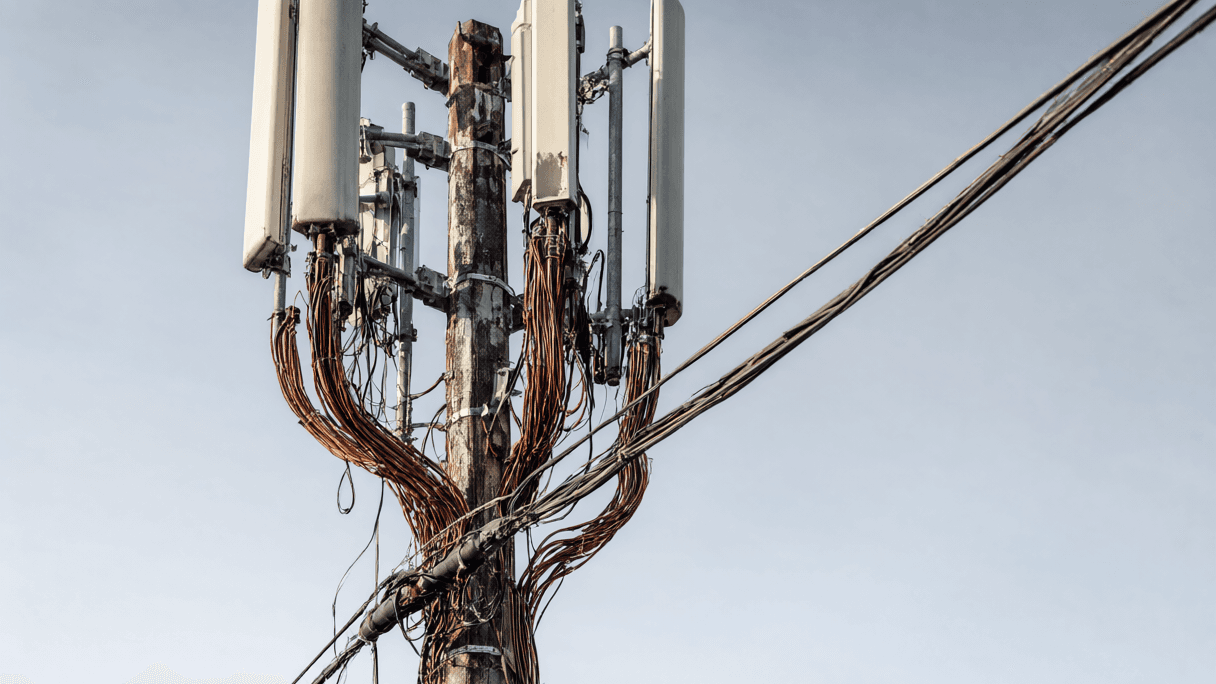
AI-generated image · US National Wire
By slashing headcount and decommissioning legacy hardware, AT&T is attempting to rewrite its cost structure to compete with leaner rivals and fend off the satellite threat.
For over a century and a half, AT&T operated as the quintessential legacy telecom moat, defined by massive physical infrastructure and a sprawling workforce. But as the company pivots toward an AI-driven era, as first reported by Wired, it is becoming clear that its current strategy is less about incremental efficiency and more about a fundamental restructuring of its identity to appease investors who no longer value the old-school telecom model.
**The Efficiency Gap**
AT&T is currently locked in a battle to prove it can do more with less. According to reporting from Wired, public financial disclosures reveal that AT&T generated less revenue per employee last year than its primary competitors, T-Mobile and Verizon. While both of those rivals have also conducted layoffs in recent months, AT&T is aggressively attempting to close this productivity gap.
Chief Technology Officer Jeremy Legg told Wired that comparing staffing levels to peers is a key driver in the company's decision-making process. The result is a steady erosion of the workforce; AT&T has already shed more than half of its staff over the last decade. In the first half of 2026 alone, the company cut approximately 2,100 jobs. If the company maintains the pace of layoffs seen last year—when it shed 8,000 employees—a source familiar with the matter told Wired that the company's target workforce could approach 85,000 by 2030. AT&T has officially called that specific figure inaccurate, but Legg explicitly stated to Wired, “We‧re not going to have the same headcount in five years as we do today.”
**Dismantling the Legacy Moat**
To achieve this leaner profile, AT&T is systematically dismantling the physical remnants of its empire. CEO John Stankey described the company's vast copper wire network during the Goldman Sachs Communacopia + Technology Conference, noting that the amount of copper in place likely makes AT&T the fifth-largest copper mine in the United States.
This legacy infrastructure is not just a physical burden but a financial drain. Chief Financial Officer Pascal Desroches told a conference earlier this month that decommissioning the energy-intensive copper network allows the company to retire infrastructure that is “absorbing a lot of power and personnel attention.”
The shift is yielding tangible operational wins. AT&T reported in July that its total energy consumption fell by 13.1 percent between 2020 and the close of 2025. Furthermore, the company noted that shifting away from copper since 2024 has saved 660,000 megawatt-hours of electricity—an amount Wired notes is enough to power roughly 65,000 homes.
By the end of this year, AT&T anticipates that copper services will no longer be necessary in more than 85 percent of its current footprint. While this move has sparked local protests in some communities and requires regulatory approval in rural areas, it is a necessary step for Stankey's vision of a “dramatically different” company focused on a “kickass wireless network” and high-speed fiber.
**The AI Mechanism**
Automation is the engine driving this transition. AT&T is targeting the manual, paper-based records that still plague some of its decades-old systems—such as the manual processes required when a customer disconnects phone service.
According to Wired, the company is deploying AI across several critical fronts:
* **Network Optimization:** A generative AI system known as GeoModeler is used to adjust network settings during extreme weather events. * **Infrastructure Planning:** AI is being used to identify locations for new cell towers and detect maintenance issues on existing ones. * **Operational Efficiency:** The company is utilizing AI to generate software code and manage service issues. * **Hardware Replacement:** Beginning next year, AT&T will move away from physical hardware at thousands of central hubs in favor of cloud software provided by the Israeli startup DriveNets, a company in which AT&T holds an investment. This shift allows technicians to perform adjustments, such as increasing internet speeds for customers, remotely.
As these tools take hold, the human cost is concentrated in specific tiers. Wired reports that middle management and junior developer roles are expected to disappear as a result of these automations.
**The Wall Street Lens**
This aggressive downsizing is a direct response to a market that is increasingly skeptical of legacy telecom stability. Investors are captivated by the potential for AI to boost profits, but they are also eyeing the disruption posed by Elon Musk's SpaceX and its Starlink satellite internet service.
While Legg told Wired that fiber will remain cheaper than satellite services and that AT&T, Verizon, and T-Mobile are cooperating on satellite service (potentially including Starlink), the pressure to lean out the organization remains. Stankey views the current focus on wireless and fiber as the exact asset base needed as AI shapes the next era of connectivity.
In short, AT&T is not just cutting costs; it is attempting to shed the weight of its 150-year history to survive in a market where the traditional telecom moat is no longer a guarantee of value. The goal is to transform from a labor-heavy utility into a streamlined, AI-integrated connectivity provider before the market decides the legacy model is obsolete.