
The Liability Trap: Why the Legal War on Flock Safety is a Warning to Venture Capital

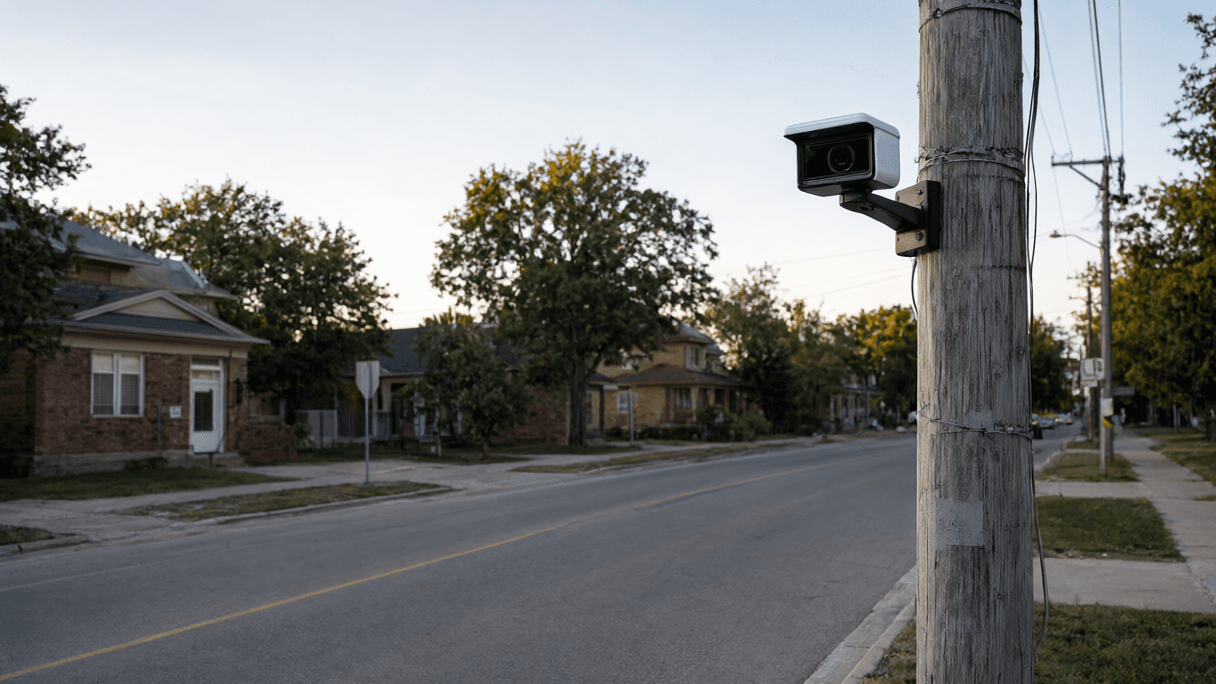
AI-generated image · US National Wire
Opinion: A federal judge's ruling that Flock's surveillance is 'indiscriminate' doesn't just threaten privacy—it exposes the fragile financial architecture of the surveillance-as-a-service model.
For years, the venture capital playbook for 'surveillance-as-a-service' has relied on a simple, cold calculation: the efficiency of the tool outweighs the friction of the law. But as I track the money flowing into the fintech and gov-tech sectors, the current legal onslaught against Flock Safety suggests that the 'friction' is about to become a full-blown financial liability.
This is not merely a debate over the Fourth Amendment; it is a debate over the viability of a business model that scales by automating the infringement of civil liberties. When a federal judge labels a product's core function as "indiscriminate mass surveillance," the risk profile for every municipal contract and VC investment in that sector shifts overnight.
***
**Opinion: The 'Fruit of the Poisonous Tree' is a Financial Risk**
Last week, Judge Sara Hill of Oklahoma delivered a blow that should make every investor in automated license plate reader (ALPR) technology sweat. In a case involving a woman named Melisa Kyle, Judge Hill ruled that a Tulsa County Deputy Sheriff, Freddie Alaniz, violated the Fourth Amendment when he used Flock Safety to search Kyle's license plate without a warrant.
As reported by 404 Media, the details are damning from a liability perspective. Deputy Alaniz pursued Kyle's Mazda SUV for no reason other than the vehicle possessing a California license plate. He then queried the Flock system, which provided him with over 50 individual records of Kyle's movements across the country over a month. While Alaniz eventually discovered 91 pounds of meth in the vehicle, Judge Hill ruled that because the initial Flock search was unconstitutional, all subsequent evidence must be suppressed as the "fruit of a poisonous tree."
From a markets lens, this is where the danger lies. The value proposition of Flock to law enforcement is the ability to generate leads and secure convictions. If the primary tool used to initiate a stop is deemed unconstitutional, the resulting evidence is useless. For the municipalities paying for these subscriptions, they aren't just buying a tool; they are buying a potential lawsuit and the risk of collapsed prosecutions.
**The Myth of the 'Cut and Dry' Model**
Flock CEO Garrett Langley has previously attempted to frame the constitutionality of the system as a settled matter. According to reporting from The Drive, Langley stated in July that the issue was "pretty cut and dry" and that courts had deemed the product a valid one as it relates to the Fourth Amendment.
Judge Hill's ruling effectively dismantles that narrative. She argued that previous judicial opinions—which suggested that tracking cars in public is not a violation—failed to account for the fact that Flock's nationwide network is "approaching dragnet-type law enforcement practice." She noted that the system allows law enforcement to "indiscriminately and passively catalog your whereabouts over an extended period of time and then use that information for any purpose whenever convenient."
When the CEO of a company tells investors and clients that a legal risk is non-existent, and then a federal judge calls the product's operation "indiscriminate mass surveillance," the credibility gap becomes a financial liability.
**The Contagion Effect**
We are seeing the beginning of a broader retreat. TechCrunch reports that numerous state and local governments, including Texas and Florida, have already stated they will stop using the technology. On the legislative front, Senator Bernie Sanders has introduced the Block Flock Act, which seeks to bar federal agencies from using ALPRs like those provided by Flock.
Furthermore, the operational cracks are showing. TechCrunch reports that Flock has offered voluntary employee buyouts to shrink its workforce amidst these cancellations. This is the classic trajectory of a company that scaled too fast on a premise—warrantless, frictionless surveillance—that the judiciary is no longer willing to tolerate.
**The Bottom Line**
For too long, the surveillance industry has operated under the assumption that the "public" nature of a street protects the data collected on it. But as Michael Soyfer of the Institute for Justice told 404 Media, courts are beginning to recognize the "sheer breadth" of these systems and their ability to reveal "incredibly intimate details of people's lives."
If the courts continue to move toward the logic seen in *Chatrie v United States*—which found that accessing digital location data constitutes a search—the ALPR model is dead in the water. You cannot build a sustainable, venture-backed business on a product that requires a warrant for every single query to avoid suppressing evidence.
Flock's current call for a "compromise" between privacy and safety, as mentioned by Langley, is too little, too late. The liability is already baked into the system. For the VCs and the city councils still betting on this model, the lesson is clear: when the product is mass surveillance, the eventual legal reckoning isn't a bug—it's the primary feature.