
The Tesla Semi’s Real Test Isn't the Hype—It's the Haul

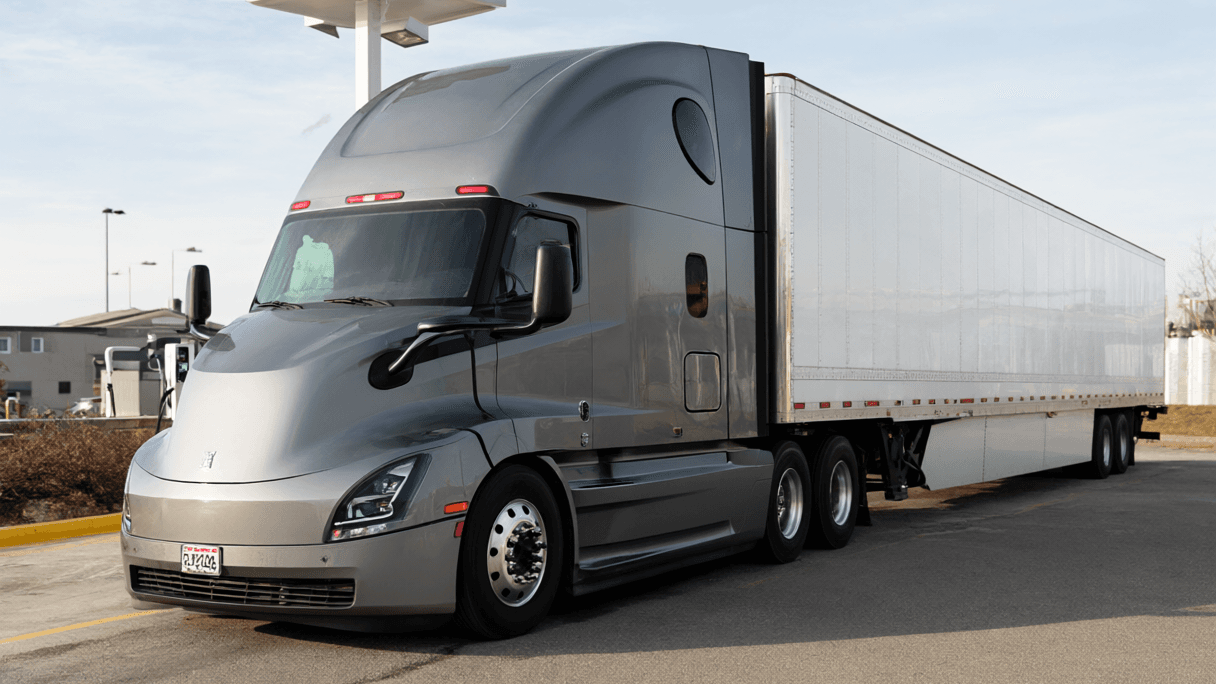
AI-generated image · US National Wire
Opinion: With high-volume production finally underway, the success of Tesla's electric truck depends on surviving the brutal economics of long-haul logistics, not Elon Musk's valuation dreams.
For years, the Tesla Semi has existed more as a promise than a product. After a concept debut in late 2017, the vehicle has finally entered high-volume production, as Wired first reported. But as a tech columnist focused on deployment, I find the flashy launch events and Elon Musk’s $20 trillion valuation targets for Tesla as a robotics company largely irrelevant. The only metric that matters now is whether these trucks can actually survive the grueling reality of American long-haul logistics at scale.
On paper, the specs are a strong start. Lars Moravy, Tesla’s vice president of Vehicle Engineering, confirmed that the long-range version is estimated to travel 500 miles per charge—roughly the daily average for U.S. long-haul truckers. The standard version is estimated at 325 miles. Compared to competitor EVs advertising ranges between 155 and 430 miles, Tesla is positioning itself at the top of the class. Musk described the vehicle in a pre-taped video as a "sports car in truck form."
However, the road to adoption is paved with structural hurdles. The upfront cost for electric semis can be double or triple that of diesel alternatives. While the current spike in diesel prices—driven by the Iran War's disruption of oil production—makes the economic argument for electricity more compelling, the lack of infrastructure remains a critical failure point. These vehicles require a specialized network of megawatt chargers to be viable. Currently, Tesla’s website lists only two public chargers in the Los Angeles area. According to Dan Priestley, the head of Tesla’s Semi program, the company aims to have 30 open by year's end, though this remains far short of a comprehensive national network.
Furthermore, the political headwinds are stiff. Wired reports that the Trump administration and the GOP have cut billions in federal EV support and are working to lower fuel economy standards for truck engines. This is a precarious position for a vehicle attempting to displace a diesel industry that contributes to 7 percent of U.S. greenhouse gas emissions.
Despite these challenges, there is a signal of genuine industrial interest. An alliance of shippers, including PepsiCo and Microsoft, has placed a record order for 2,500 Tesla Semis to be delivered over the next 18 months. Meena Bibra, a spokesperson for the nonprofit Smart Freight Centre, told Wired that this group chose Tesla after evaluating service support, production capability, performance, and price. If delivered, these trucks would nearly double the current number of heavy-duty electric trucks on U.S. roads.
But we must remember that fleet managers are pragmatic. If competitors like Volvo, Ride, or Kenworth better meet their needs or offer better familiarity, carriers will pivot. Moreover, Tesla is still missing key promised tech; Full Self-Driving (Supervised) is not yet available, and the previously promised Enhanced Autopilot remains a lingering question mark.
Tesla has finally moved from the stage to the street. But in the world of logistics, a "sports car in truck form" is useless if it can't be charged or if the cost of ownership doesn't beat diesel. The hype cycle is over; the deployment cycle has begun.