
Beyond the Funding: How Women Designers are Closing the Utility Gap in Hardware

AI-generated image · US National Wire
From EV trucks that reject 'macho' aesthetics to health-tech that prioritizes biological accuracy, female-led design is moving past the prototype phase into high-impact deployment.
### The Deployment Shift
In the world of clean tech and consumer hardware, the industry often celebrates the funding round or the conceptual prototype. But as a pragmatic observer of the market, I believe the real story isn't found in the venture capital—it's found in the deployment. As first reported by Wired, we are seeing a pivot where women designers are leading the development of products that solve actual utility gaps, rather than treating women's versions as scaled-down iterations of male-centric designs.
### Redefining the Electric Vehicle
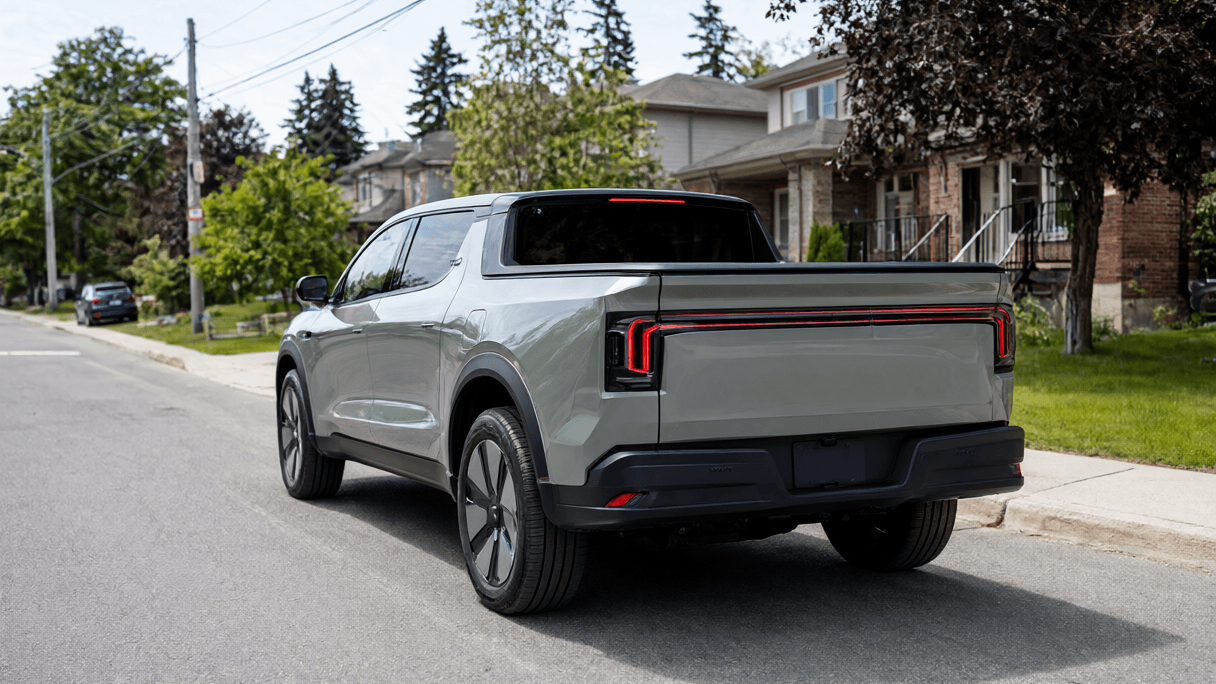
Nowhere is this shift more evident than in the automotive sector. Tisha Johnson, head of design at the EV-maker Slate, is a rarity in the field: a design leader shaping the entire look of a vehicle. Johnson has steered the company away from the aggressive, 'macho' design language typical of pickup trucks, favoring approachable round headlamps and strong shoulders over 'arrowed surfacing.'
The resulting modular, add-on-friendly EV exists in a Fastback guise and is proving its commercial viability. The Slate pickup starts at just under $25,000, making it the cheapest pickup currently on sale in the U.S., regardless of powertrain. The market response has been strong, with Slate already securing some 180,000 reservations.
### Precision in Health-Tech and Performance
Bridging the design gap in health and performance tech often leads to leaps in accuracy. Elina Berglund Scherwitzl, a CERN physicist, co-founded Natural Cycles, which developed the world's first FDA-cleared birth-control app. The accompanying NC° Band is a screenless wearable that tracks movement, heart rate, and temperature during sleep. This data feeds into an algorithm that Natural Cycles claims provides daily fertility guidance with 93 percent accuracy, a precision further bolstered by a partnership with Whoop.
This principle extends to sports hardware. At TaylorMade, principal product-development engineer Michelle Penney led the development of the Kalea Gold Driver. Working with female players and a dedicated women's advisory board, Penney engineered the 460 cc carbon driver with a lightweight 47-gram shaft and options for 11.5- or 13.5-degree lofts to specifically account for women's swing profiles.
### Engineering for the Female Form
Utility-first design is also disrupting electronics and apparel. Limor Fried (known as Ladyada) founded Adafruit as a 100 percent woman-owned company that lowers the barrier to hardware hacking through tools like wearable e-paper name badges and touchscreens.
In technical apparel, Marion Clignet, a six-time cycling world champion, co-founded Jelenew to create windproof shells shaped around women's proportions using 94 percent recycled nylon. Similarly, the brand Raide has developed a multifunctional cargo tank—a 4.6-ounce layer integrating a vest and unpadded sports bra—that holds up to 30 fluid ounces of water and six fuel gels while minimizing bounce.
### The Bottom Line
These deployments prove that when women lead the design process, the output is a superior piece of engineering. Whether it is a $25,000 EV that rejects the 'beast' archetype or a birth-control wearable with 93 percent accuracy, these products are filling gaps that the industry previously ignored.
*Opinion: The real victory here isn't that these products exist, but that they are outperforming the 'standard' versions of the same tech. We are seeing the end of the 'compromise' era of hardware.*