
The Sovereignty Illusion: Europe's AI Dreams on Borrowed Silicon

AI-generated image · US National Wire
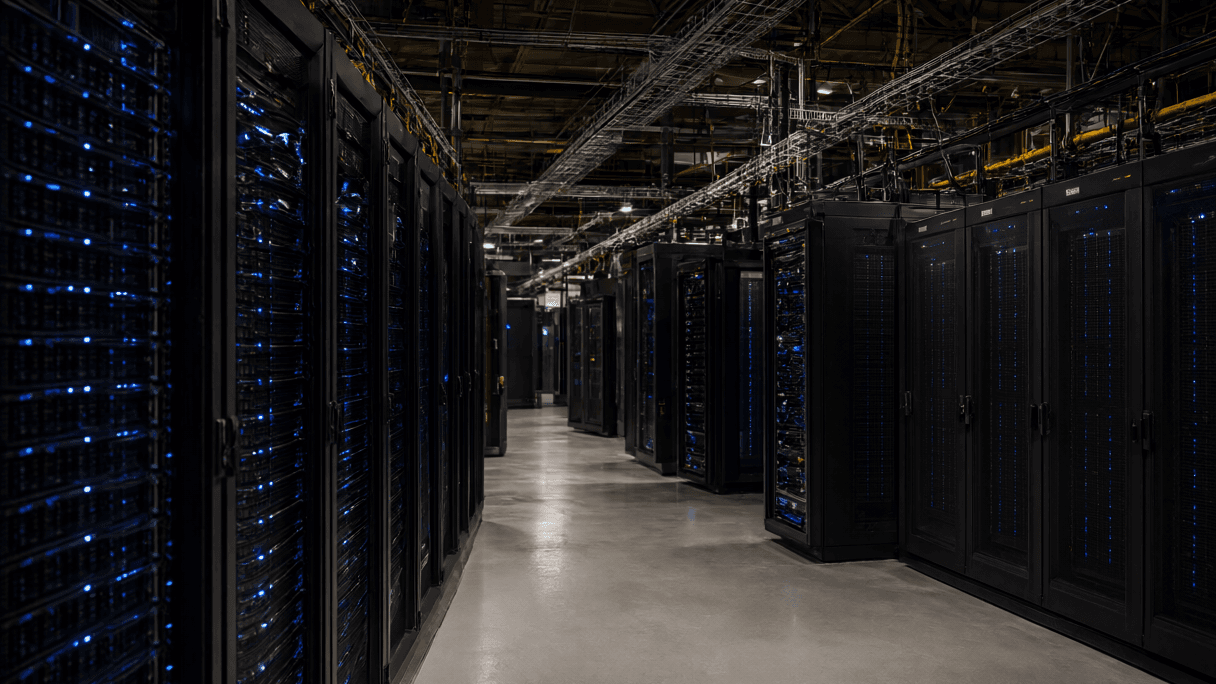
The EU aims to triple its datacenter capacity via the Cloud and AI Development Act, but Global Electronics Association data reveals a stark reality: European firms control less than 10% of the essential hardware stack.
Let's be clear: you cannot claim technological sovereignty when you don't own the tools of production.
As a hardware nerd, I look at the current state of European AI ambitions and see a dangerous game of pretend. The European Union is positioning itself as a global AI powerhouse, yet it is attempting to build a futuristic digital empire on a hardware stack that it neither designs, manufactures, nor assembles in any meaningful capacity.
**OPINION: The Gap Between Policy and Physics**
Europe is currently operating under a delusion that policy mandates can substitute for industrial capacity. The bloc is pushing the Cloud and AI Development Act (CADA), which, as The Register first reported, aims to triple the EU's datacenter capacity within a window of five to seven years. On paper, this looks like a bold leap forward. In the server room, however, it looks like a massive procurement order sent to overseas competitors.
If you don't control the silicon, the substrates, or the assembly lines, you aren't building a sovereign AI future; you are simply paying rent to the companies that did.
**The Brutal Math of the Supply Chain**
To understand the scale of this dependency, we have to look at the numbers provided by the Global Electronics Association (GEA) in its report, "From Chips to Systems: Building an End-to-End EU Strategy for Data Centre, Cloud Infrastructure and AI." The data is a wake-up call for anyone believing the rhetoric of European digital independence.
According to the GEA, EU-headquartered companies hold a negligible share of the critical infrastructure markets: - **Datacenter Semiconductors:** 6% - **Server Manufacturing and Assembly:** 7% - **Cloud Infrastructure:** 8%
When you aggregate these figures, it becomes evident that European firms capture less than 10% of the value in the very sectors that define the AI era. While Europe remains one of the largest global markets for AI datacenter infrastructure, it is essentially a consumer of technology, not a producer.
**A World of Dominance**
Who is actually filling the void? The Register reports that the electronics supply chain is dominated by a few key global players, leaving Europe on the periphery.
Taiwan is the undisputed leader in contract chip manufacturing and produces the vast majority of leading-edge processors, many of which are designed by American firms. Meanwhile, the memory market is controlled by suppliers from the United States and South Korea.
When we move up the stack to the systems level, the imbalance persists. The Register notes that most major server makers are American, with China's Lenovo serving as a notable exception. The dominance of U.S. companies extends further into networking and storage, leaving the EU with almost no large-scale domestic suppliers to lean on.
**The Strategic Stakes**
This isn't just about corporate profits or trade balances; it is about the fundamental architecture of modern society. In its report, the GEA identifies cloud, AI, and datacenter infrastructure as the most critical markets for achieving EU technological sovereignty.
Server farms are no longer just clusters of computers; they are the critical infrastructure supporting essential services. Furthermore, the cloud services running on this hardware are now integral to how physical goods are designed, manufactured, and operated. If the hardware fails—or if the suppliers decide to change the terms of the deal—the entire European industrial engine could stutter.
**The Path Forward: Incentives over Independence**
The GEA argues that the AI processing requirements driving server growth since 2024 have made servers the primary growth engine of the electronics industry. In fact, forecasts suggest that by 2030, servers will become the largest electronics segment, surpassing both automotive electronics and smartphones.
To capture this value, the GEA suggests that the EU cannot simply support isolated parts of the supply chain. While the Chips Act 2.0 and CADA are viewed as steps in the right direction, the GEA insists that other industrial policy instruments must match them. For the first time, the EU's industrial strategy explicitly targets not just semiconductor fabrication, but also substrates, advanced packaging, electronic manufacturing services, and printed circuit boards.
However, there is a critical admission in the GEA report: Europe cannot realistically build this supply chain using only EU-headquartered companies.
Instead, the proposed strategy is to use the growth and attractiveness of the EU market to entice global technology leaders to expand their manufacturing footprint within the bloc. This approach mirrors the Trump administration's efforts to rebuild American manufacturing, though The Register notes that the European model relies on incentives rather than the tariffs or threats of exclusion used by the U.S.
The goal is to anchor a greater share of the end-to-end value chain within Europe through partnerships with research organizations and local tech firms, effectively importing expertise to build a domestic ecosystem.
**The Bottom Line**
Europe is at a crossroads. It can continue to play a game of pretend, treating "sovereignty" as a regulatory goal, or it can accept that it is starting from a position of deep dependence. The GEA's proposal is a pragmatic attempt to bridge that gap, but it raises a fundamental question: does the European Union have the collective will to reverse decades of industrial decline?
Until the EU can move beyond being a mere customer of American and Asian hardware, its AI ambitions will remain hosted on someone else's servers.