
EU AI Ambitions Hit Supply Chain Wall

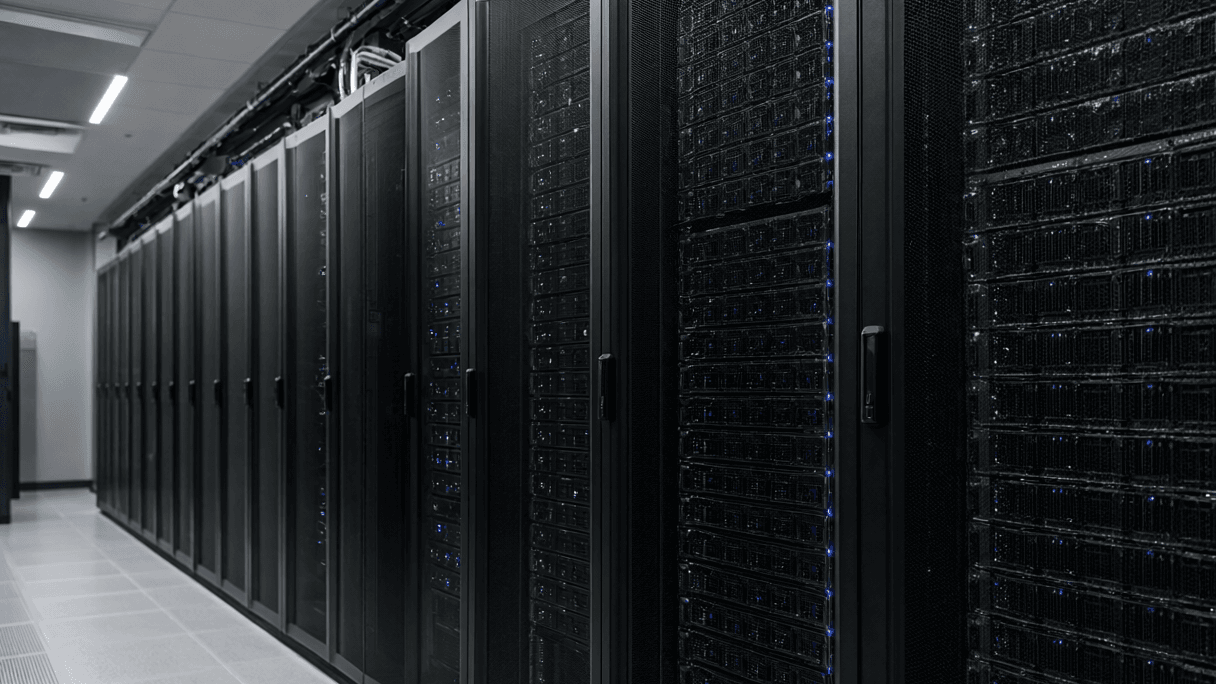
AI-generated image · US National Wire
European firms hold single-digit shares of critical datacenter markets despite goals to triple capacity.
The European Union is attempting to scale its artificial intelligence capabilities while remaining almost entirely dependent on foreign hardware, according to reporting from The Register.
Data from the Global Electronics Association (GEA) reveals that EU-headquartered companies capture a minimal fraction of the bloc's essential infrastructure markets: just 6% of datacenter semiconductors, 7% of server manufacturing and assembly, and 8% of cloud infrastructure. This dependency exists as the EU implements the Cloud and AI Development Act (CADA), which aims to triple the region's datacenter capacity over the next five to seven years.
The GEA's report, "From Chips to Systems: Building an End-to-End EU Strategy for Data Centre, Cloud Infrastructure and AI," highlights how other global powers currently dominate the supply chain. Taiwan leads contract chip manufacturing, while the U.S. and South Korea control the memory market. American firms dominate networking, storage, and server production, with China's Lenovo serving as a primary non-U.S. exception.
Because servers have been the primary growth driver for the electronics industry since 2024 and are projected to be the largest electronics segment by 2030, the GEA argues that these systems are the most strategically important market for EU technological sovereignty. The association suggests that while the Chips Act 2.0 and CADA are positive steps, the EU must attract global technology leaders to expand their manufacturing footprint within the bloc to anchor more of the value chain locally.