
The Semi’s True Test Isn't the Launch—It's the Long Haul

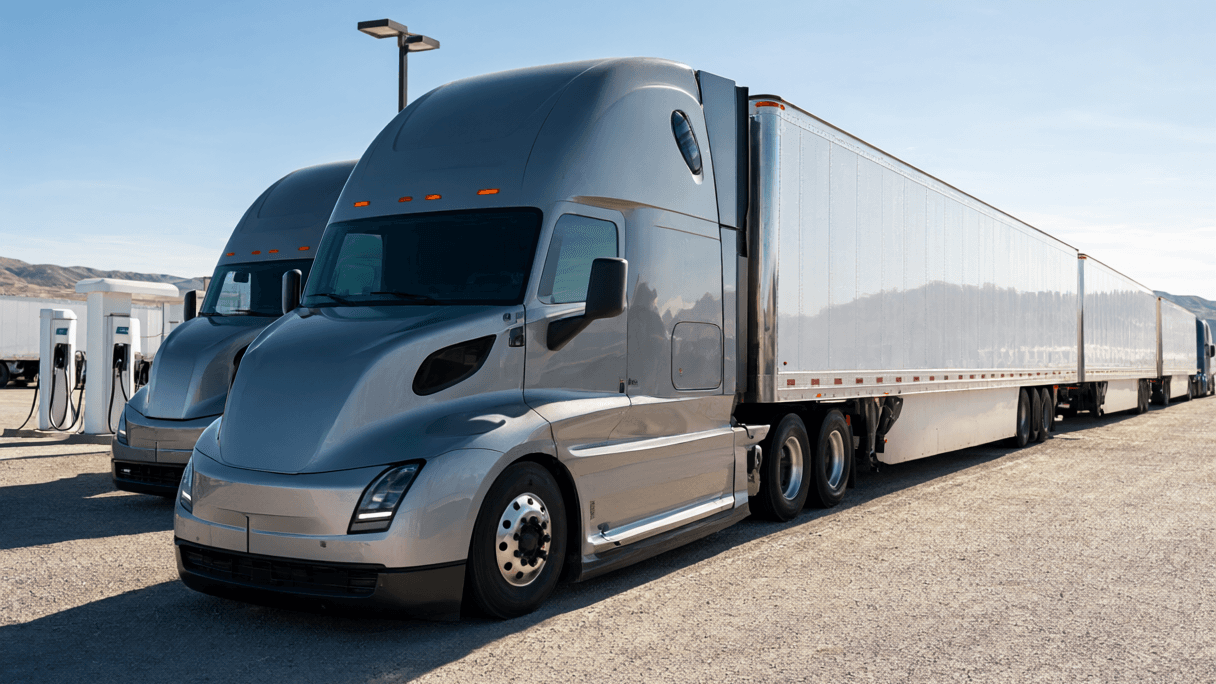
AI-generated image · US National Wire
Opinion: Tesla has finally moved the Semi into high-volume production, but the real climate win depends on whether these trucks can survive the brutal economics and infrastructure gaps of American logistics.
For years, the Tesla Semi existed primarily as a centerpiece for corporate spectacle. From its 2017 debut to Elon Musk’s current ambitions to value Tesla as a robotics company worth $20 trillion, the narrative has been dominated by hype and valuation targets. But as someone who tracks deployment over funding rounds, I believe the time for spectacle is over. With Tesla officially launching high-volume production at its Nevada factory, the conversation must shift from prototype potential to operational reality.
Let’s be clear: this is an opinion piece, and my position is that the Semi’s success—and its impact on the climate—will not be measured by the number of trucks ordered, but by how many actually survive the grind of long-haul logistics. Heavy trucks are a significant climate lever, accounting for roughly 7 percent of greenhouse gas emissions in the U.S., as Wired first reported. Replacing them is a necessity, but the path is fraught with friction.
On paper, the specs are competitive. Lars Moravy, Tesla’s vice president of Vehicle Engineering, confirmed that the long-range Semi is estimated to travel 500 miles per charge—roughly the daily average for U.S. long-haul truckers. The standard version is estimated at 325 miles. Compared to competitor EV ranges of 155 to 430 miles, Tesla is positioning itself at the top of the class.
However, range is a vanity metric if the infrastructure isn't there to support it. These vehicles require a specialized network of megawatt chargers to fill massive batteries in a matter of hours. According to Wired, Tesla’s own website currently shows only two such public chargers operating in the Los Angeles area. Dan Priestley, who leads the Semi program, says the company intends to open 30 more by the end of the year. In a country as vast as the U.S., 32 chargers is a start, but it is not a network. Without a massive, reliable charging grid, the Semi remains a localized tool rather than a long-haul solution.
Then there is the economic volatility. The Trump administration and the GOP have cut billions in federal EV support and are working to lower fuel economy standards for truck engines. Yet, paradoxically, the market is shifting. Wired reports that U.S. diesel prices hit record highs this month due to the Iran War disrupting Middle East oil production, with prices nearly double what they were last year. This makes Musk’s pre-taped argument—that electricity is far cheaper than diesel—economically compelling for the first time.
We are seeing the first real test of scale. An alliance of shippers, including PepsiCo and Microsoft, has placed a record order for 2,500 Semis to be delivered over the next 18 months. Meena Bibra, a spokesperson for the nonprofit Smart Freight Centre, told Wired that this group chose Tesla after evaluating service support, production capability, performance, and price. If these trucks actually hit the road, they would nearly double the current number of heavy-duty electric trucks in the U.S.
But the competition is real. Carriers may still opt for electric trucks from Volvo, Ride, or Kenworth if those vehicles better meet their specific needs. The real victory for the climate isn't that Tesla can build a "sports car in truck form," as Musk put it. The victory is whether these vehicles can withstand the daily wear and tear of the American supply chain at a price point that doesn't require government subsidies. The order books are full; now we see if the trucks can actually deliver.