
The Math of Water Positivity: Amazon's $20 Million Pledge vs. The AI Footprint

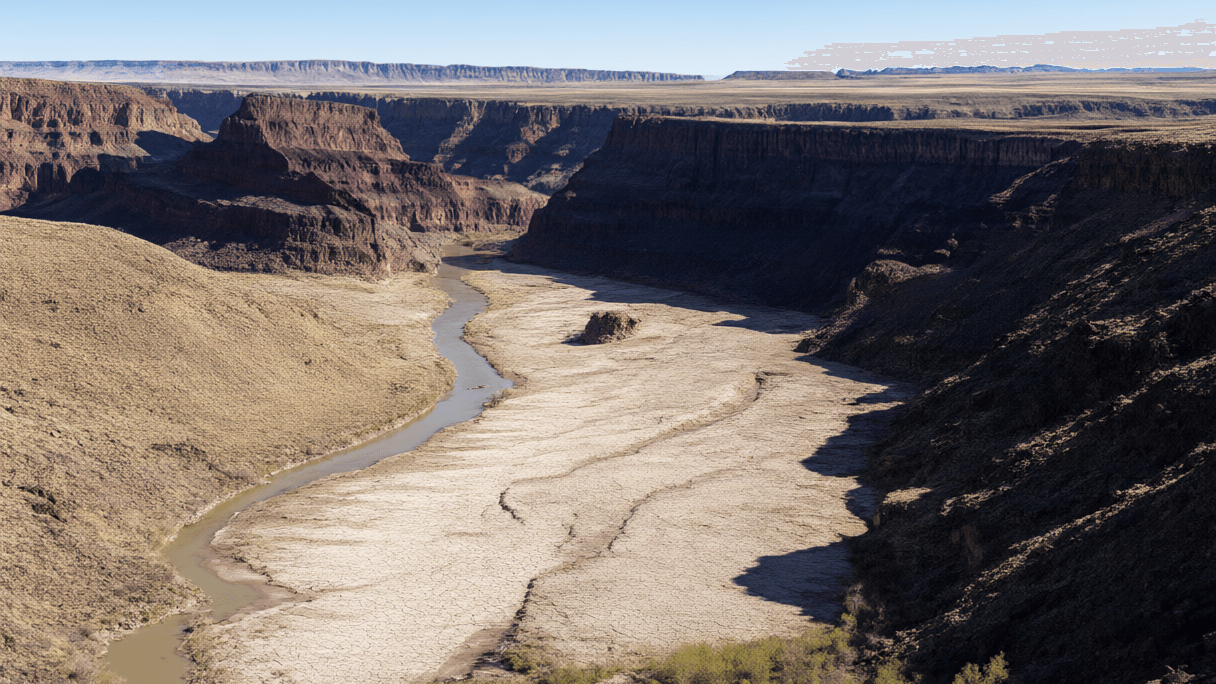
AI-generated image · US National Wire
Amazon aims to be 'water positive' by 2030, but critics argue efficiency metrics and small-scale investments mask the true cost of its data center expansion.
Amazon is positioning itself as a savior of the Colorado River, but as first reported by The Verge, a closer look at the numbers suggests the company is prioritizing optics over transparency.
Amazon recently launched the Colorado River Basin Collaborative. The company intends to raise $100 million over two years for conservation, contributing $20 million of its own funds. This effort comes at a critical juncture for the Colorado River, which serves 40 million people across two Mexican states and seven U.S. states. According to the US Bureau of Reclamation, the river has endured an "unprecedented" drought over the last 26 years, a crisis fueled by human-caused climate change and decades of overuse. The situation is so dire that the US Department of the Interior finalized a plan in August to impose steep water cuts on California, Nevada, and Arizona.
On the surface, Amazon's commitment looks proactive. In Orange County, California, the company pledged $2.2 million over three years to patch leaks, a move it claims will save 189 million gallons of water annually. Amazon has set a goal to become "water positive"—meaning it replenishes more water than it consumes—by the end of the decade.
However, the actual scale of Amazon's water consumption remains opaque. In June, Amazon disclosed that its global data centers used 2.5 billion gallons of water in 2025. While the company touts a 52 percent improvement in water efficiency since 2021 and claims its usage of 0.12 liters of water per kilowatt-hour is seven times more efficient than the industry average, these efficiency gains can be misleading. As The Verge notes, sustainability experts point to the Jevons paradox: as a technology becomes more efficient, total resource consumption may actually increase because the technology is used more frequently.
Furthermore, Amazon's reporting lacks the granularity found in its peers. The Verge reports that while Microsoft discloses total data center water use since 2020 and Google provides global operational water use since 2021 with location-based breakdowns, Amazon's annual sustainability report provides water use per unit of power but omits total water use over that period.
There are also concerns regarding what Amazon chooses to count. A 2025 investigation by The Guardian alleges that Amazon executives, worried about "reputational risk," decided to ignore "secondary" water use—the water required to generate electricity—and only account for "primary" water use at its facilities.
This lack of transparency is particularly concerning as AI scales. One estimate cited by The Verge suggests AI used between 312.5 billion and 764.6 billion liters of water in 2025, a volume comparable to global bottled water consumption. With data centers driving up utility rates in Arizona and facing community opposition—leading to several abandoned projects, as reported by Reuters—a $20 million pledge feels less like a solution and more like a distraction from a massive, undisclosed water footprint.