
The Digital Dashboard Delusion: Why It's Time to Bring Back the Button

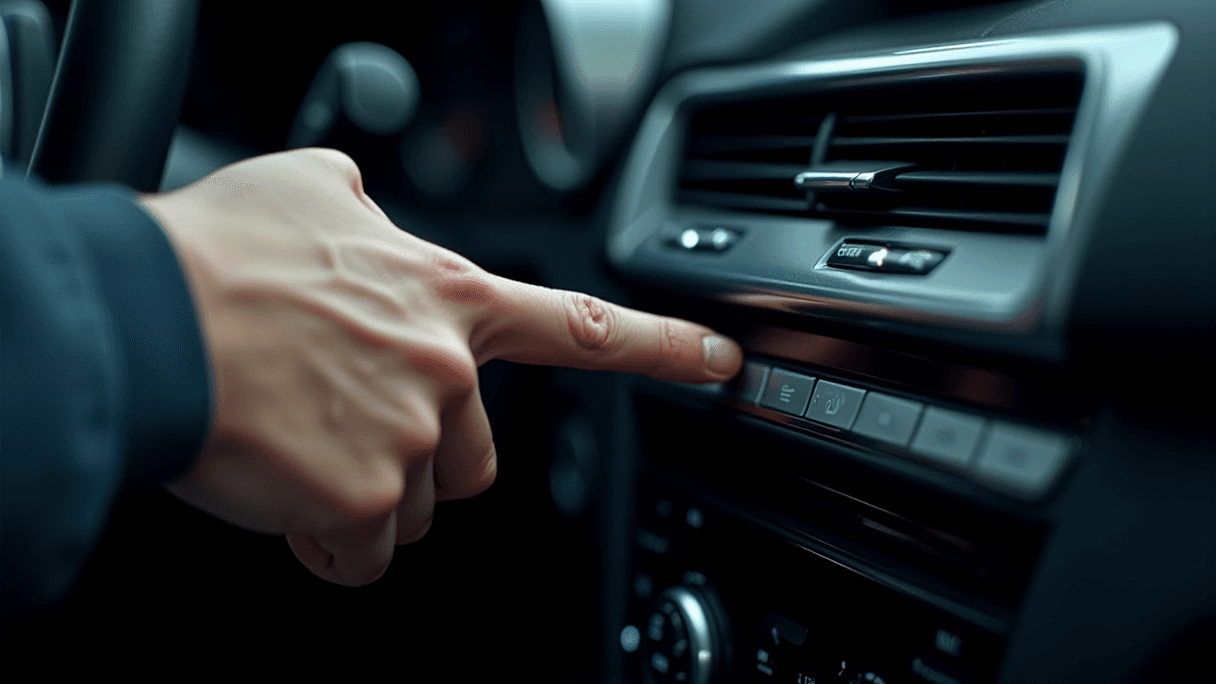
AI-generated image · US National Wire
Opinion: As automakers double down on screens and complex automation, JD Power data suggests drivers actually want the tech they can ignore.
I have a confession: I am exhausted. I am exhausted by the modern automotive interior, where a simple task—like adjusting the volume or changing the temperature—has been transformed into a three-menu deep dive on a piece of glass. We have reached a tipping point where 'smart' has become a synonym for 'cumbersome,' and as a reviewer who spends as much time in cars as I do with gadgets, I'm calling it: we need to demand our physical buttons back.
For years, the industry has operated under the assumption that more screens equal more luxury. We've seen this trend peak with the introduction of passenger screens—extra displays embedded in the dashboard for the person in the shotgun seat. As The Verge first reported, these features have appeared in premium brands such as Porsche, BMW, and Mercedes. But if you actually look at the data, these screens are nothing more than expensive dashboard ornaments.
In a recent tech survey conducted by JD Power, which polled 68,084 owners of new 2026 model-year vehicles after 90 days of ownership, passenger screens rated the lowest in satisfaction. The numbers are staggering: more than one-third of owners who have these screens reported they have never even tried to use them. Only 6 percent of owners admitted to using the passenger screen every time they drive. Why are we sacrificing tactile utility for a piece of hardware that the vast majority of people ignore?
This isn't just about the passenger seat; it's about a fundamental misunderstanding of what makes a car 'better.' The JD Power survey, which looked at 40 different automotive technologies across categories like smart vehicles, electric vehicles, and driver assist, revealed a striking truth: the features owners love most are the ones they barely notice.
The big winners in the survey were the inconspicuous systems. Smart ignition—where the car starts and stops automatically based on driver actions—delivered the highest overall satisfaction, with a rate of just 2.4 problems for every 100 vehicles. Similarly, smart HVAC systems that use AI to automatically manage the cabin environment for efficiency and comfort were highly praised. These features succeed because they solve a problem without requiring the driver to engage with a screen or navigate a software interface.
As Doron Hikry, the director of customer success at JD Power, noted in a press release, the real opportunity for automakers is to prioritize technology that simplifies the driving experience rather than complicating it. Hikry emphasized that the features resonating most with customers are those that solve real problems without adding stress or effort to the driver's plate.
We see this same tension playing out in the realm of automation. Automakers are pushing 'Level 2 Plus' automation—hands-free systems like GM’s Super Cruise, Ford’s BlueCruise, Tesla’s Full Self-Driving, and Mercedes’ Drive Pilot. While these allow for completely hands-free driving on specific roads, the JD Power data suggests that owners actually prefer standard Level 2 systems. These systems require the driver to keep their hands on the wheel, and users rated them higher in terms of quality of experience and design.
Interestingly, the difference in reliability is negligible. Level 2 systems recorded 14.3 problems per 100 vehicles, while the more automated L2 Plus systems recorded 13.8. The slight edge in reliability for the more complex system doesn't seem to matter; as Hikry observed, owners appear more comfortable with systems that clearly assist the driver rather than those that introduce a higher degree of automation.
Of course, technology in the car isn't the enemy. When it's useful and out of the way, it's fantastic. The JD Power survey highlighted several wins for specific functional tech: the Toyota Tundra and Cadillac Escalade both won for their camera mirrors, and other manufacturers were recognized for digital keys, blind-spot cameras, EV charging schedulers, and one-pedal driving. These are tools that enhance the act of driving without turning the dashboard into a tablet computer.
But when the 'innovation' involves replacing a physical knob with a touch-sensitive slider or burying the climate control under three layers of a glitchy software menu, it isn't progress—it's a regression in ergonomics. We are being sold a vision of the future that prioritizes the aesthetic of a clean, screen-heavy dash over the actual safety and sanity of the person behind the wheel.
If the data from 68,000 owners tells us anything, it's that we are tired of being forced to interact with our cars like they are oversized smartphones. We want the smart ignition that just works. We want the HVAC that knows what we need. And most of all, we want to stop staring at a screen just to turn down the music. It is time for automakers to stop chasing the 'wow' factor of the passenger screen and start prioritizing the invisible, intuitive technology that actually makes driving easier. Give us back the buttons.