
NASA Opens the LEO Checkbook: Legacy Primes and New Entrants Battle for Station Subsidies

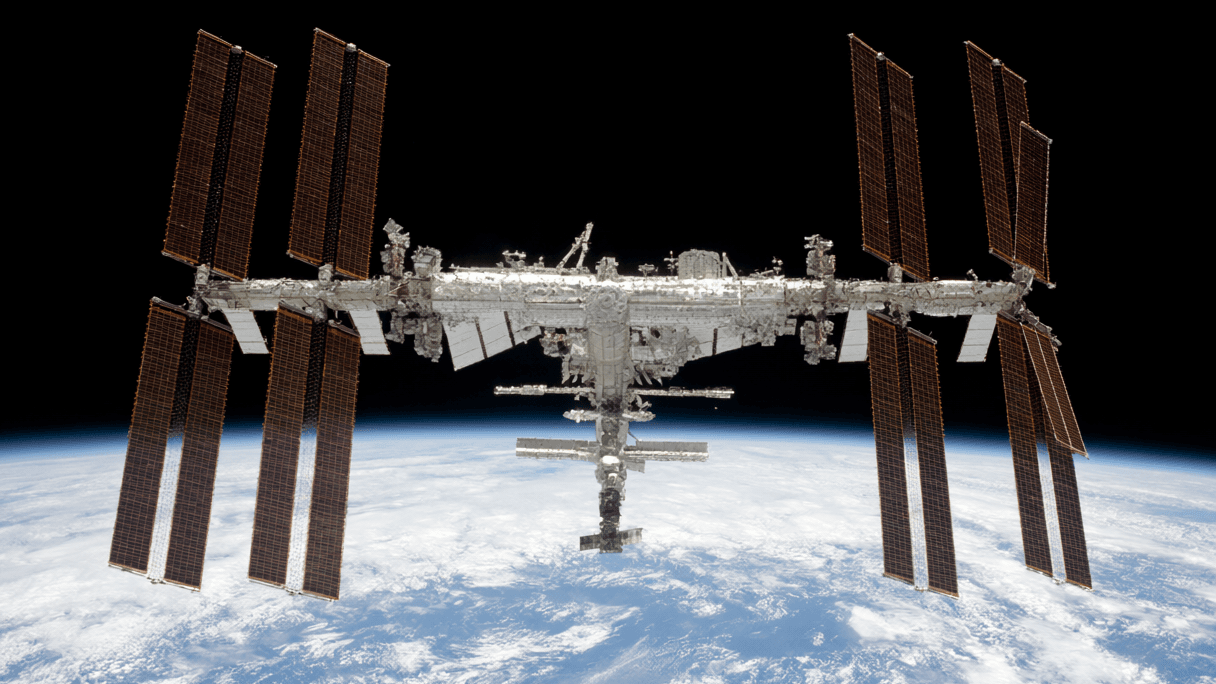
AI-generated image · US National Wire
A new RFP for Commercial LEO Destinations signals NASA's commitment to low-Earth orbit, but the agency's willingness to broker transportation deals reveals a critical vulnerability in the orbital supply chain.
NASA has officially issued a long-awaited request for proposals (RFP) to the U.S. commercial space sector to build private space stations, as Ars Technica first reported. The agency intends for these stations to succeed the International Space Station (ISS) as early as 2030, ensuring a sustained human presence in low-Earth orbit (LEO) for science, exploration, and the preparation of missions to Mars and the Moon.
NASA Administrator Jared Isaacman stated that utilizing commercial space stations allows the agency to shift more resources toward "near-impossible missions" while maintaining a footprint in LEO. The competition, titled "Commercial LEO Destinations," is structured in phases. Winners of Phase 1 are guaranteed at least $100 million, with subsequent phases projected to be worth billions. Phase 2, starting next year, will focus on development and certification funding, while Phase 3 will involve NASA purchasing at least four missions for its astronauts.
**The Capital Contenders**
While several firms are positioning themselves for the contract, the competitive landscape is split between established players and aggressive newcomers. Ars Technica identifies the following primary bidders for this funding phase:
* **Axiom Space:** A spokesperson for the company stated that Axiom is reviewing the RFP and believes its experience with orbital hardware and human space flight makes it the "clear choice." * **Voyager Space:** Marshall Smith, CEO of Voyager's Starlab space station, described the RFP as an "important milestone" and asserted that Starlab possesses the strongest technical solution and business plan. * **Vast Space:** A company spokesperson indicated that Vast is currently in final integration with Haven-1 and is prepared to build a multi-module station.
Other industry dynamics complicate the bidding process. Blue Origin previously secured funding in an earlier round, though Ars Technica notes that questions persist regarding the company's commitment. Meanwhile, SpaceX appears unlikely to bid at this time.
**The Transportation Bottleneck**
Beyond the construction of the stations, the most critical friction point is how astronauts will actually reach them. SpaceX currently operates the only U.S. vehicle capable of such transportation, but the company has indicated it plans to retire the Crew Dragon spacecraft around the time the ISS is deorbited (estimated between 2030 and 2032). Additionally, SpaceX has not made seats available for purchase by private station operators.
To mitigate this, NASA has taken an active role in securing the transit pipeline. Two weeks prior to the RFP, NASA provided $359 million to Boeing to support the certification of the Starliner spacecraft. In the new RFP, NASA is easing the burden on contractors by removing the requirement to provide a signed contract or a letter of intent with a transportation provider like Boeing.
NASA has gone a step further by offering to "furnish" transportation for the first four service missions, effectively acting as a broker between the station operators and Boeing. To provide a baseline for these costs, NASA's documents assign explicit pricing for 2030: a four-seat crew flight is estimated at $325 million, and a cargo flight is estimated at $300 million.
Industry responses to the 360-page request are due by December 8, with NASA planning to select two or more contractors by April.