
Nuclear NASA: Agency Taps DoE to Bridge Lunar Power Gap

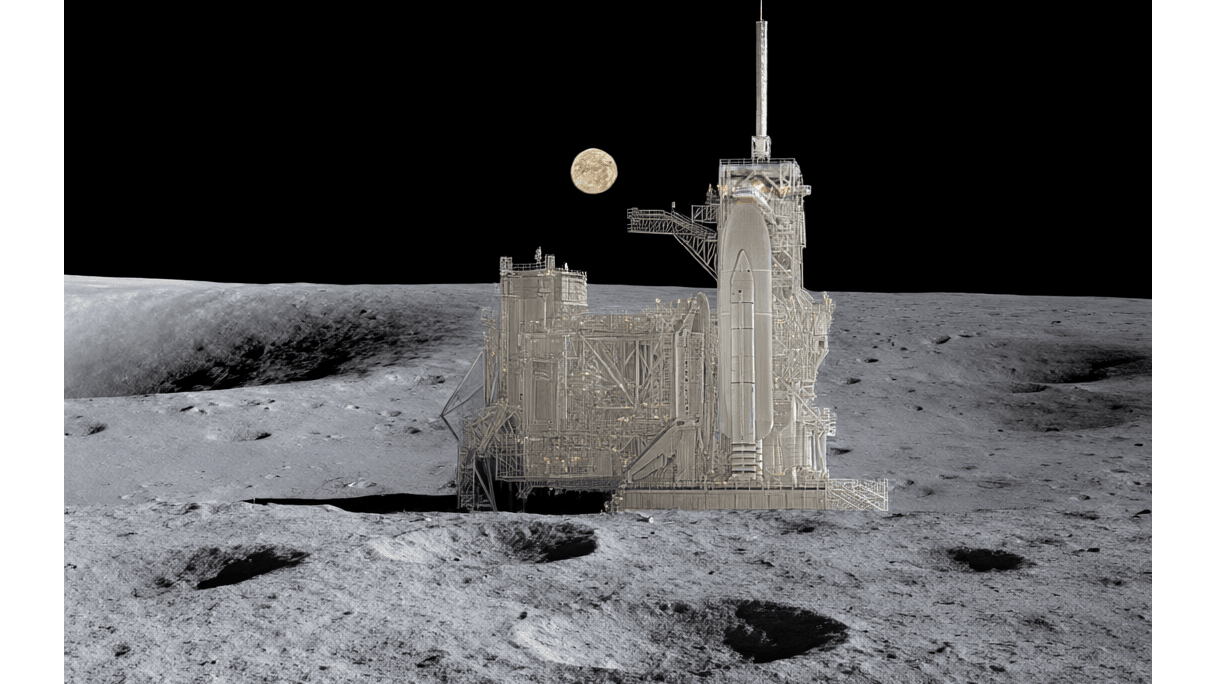
AI-generated image · US National Wire
Administrator Jared Isaacman signs MOU with Energy Secretary Chris Wright to accelerate fission-powered spacecraft, but GAO warnings and tight deadlines suggest a reality gap.
NASA is betting on nuclear fission to power its next era of deep-space exploration, but the agency is increasingly leaning on the Department of Energy (DoE) to make these ambitions a reality, as first reported by The Register. In a recent signing ceremony, NASA Administrator Jared Isaacman and Energy Secretary Chris Wright signed a joint memorandum of understanding (MOU) to expand collaboration on space nuclear technology. While the full text of the MOU has not been published, NASA states the agreement establishes a framework for joint work on fuel production, research, testing, operations, and launch integration.
**The Timeline Tension** According to reporting from The Register, NASA is chasing two aggressive deadlines that leave little room for error. First is the "Freedom" spacecraft, a nuclear-propelled vessel intended to launch in December 2028. NASA previously detailed the Space Reactor-1 (SR-1) in March, noting the craft would be built largely from a repurposed spacecraft bus. The SR-1 is designed to generate over 20 kilowatts of electricity to power electric thrusters for a mission to Mars, where it will deploy three Ingenuity-class helicopters to scout future human landing sites.
Second, NASA is targeting 2030 for the launch of Lunar Reactor-1 (LR-1). This unit is intended to power a base on the Moon's surface, a priority that shifted after NASA paused work on the orbital Lunar Gateway station earlier this year.
**Opinion: PowerPoint vs. Procurement** From my perspective, these goals currently look more like expensive PowerPoint slides than a viable procurement pipeline. NASA claims it is making "steady progress" on LR-1, but as The Register notes, the agency has provided little public evidence to support this claim. When asked for assurances that these projects are on pace, NASA did not respond to The Register's inquiries.
**The Reliability Gap** Historically, NASA's scheduling has been a point of contention. The Register reports that the Government Accountability Office (GAO) has spent nearly a decade warning that NASA's lunar timelines are often unrealistic. The GAO has specifically noted that current schedules are so tight that a single mishap could cause significant delays—a risk compounded by massive workforce reductions under the second Trump administration.
These systemic issues are already visible in the Artemis program. The Register highlights that Artemis I and II faced multiple delays, and Artemis III's 2027 lunar landing has been downgraded to a low Earth orbit demonstration mission due to readiness concerns regarding landing systems, including SpaceX's Starship. Between these setbacks and the ongoing struggles with Boeing's crew capsule, the prospect of launching a nuclear reactor in just over two years remains highly speculative.