
ISRO's Pivot: Gaganyaan Delays Mask a Push for Sovereign Orbital Infrastructure

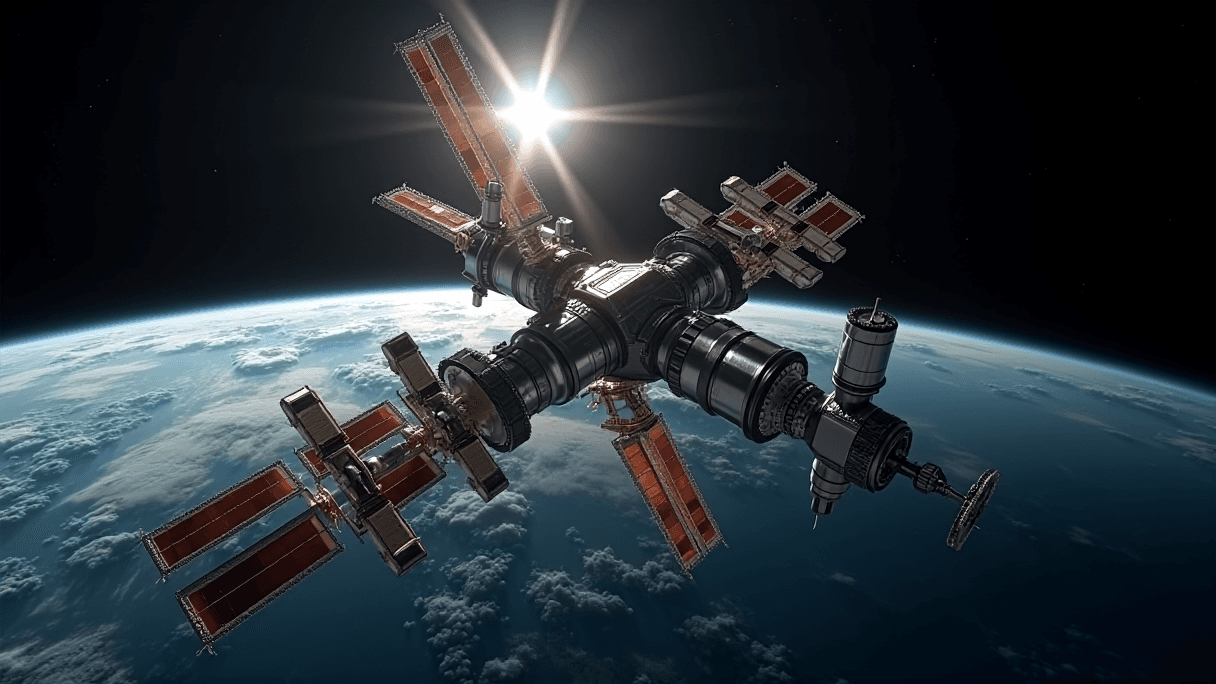
AI-generated image · US National Wire
After missing multiple launch windows, India is signaling a shift toward a 2035 space station goal that could redefine LEO power dynamics.
For those tracking the ledger of orbital launches, India's recent silence on its crewed space program looked like a series of failures. However, looking at the broader strategic trajectory, the shifting timelines of the Gaganyaan program suggest a calculated pivot toward long-term sovereign infrastructure.
**The Gaganyaan Reset** As The Register first reported, India's crewed space program, Gaganyaan, has already missed its scheduled flight targets for 2022 and 2025. While the Indian government and the Indian Space Research Organisation (ISRO) remained silent after the 2025 deadline passed, ISRO Chairman Dr. V. Narayanan recently broke that silence during India's third annual National Space Day.
Dr. Narayanan revealed that testing for the crew module and the associated rocket is nearly finished. The Register reports that the first of three planned test missions is now slated to launch this year. These missions will utilize the LVM3 launcher—a vehicle with a perfect nine-flight record—which has been upgraded with a solid-fuel motor crew escape system to ensure the safety of "Vyomanauts," the Sanskrit-derived term for India's astronauts.
**The Sovereign Station Play** While the immediate goal is to become only the fourth nation to independently launch humans into orbit—joining the U.S., Russia, and China—the real shift is the horizon. The Register notes that Dr. Narayanan and other government officials are now targeting the operation of an Indian space station by 2035.
This ambition suggests that ISRO is no longer just chasing the milestone of a short-term orbit. The current Gaganyaan module is designed to support three Vyomanauts for three days in a 400km orbit before splashing down in Indian waters. Moving toward a permanent station by 2035 indicates a desire to challenge the existing hegemony in Low Earth Orbit (LEO).
**The Funding and Fabrication Model** Crucial to this expansion is how India intends to build its fleet. The Register reports that ISRO is eyeing increased involvement from private space companies, potentially as launcher manufacturers. This would mirror the U.S. model, where NASA maintains the Space Launch System (SLS) while contracting other launches to commercial firms. This differs from the Japanese model, where the space agency defines specifications and contracts industrial giants like Mitsubishi to build the vehicles while maintaining mission control.
**OPINION:** In my view, the move toward a 2035 station isn't just an add-on to the Gaganyaan program; it's a strategic realignment. By integrating private sector manufacturing and targeting a sovereign station, India is positioning itself to move beyond the "catch-up" phase of crewed flight and into a role as a primary architect of LEO infrastructure.