
Beyond the Seed: Can Letara Scale Hybrid Propulsion for Orbital Infrastructure?

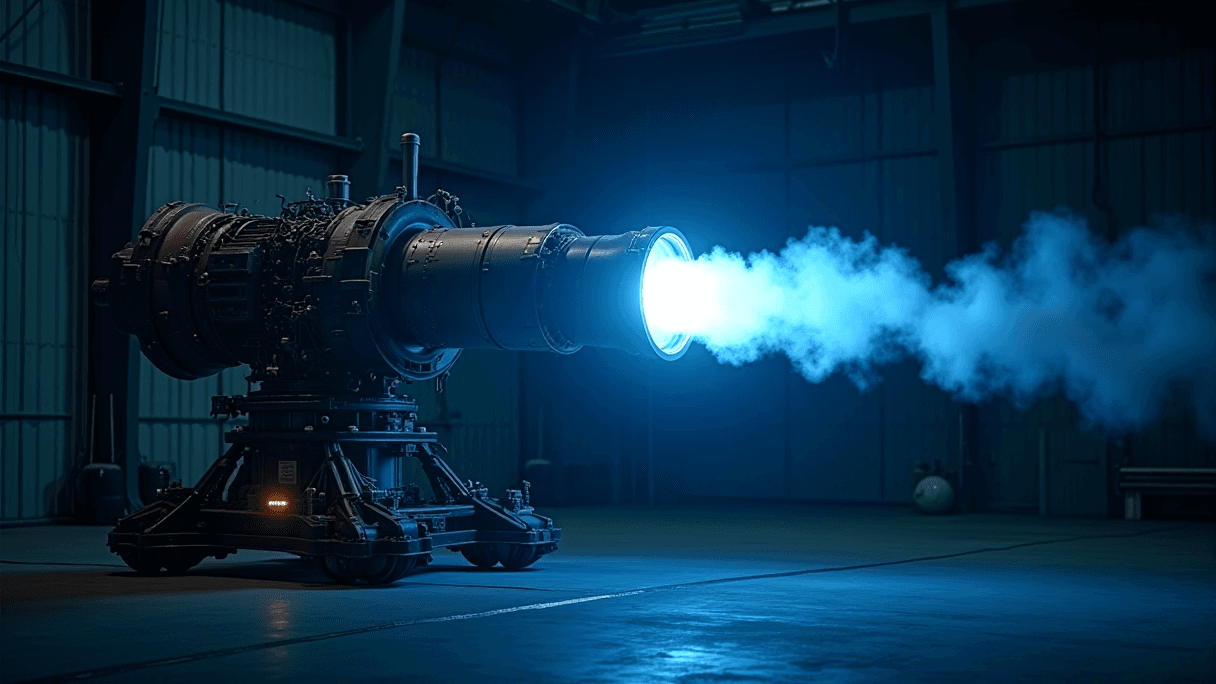
AI-generated image · US National Wire
Sapporo-based Letara is moving from small satellite thrusters to large-scale rocket systems, betting that a proprietary fuel process can unlock defense and launch markets.
Opinion: In the world of clean tech and aerospace, funding rounds are often mistaken for milestones. But for Letara, the real test isn't the ¥2.6 billion (~$16 million) it just secured; it is whether the company can transition its hybrid propulsion technology from academic demonstrations to viable, large-scale orbital infrastructure.
As reported by TechCrunch, the Sapporo-based startup is pivoting. After spending years focusing on hybrid thrusters for small satellites, Letara now intends to develop large rocket systems targeting the launch, security, and defense sectors. This shift is timed with a broader Japanese government push to foster a domestic aerospace sector by easing defense export restrictions and investing billions of dollars into the industry.
**The Mechanism: Plastic Over Paraffin**
To understand the scaling challenge, one must look at the propulsion mechanism. Traditional hybrid rockets—which separate solid fuel from liquid oxidizers—often rely on expensive paraffin wax. Letara, co-founded by Shota Hirai and Landon Thomas Kamps during their research at Hokkaido University, uses a different approach. According to TechCrunch, Letara utilizes inexpensive, widely available materials like rubber and plastic as solid fuel.
The company's proprietary manufacturing process focuses on how these materials are mixed, compressed, and shaped. Co-CEO Shota Hirai told TechCrunch that this method aims to solve three historical pain points of hybrid propulsion: maintaining consistent performance, controlling combustion, and generating sufficient thrust. If successful, this would allow for more thrust and less waste than traditional hybrid systems.
**The Deployment Gap**
Scaling from a niche thruster to a launch vehicle is a massive leap in engineering. Hirai noted to TechCrunch that high-thrust propulsion is critical for spacecraft moving from low earth orbit (LEO) to geostationary orbit (GEO), specifically to navigate the Van Allen radiation belt quickly.
However, the path to commercialization requires more than just a working prototype. Letara must now establish a reliable supply chain for tanks and fuel, alongside a repeatable manufacturing process with strict quality controls. The company's next critical milestone is an in-orbit firing test conducted with an overseas partner.
**A Crowded Orbit**
Letara is not operating in a vacuum. TechCrunch notes a crowded global field of competitors pursuing hybrid rocket technology, including: * **Japan:** Interstellar Technologies * **China:** Galactic Energy * **South Korea:** InnoSpace * **Singapore:** Equatorial Space * **Germany:** HyImpulse * **Australia:** Gilmour Space
While the global hybrid rocket propulsion market is projected to grow from $848 million in 2024 to $2.6 billion by 2032, Letara's success depends on its ability to capture government and commercial contracts. While the company confirmed it has won orders from the Japanese government and various satellite and rocket firms, it has not disclosed the value of those contracts.
**The Pragmatic View**
From my perspective, the most intriguing part of Letara's pitch isn't the current funding—led by Headline Asia, JIC Venture Growth Investment, and Incubate Fund—but the potential for circularity. Letara told TechCrunch that using recycled plastic as fuel is a "very much a possibility," though it requires further development. If Letara can prove that recycled materials can power orbital infrastructure at scale, they move from being just another propulsion startup to a key player in sustainable space logistics.