
Waymo's Ojai Expansion is a Desperate Pivot, Not a Victory

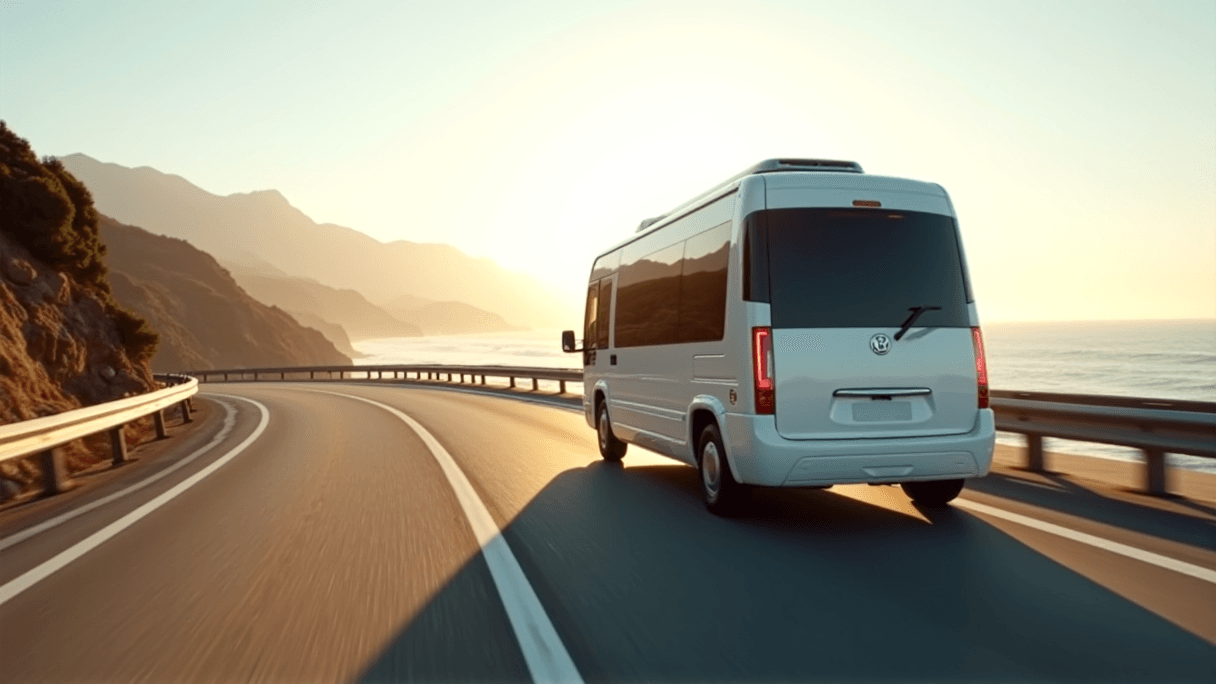
AI-generated image · US National Wire
Opinion: Alphabet's push to scale its robotaxi fleet with cheaper Zeekr-based vans reveals a company struggling to move beyond expensive prototypes and curated city blocks.
Let's be clear: Waymo is currently attempting to sell us on the idea that it has finally cracked the code of scalable autonomy. The latest announcement—that the Ojai driverless vans are now available to all riders in Los Angeles, Phoenix, and San Francisco—is being framed as a milestone. But if you look past the marketing of "spaciousness" and backseat entertainment, the Ojai rollout looks less like a victory lap and more like a frantic effort to prove that this business model can actually function outside of a controlled experiment.
For years, Waymo has leaned on the Jaguar I-Pace. As reported by TechCrunch, the sensor-heavy Jaguar hatchback served as a stopgap in the company's pursuit of mass scale and eventual profitability. The problem is that the Jaguar is an expensive, modified luxury vehicle. You cannot build a profitable, mass-market transportation network on the back of a luxury SUV. The Ojai is the admission of that failure. By partnering with Zeekr—a brand owned by China's Geely Holding Group—Waymo is finally admitting that it needs a vehicle that is actually cheap to build, operate, and maintain.
According to TechCrunch, the Ojai is built on Zeekr's SEA-M platform, designed specifically for delivery vans and robotaxis. Waymo has spent years testing prototypes of this vehicle, and it is only now reaching the general public in three cities. While Waymo claims the Ojai is designed for durability and ease of access, the logistics of this "scale" are fraught with irony. For one, despite the vehicle's name, Engadget notes that Waymo is not yet available in Ojai, California.
More concerning is the geopolitical and financial friction inherent in this strategy. TechCrunch reports that because these vehicles are built in China, they are subject to steep import tariffs under current U.S. trade policy. Waymo is essentially betting its scaling strategy on a supply chain that is actively being penalized by the U.S. government. The process is cumbersome: Zeekr ships the base vehicles without Chinese connected-car technology, and they are subsequently outfitted with Waymo's sixth-generation self-driving system at a factory in Arizona.
If you want to see how desperate the push for volume is, look at the numbers provided by the New York-based research firm MoffettNathanson. The firm, which tracks imports via shipping receipts, indicates Waymo is on track to import 5,000 Ojai vehicles into the U.S. before 2027. During July alone, the country saw 725 Ojai vehicles arrive. MoffettNathanson notes that this would more than double Waymo's current Jaguar fleet.
But volume is not the same as viability. Adding more pods to the street does not solve the fundamental reliability issues that continue to plague the fleet. Engadget reports a troubling pattern of instability: after introducing freeway rides in November, Waymo was forced to suspend highway service in May. This followed a series of recalls after vehicles drove into closed construction zones. While freeway access was restored in July, these lapses suggest that the "intelligence" of the system is still struggling with the unpredictability of the real world.
Waymo is now attempting to mask these operational hiccups with a flurry of expansion news. In the same week as the Ojai rollout, the company announced it received permission to operate in San Diego and Sacramento, and TechCrunch reports plans to bring the Ojai to Las Vegas, Denver, and San Diego later this year.
Adding Google's Gemini AI as an in-car assistant and updating the user interface are fine flourishes, but they are distractions from the core question: Can Waymo actually scale without burning through Alphabet's coffers? The shift to the Ojai is a necessary pivot toward a cheaper vehicle, but it is one born of necessity, not a sudden breakthrough in autonomous efficiency.
Waymo is no longer just fighting the roads; it is fighting the economics of its own existence. Until these driverless pods can navigate a construction zone without a recall and scale without relying on tariff-heavy imports, the Ojai isn't a sign of victory—it's a sign that Waymo is running out of ways to justify the cost of its dream.