
The Unsexy Hardware Win: How AI is Forcing a Grid Evolution

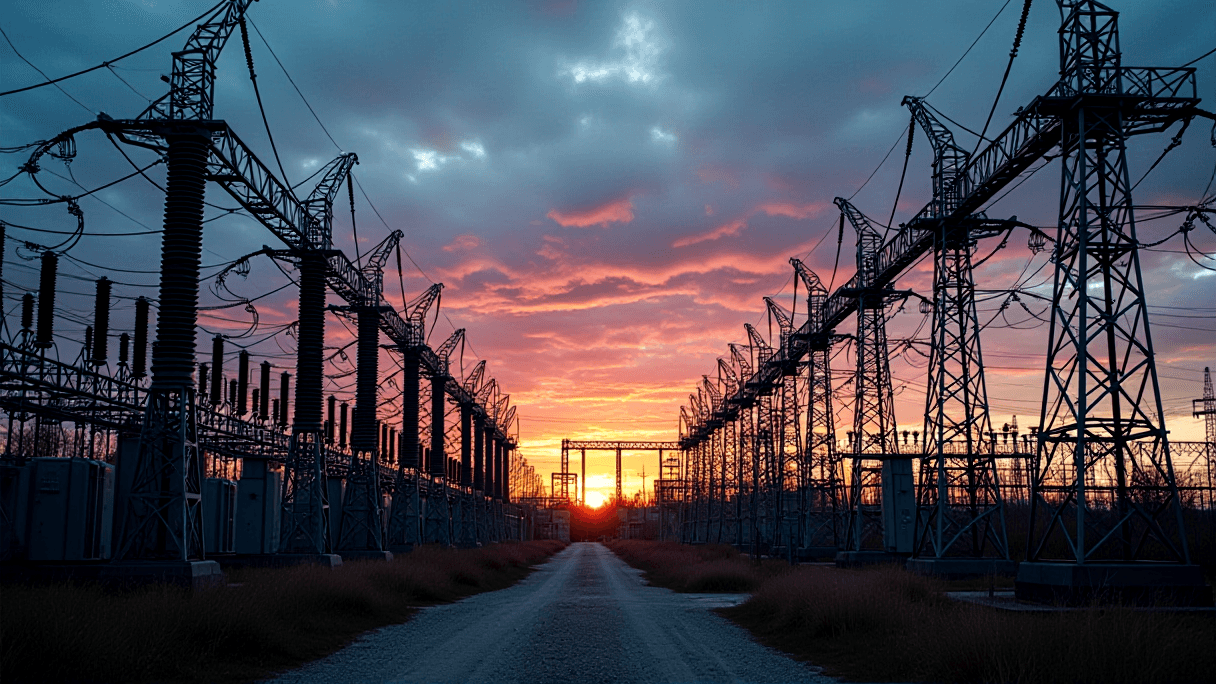
AI-generated image · US National Wire
While the world focuses on AI software, the real climate breakthrough is happening in the power transformer—replacing 19th-century copper coils with semiconductor-driven efficiency.
In the climate tech world, we spend a lot of time chasing the next software breakthrough or funding round. But if you want to see where the actual deployment is happening, look at the power grid. Specifically, look at the transformer.
As reported by Ars Technica, the explosion of AI data centers has created a massive surge in electricity demand that is pushing U.S. power grids to their limits. However, this pressure is acting as a catalyst for a necessary hardware upgrade: the shift from conventional transformers to solid-state transformers.
To understand why this matters, you have to understand how boring the current system is. According to Ars Technica, our grids still rely on transformer technology dating back to the 1880s. These units are essentially copper wire coils wound by hand around steel cores. Because they are custom-built for specific utility substations rather than mass-manufactured, the supply chain is brittle. Utility companies are currently facing wait times of several years for new deliveries, which slows down both the expansion of the grid and the replacement of aging equipment.
Enter the solid-state transformer. Rather than relying on manual winding and electromagnetic fields, these devices use high-frequency semiconductor switching—specifically materials like silicon carbide—to convert voltage.
**Opinion: The Deployment Angle**
From my perspective, the real win here isn't just that these devices are smaller or lighter. It's that they move power infrastructure from the realm of custom industrial fabrication into the realm of electronics. As Srdjan Lukic, a professor of electrical and computer engineering at North Carolina State University, told Ars Technica, solid-state transformers are like electronic devices, which opens up who can manufacture them and where they can be made. That is how you actually solve a supply chain crisis.
For the AI giants, this is a pragmatic necessity. Modern server racks packed with AI chips are moving toward direct current (DC) power architectures. Conventional grids provide alternating current (AC). Normally, this requires separate devices to handle the AC/DC conversion. Lukic describes the solid-state transformer as a "magic box" that handles this conversion in one stage outside the data hall, eliminating interoperability challenges and reducing the amount of copper and physical space required for the project.
While data centers are the "killer application" driving this right now, the ripple effects extend to the rest of the clean energy transition. Ars Technica reports that several companies—including DG Matrix, Heron Power, and Amperesand—have collectively raised over $280 million in the last year to commercialize this tech.
Beyond the data center, this hardware is critical for EV infrastructure. Lukic and his team recently conducted field tests at the Electric Power Research Institute (EPRI) site in Lenox, Massachusetts, in collaboration with the New York Power Authority. Their 1 MW solid-state transformer system, which has been testing in a shipping container since May 2026, demonstrated the ability to step down voltage and convert AC to DC to support EV battery charging.
If we can move the grid away from 140-year-old designs, the AI boom might leave us with a power infrastructure that is actually capable of supporting a decarbonized future.