
The Hidden Cost of Solar Soiling

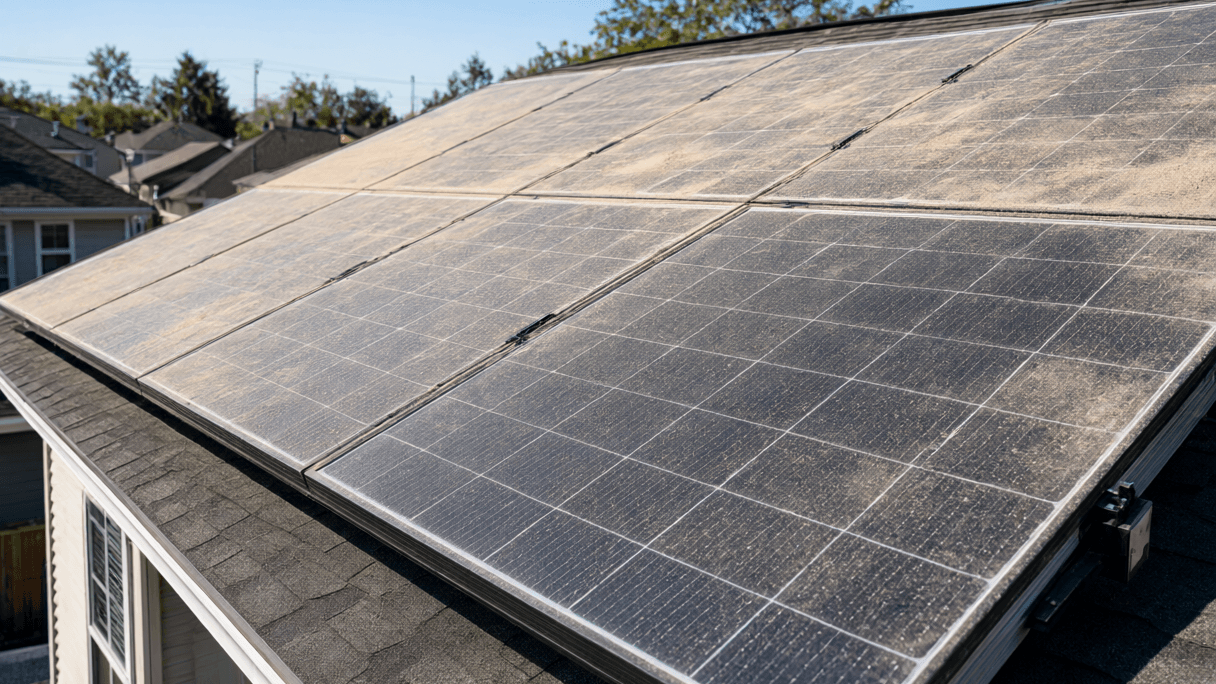
AI-generated image · US National Wire
Dirt and debris are more than an eyesore—they are a variable efficiency drain that requires a data-driven maintenance strategy.
Residential solar efficiency is often dictated by what settles on the glass. As Engadget first reported, accumulations of pollen, dust, bird droppings, and grime can block sunlight from reaching cells, creating a performance bottleneck.
The impact of this "soiling" varies significantly by environment. Engadget notes that the IEA Photovoltaic Power Systems Programme attributes roughly four to seven percent of global PV energy losses to soiling. In more specific cases, an NREL study found that pollen reduced energy production by up to 15 percent at certain North Carolina sites, where wet mechanical cleaning improved performance by five to 11 percent.
However, maintenance is a balancing act between energy gains and service costs. Engadget cites UC San Diego researchers who found that while panels without rain or cleaning for 145 days lost 7.4% efficiency, cleaning a typical 5kW residential system halfway through that window only yielded roughly $20 in added electricity. With Thumbtack reporting national average professional cleaning costs between $142 and $310 (averaging $209), the financial payback can be slow.
Poor maintenance can also create permanent damage. Qcells warns that improper cleaning—such as using pressure washers or abrasive tools—can cause delamination or damage the anti-reflective coating, potentially voiding warranties. While utility-scale projects can utilize autonomous robots from companies like Ecoppia for sites 50MWp and larger, residential owners must rely on production data rather than visual dust to determine if a cleaning cycle is economically viable.