
The Human Cost of Efficiency: AT&T's AI Pivot

AI-generated image · US National Wire
In a rush to impress Wall Street with leaner operations, AT&T is automating away the human support and legacy infrastructure that customers rely on.
OPINION: For the executives at AT&T, the goal is clear: do more with less. But for the customers paying the bills, this corporate alchemy looks less like innovation and more like a calculated abandonment of reliability in favor of quarterly earnings reports.
As Wired first reported, AT&T is aggressively pursuing a strategy of automation and downsizing to signal its efficiency to investors. The company has already shed more than half of its workforce over the last decade, and the cuts are not stopping. In the first half of 2026 alone, the telecom giant eliminated approximately 2,100 jobs. If the company maintains the pace of layoffs seen last year—which saw 8,000 people leave—a source familiar with the matter told Wired that AT&T's target workforce could drop to 85,000 by 2030, though AT&T has disputed the accuracy of that specific figure.
Chief Technology Officer Jeremy Legg told Wired that comparing staffing levels to competitors is a factor in these decisions. This is a cold calculus; public financial disclosures indicate that AT&T generated less revenue per employee last year than T-Mobile and Verizon. To fix this ratio, AT&T is replacing human intuition with algorithms. The company is deploying AI for customer service, utilizing a generative AI system called GeoModeler to adjust network settings during extreme weather, and using AI to write software code.
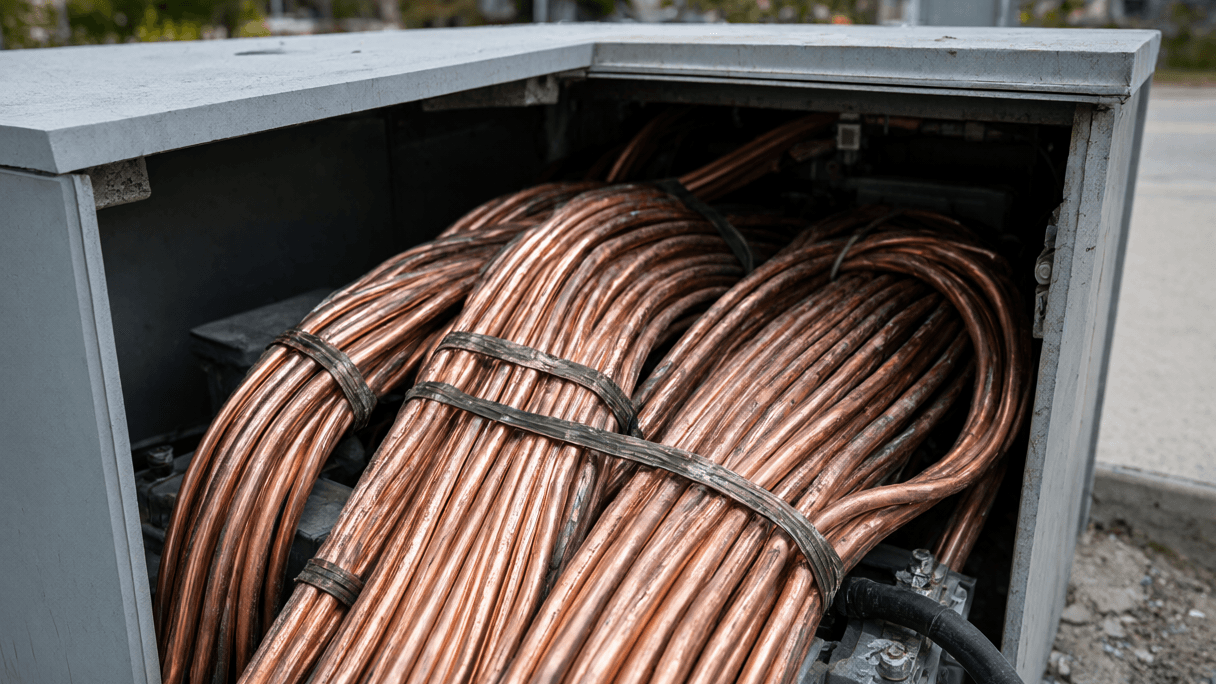
Perhaps most concerning is the erosion of physical infrastructure. AT&T is decommissioning its copper wire network, which powers DSL internet and landline telephones. CFO Pascal Desroches told a conference that retiring this infrastructure removes assets that absorb significant "personnel attention" and power. CEO John Stankey highlighted the sheer volume of this legacy hardware at the Goldman Sachs Communacopia + Technology Conference, joking that the amount of copper makes AT&T effectively the fifth-largest copper mine in the U.S.
While the company touts the environmental benefits—claiming total energy consumption fell 13.1 percent from 2020 through 2025—the human cost is evident. Wired reports that the move to drop copper services has sparked local protests in some communities, as rural areas may lack alternative connectivity. Additionally, the company is swapping out physical hardware at thousands of central hubs for cloud-based software provided by DriveNets, an Israeli startup. While this allows technicians to make remote adjustments, it simultaneously wipes out middle management and junior developer roles.
CEO John Stankey has promised a "dramatically different" company by the end of the decade, focusing on "fantastic" fiber internet and a "kickass wireless network." But as the company automates the manual tasks that once ensured service reliability—including the simple act of disconnecting a phone line—customers are left wondering if "efficiency" is just a corporate euphemism for the disappearance of actual support.