
The Hubble Salvage Play: NASA's Search for a Low-Margin Rescue

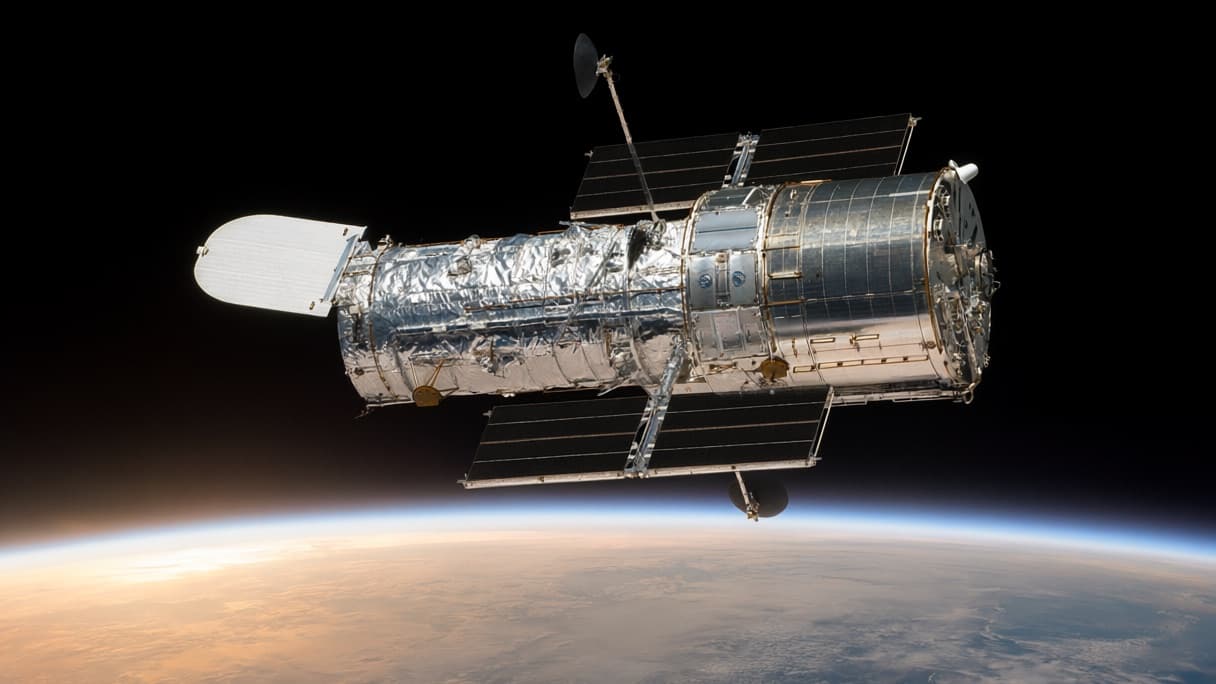
AI-generated image · US National Wire
With the telescope facing a 2034 reentry, NASA is soliciting private sector proposals for orbital raises and disposal, turning a scientific icon into a commercial bidding war.
NASA is effectively opening the floor for a salvage operation. As Wired first reported, the agency has issued a formal Request for Information (RFI) seeking proposals from commercial space companies to extend the lifespan of the Hubble Space Telescope.
The stakes are a matter of orbital decay. Because Hubble lacks a propulsion system to adjust its own orbit, atmospheric drag is pulling it downward. NASA analysis indicates that without intervention, the telescope will likely re-enter Earth's atmosphere by 2033 or 2034. To prevent this, NASA is looking for "in-space servicing" to raise the telescope's altitude, though the agency is also open to industry suggestions for a controlled disposal or a safe reentry.
From a contracts perspective, this is a high-visibility, low-margin game. NASA Administrator Jared Isaacman has stated that the agency must explore "innovative and cost-effective ways" to extend the life of orbital assets to serve the scientific community and the American taxpayer. While the prestige of saving a "national icon"—as described by Nicky Fox, associate administrator of NASA's Science Mission Directorate—is immense, the financial reality is tighter. NASA is not just looking for a lift; they are open to proposals for functionality upgrades to maximize the telescope's remaining years.
This isn't NASA's first attempt to outsource this specific problem. Wired reports that in September 2022, NASA entered a nonfunding partnership with SpaceX to study whether the Dragon spacecraft could move Hubble into a stable orbit. Crucially, NASA noted at the time that it had no plans to fund that specific mission; the study was strictly to assess commercial feasibility.
Commercial players should also note the risks of failure in this sector. In September 2025, NASA commissioned Katalyst Space Technologies to perform an orbital raise for the Swift Observatory. However, the Katalyst vessel encountered an attitude control failure following its July 2026 launch. The mission was abandoned, and the Swift observatory re-entered the atmosphere over Indonesia on November 4.
Beyond the orbit, the hardware is failing. In June 2024, NASA transitioned Hubble to an operating mode using only one of its six gyros. Of the original six, only three remained operational, and one of those began producing abnormal readings. NASA is keeping one remaining functional gyro in reserve.
NASA estimates that any mission to raise Hubble's orbit must be executed by 2032. For the commercial sector, the opportunity is clear: provide a cost-effective rescue for a legacy asset before it becomes a piece of uncontrolled space debris.