
The Hubble Hedge: NASA's RFI Cycle and the Procurement Gap

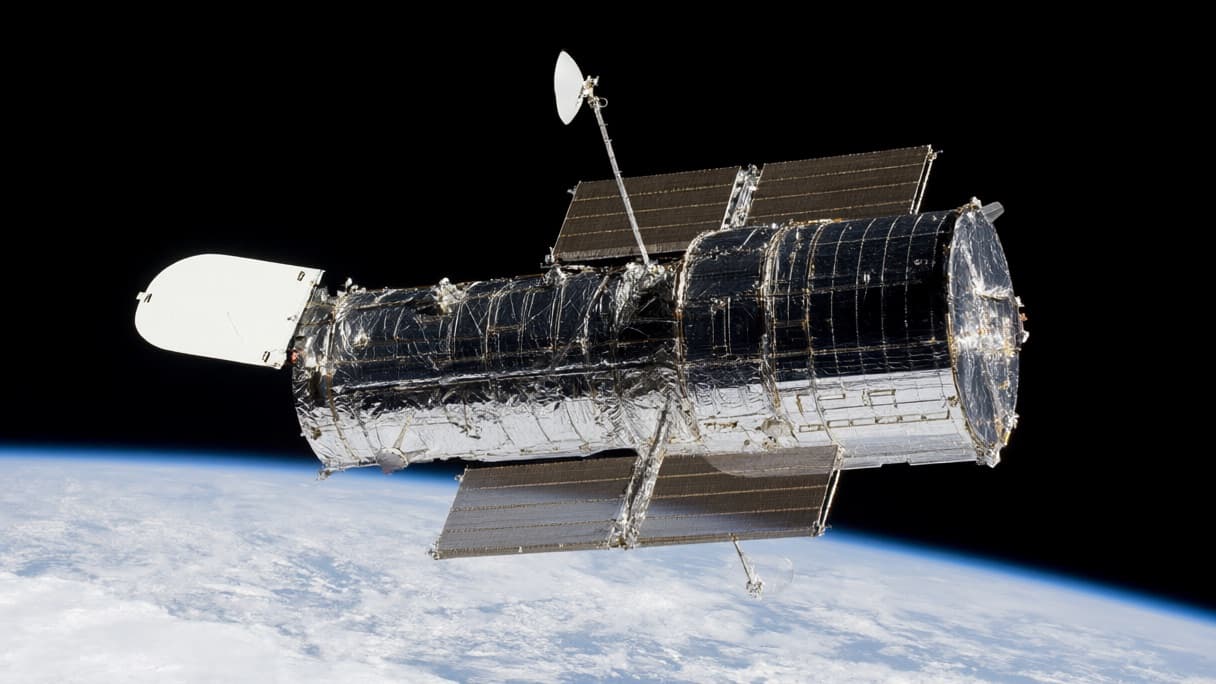
AI-generated image · US National Wire
A new call for commercial rescue ideas arrives as the agency admits it has zero dollars allocated for the mission.
NASA is once again asking the commercial sector for ideas to save the Hubble Space Telescope from a predicted atmospheric plunge in the early-to-mid 2030s, as Ars Technica first reported. While the agency frames the move as an exploration of innovative opportunities, the underlying financial reality is stark: NASA currently has no funding allocated to procure a Hubble reboost or servicing mission.
According to reporting from Ars Technica, NASA released a Request For Information (RFI) on Thursday seeking capabilities to capture the telescope and boost it to an altitude of at least 373 miles (600 km), or otherwise conduct a controlled reentry. The agency is looking for contractors to provide the launch vehicle, mission operations, servicing spacecraft, and crew if necessary, with a target mission date by 2032.
This is not a new request. As Ars Technica notes, NASA issued a similar RFI in 2022. That cycle yielded eight responses, including a joint robotic proposal from Momentus and Astroscale. It also included a proposal from billionaire commercial astronaut Jared Isaacman, who offered to fund most of a mission using a SpaceX Dragon spacecraft to reboost the telescope by at least 30 miles (50 km). Despite these efforts, NASA officials announced in 2024 that they would not pursue a reboost. Mark Clampin, then head of NASA's astrophysics division, dismissed the SpaceX and Isaacman plans as "notional concepts."
Now, in 2026, the landscape has shifted. Isaacman has ascended to the role of NASA administrator, and the commercial servicing sector has matured. Ars Technica reports that Northrop Grumman recently launched a robotic servicing satellite in partnership with DARPA, while startups like Starfish Space and Astroscale hold contracts for refueling and servicing demonstrations with NASA and the US Space Force.
There is a precedent for low-cost, rapid-response rescues. Last year, NASA awarded a $30 million contract to Katalyst Space Technologies to save the Swift telescope. While the mission ultimately failed to close the gap due to power and reaction-control system issues, Katalyst successfully launched a rescue satellite within a nine-month window. This proved that servicing missions do not necessarily require the multi-billion dollar budgets previously predicted by NASA's canceled demo projects.
However, Hubble is a far more expensive asset than Swift. While NASA Administrator Isaacman states that the agency owes it to the scientific community and taxpayers to explore cost-effective ways to extend the telescope's life, the agency remains in a holding pattern. By issuing RFIs without dedicated procurement funding, NASA is effectively outsourcing the conceptual heavy lifting to the private sector while avoiding any budgetary commitment.
Without intervention, orbital dynamicists predict—according to Ars Technica—that Hubble will burn up in 2033 or 2034. The agency's recurring "call for ideas" serves as a transparent hedge: it keeps the possibility of a rescue alive in the public eye without requiring the agency to secure the actual funding necessary to execute one.