
The High-Stakes Gamble of 'Constrained Autonomy': Is AstroForge Betting Too Much on the Transformer?

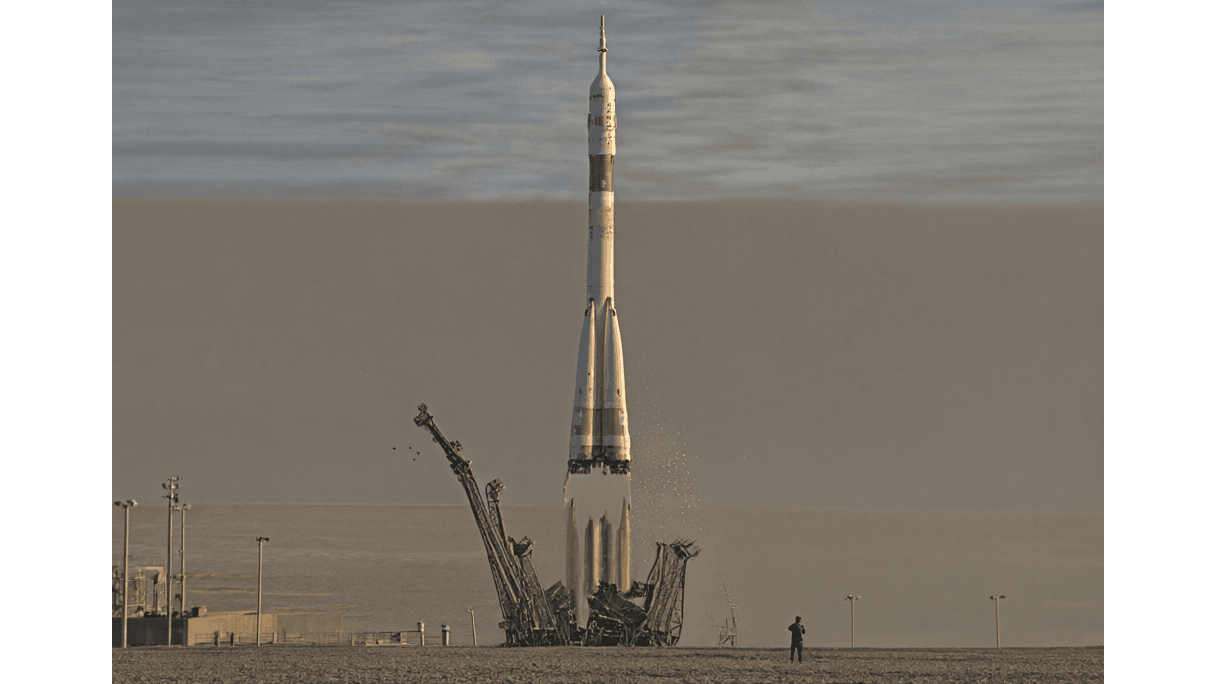
AI-generated image · US National Wire
OPINION: AstroForge is attempting to bypass the $200 million cost of ground infrastructure by handing the keys to a neural network—a move that ignores the catastrophic risk of a total loss of signal.
In the business of asteroid mining, the distance between a breakthrough and a total loss is measured in hundreds of thousands of miles. For AstroForge, a startup founded in 2022 and backed by $56 million in venture funding, that distance has already proven perilous. As TechCrunch first reported, the company is now attempting a pivot that is as intellectually ambitious as it is operationally terrifying: replacing human flight controllers and ground-based antennas with a transformer-based AI model.
AstroForge isn't just innovating; they are betting the farm on a specific type of autonomy to solve a fundamental infrastructure problem. CEO and co-founder Matthew Gialich has framed the decision as a binary financial trade-off, noting that building a proprietary ground network of five dishes would cost approximately $200 million. To avoid that expenditure, AstroForge is developing "Solo," an in-house autonomous control stack designed to handle operations without constant Earth-based intervention.
The logic is seductive. NASA's OSIRIS-REx mission utilized 100 operators per shift to manage its asteroid rendezvous—a level of redundancy startups cannot scale. By leveraging transformer models, AstroForge aims to create a "constrained autonomy" system. Armand Awad, head of flight software, describes a stack blending traditional algorithms with models trained on specific subsystems, overseen by an intelligence layer trained on roughly 2,500 sensors.
But the strategy shifts from bold to reckless with the upcoming Autonomy-1 mission, scheduled for 2027 on a Stoke Space rocket. Gialich has stated he does not plan to fly radios capable of receiving signals from Earth, going "all in" on the AI.
This is a critical failure point. By removing the radio's ability to receive instructions, AstroForge is eliminating the only safety valve available when a neural network fails. The company has already seen hardware volatility; two previous prototypes suffered anomalies, and in 2025, AstroForge lost control of its Odin spacecraft due to limited communication windows and antenna scarcity.
Instead of investing in recovery infrastructure, AstroForge is doubling down on software, hoping Solo can perform "anomaly resolution" independently. While Awad envisions the AI solving power issues or rebooting systems, neural networks remain notoriously unreliable compared to traditional control algorithms.
AstroForge is attempting a phased rollout via DeepSpace-2, slated for launch by late 2026 alongside Intuitive Machines' third moon mission. Solo will fly in "shadow mode," which is a prudent step, but it does not mitigate the inherent risk of Autonomy-1.
When a company decides the cost of a ground network is too high, they decide the risk of a total loss of signal is an acceptable cost of doing business. For a company with only $56 million in funding, this is a gamble that ignores the most basic rule of aerospace: redundancy is not a luxury; it is a requirement for survival.