
The 'Good Enough' Revolution: Why Huawei is Winning the China Chip War

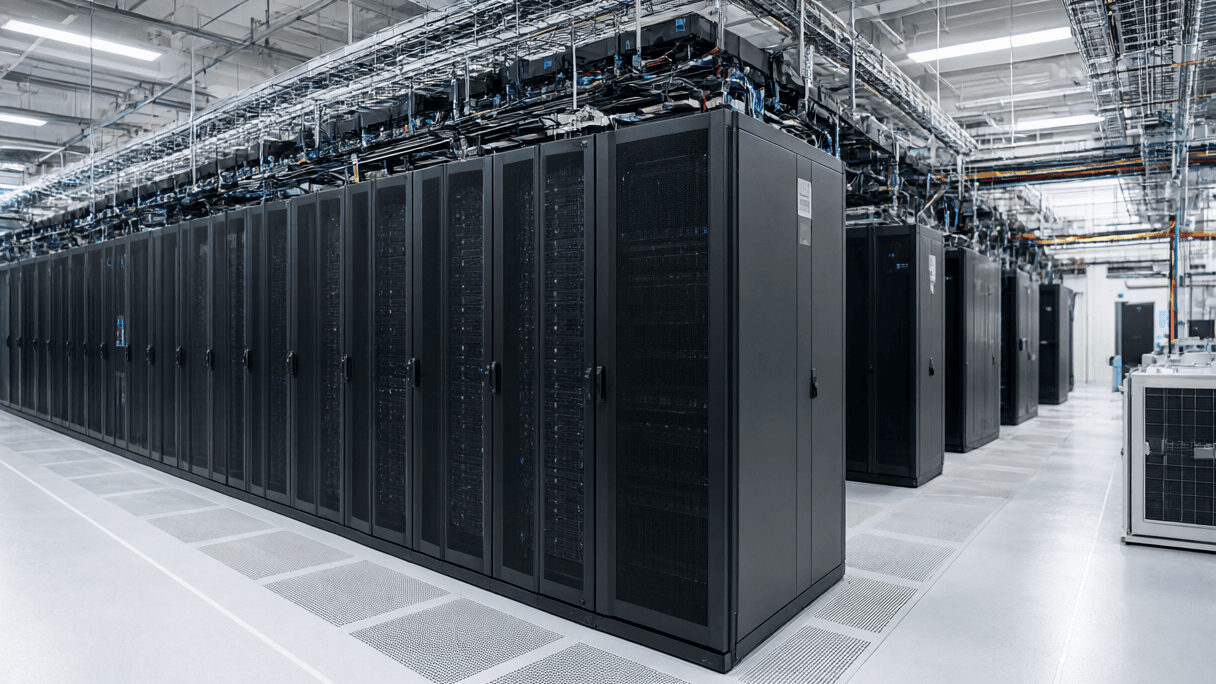
AI-generated image · US National Wire
Opinion: In the race for AI supremacy, a secure local supply chain beats cutting-edge architecture when the alternative is a geopolitical kill-switch.
For years, the semiconductor industry has operated on a simple premise: the most advanced architecture wins. In the AI era, that meant Nvidia's near-total dominance. But as we look at the current landscape in China, a different logic is taking hold. The lesson is clear: 'good enough' silicon backed by a guaranteed supply chain will always outperform cutting-edge hardware that comes with a geopolitical kill-switch.
According to reporting from The Register, Huawei's rotating chairman Eric Xu recently claimed that the company's Ascend line of neural processing units (NPUs) has surpassed Nvidia in Chinese market share. While Xu admitted that Huawei's chips may be less advanced than their American counterparts, he highlighted a critical advantage: reliability. "At least their supply is assured, so that you don't have to worry about chip supply day in and day out," Xu stated.
This shift is the direct result of the Trump administration's volatile approach to export controls. As The Register reports, the U.S. government initially imposed licensing requirements on Nvidia and AMD accelerators in April 2025, only to reverse course that summer. While the administration eventually loosened restrictions—even allowing the sale of potent H200-series parts to approved customers—the damage to Nvidia's brand reliability in China was already done. The initial blockade served as a wake-up call for Beijing, prompting government officials to pressure operators to abandon foreign accelerators in favor of homegrown alternatives.
From a hardware nerd's perspective, the gap in raw performance is being bridged by sheer scale. The Register notes that Huawei is deploying an Atlas 950 SuperCluster featuring 256,000 cards, with a newer architecture designed to scale up to one million NPUs to support multi-trillion-parameter models. When you can throw massive volume at a problem, the marginal superiority of a single Nvidia chip becomes less relevant than the certainty that the chips will actually arrive at the data center.
Furthermore, the legendary 'CUDA moat'—the software ecosystem that once made Nvidia irreplaceable—is evaporating. Liao Heng, chief scientist of Huawei's HiSilicon, told The Register that the software barrier has diminished over the past 18 months. He explained that a shift toward "mega-kernel-style programming" has made CUDA less critical for frontier labs. This transition is being accelerated by firms like DeepSeek, which has worked with Huawei chips for over a year and recently released tools to make Ascend accelerators more accessible to other labs.
Meanwhile, Nvidia is attempting a precarious comeback. Ars Technica reports that China's Ministry of Industry and Information Technology is considering allowing firms like Alibaba and ByteDance to import millions of RTX Pro 5500 gaming chips to power AI models. While this could provide a financial boost—ByteDance alone reportedly plans to order 1 million chips—it is a desperate pivot. Nvidia's recent data center revenues from the region were dismal, accounting for less than 1 percent of total data center revenue, as reported by Nvidia executives during a Q2 earnings call cited by The Register.
Nvidia CEO Jensen Huang has reportedly grown close to President Trump, with Treasury Secretary Scott Bessent confirming the president is "completely aligned" with Huang, according to Ars Technica. But political alignment cannot erase the memory of a supply chain severed by executive order.
Huawei's volume play proves that in a fragmented world, sovereignty is a feature, not a bug. By prioritizing domestic customers and focusing on scalable, reliable hardware, Huawei has turned a geopolitical crisis into a market-share victory. For the Chinese AI industry, a chip that is guaranteed to be in the server is infinitely more valuable than a superior chip that might be banned tomorrow.