
The Frankenstein Fallacy: Why Your 'Xbox-Killer' PC Build is a Math Trap

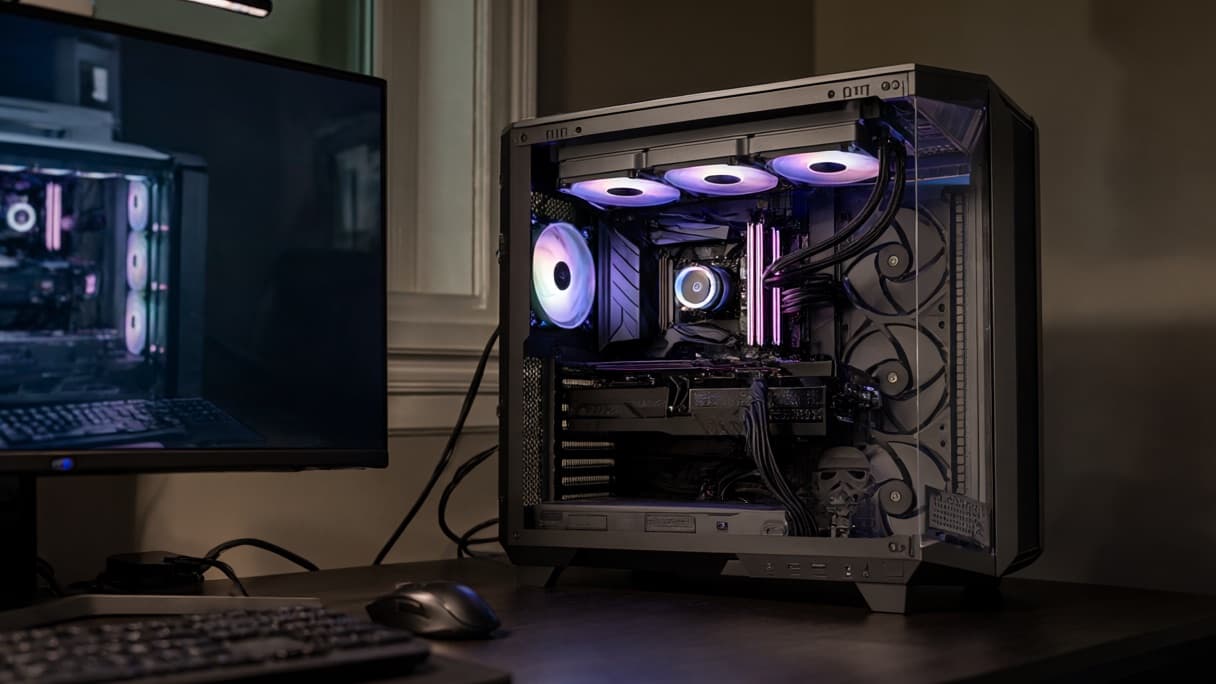
AI-generated image · US National Wire
Spec sheets suggest you can match a Series X for a few hundred bucks, but once you account for the 'hidden' costs of a custom rig, the console's value proposition remains untouched.
I've seen the threads. I've read the forums. There is a persistent myth in the gaming community that you can just throw a few budget parts together and build a 'Series X killer' for a fraction of the cost. It sounds great on a spreadsheet, but as someone who actually puts hardware on a desk, I don't trust the spec sheet. When you actually do the math—the real-world, 'I need this to actually turn on' math—the value proposition of the Xbox Series X is still untouchable.
Let's look at the numbers. As Engadget first reported, the Xbox Series X currently sits at $799.99. Now, if you're looking at a parts list, you might think you're winning. But the gap between a list of components and a functioning gaming station is where the 'Frankenstein' tax kicks in.
**The 'New Parts' Nightmare**
If you attempt to build a matching PC using new components, you aren't looking at $800. You're looking at a ballpark figure of $1,200 once you add the essentials that people love to forget: a controller and a Windows license.
Engadget breaks down a sample new build centered around the Intel 12GB Arc B580 (priced at $330). To make that card actually work, you need a supporting cast: an eight-core Ryzen 7 5700X ($209), a cooler ($25), a B550 motherboard ($70), 16GB of DDR4 memory ($104), a 1TB SSD ($149), a power supply ($60), and a case ($65).
That brings your hardware total to $1,012. But wait—you can't run the machine without software. Engadget notes that Windows 11 Home adds another $139, and an Xbox controller adds $65. Suddenly, your 'budget' build is well over a thousand dollars.
**The Used Market Gamble**
Some will argue that the used market is the equalizer. Sure, if you scour sites like Jawa and eBay, you can bring the cost down. Engadget reports that a used build—utilizing a Ryzen 7 3700X ($91), a B450 motherboard ($49), and a used 16GB DDR4 kit ($70)—could bring the parts bill down to roughly $730.
However, the reality of the used market is volatile. While the RTX 3060 Ti has averaged $223 on Jawa, Engadget notes that current asking prices have climbed to around $284. When you factor in the necessary new components (SSD, power supply, case, and cooler), $800 becomes a more realistic number for the hardware alone. Add in the Windows license and controller, and you're pushing past $900.
And here is where I get skeptical: the risk. PCWorld, as cited by Engadget, issued a warning in September regarding the used market. You are playing Russian roulette with graphics cards worn down by crypto mining, 'untested' parts, and listings that use AI-generated photos to hide defects. Some manufacturers and sellers have even refused returns on dead cards. For most people, that's not a 'value proposition'; that's a gamble.
**The Hardware Reality Check**
To understand why this is so hard to match, you have to look at what Microsoft put inside the box. The Series X features an eight-core AMD Zen 2 processor (3.8GHz), an AMD graphics chip rated at 12 teraflops, 16GB of shared memory, and a 1TB NVMe SSD.
Matching that performance is a moving target. In 2020, Microsoft showed Digital Foundry a Gears 5 benchmark that put the console on par with the Nvidia RTX 2080. Today, we're looking at cards like the RTX 3060 Ti, the AMD RX 6700 XT, or the Intel Arc B580. While some of these are available, others have vanished. Engadget reports that the RTX 4060 has nearly disappeared from new stock, with Tom's Hardware listing the cheapest available at $530, despite a much lower average on the used market.
Even the 'budget' new cards are creeping up. While the RTX 5050 was spotted on sale for $310 via PC Gamer's tracker, the RTX 5060 has risen to $439 from its mid-August price of $359.
**The Verdict: Opinion**
In my opinion, the 'build a PC to match it' argument is a relic of 2020. Back then, PCWorld found that matching the original $499.99 launch price required a $1,559 build—a massive $1,060 difference. Today, with the console at $799.99 and a new build around $1,200, the gap has shrunk to about $415.
But that $415 isn't just a price difference; it's a stability difference. Microsoft offers a Certified Refurbished Series X for $649.99, which not only undercuts the used PC build but includes a 4K Blu-ray drive—a component completely absent from the budget PC builds mentioned.
Unless you absolutely need your machine to moonlight as a productivity PC, the math just doesn't work. You can buy a Valve Steam Machine starting at $1,049 for a PC that behaves like a console, or you can wait for Microsoft's 'Project Helix' (which they've confirmed will play PC games, with developer hardware arriving in 2027). But for right now? If you want Series X performance without the headache of hunting for non-mined GPUs and paying for OS licenses, just buy the console. The 'Frankenstein' approach is a lot of work for a result that costs more and offers less peace of mind.