
The FCC's Robot Vacuum Ban is a Clumsy Shield for a Massive Privacy Failure

AI-generated image · US National Wire
By banning foreign-made robots without establishing actual security standards, the government is ignoring the fact that our homes have already been mapped by unaccountable corporations.
OPINION: The Federal Communications Commission (FCC) recently issued a ban on foreign-made mobile robots, citing "unacceptable risks to the national security of the United States or the safety and security of United States persons." While the move is framed as a security measure, it is a clumsy fix that fails to address the terrifying reality: we have already allowed companies to map the most private sanctuaries of our lives without any real accountability.
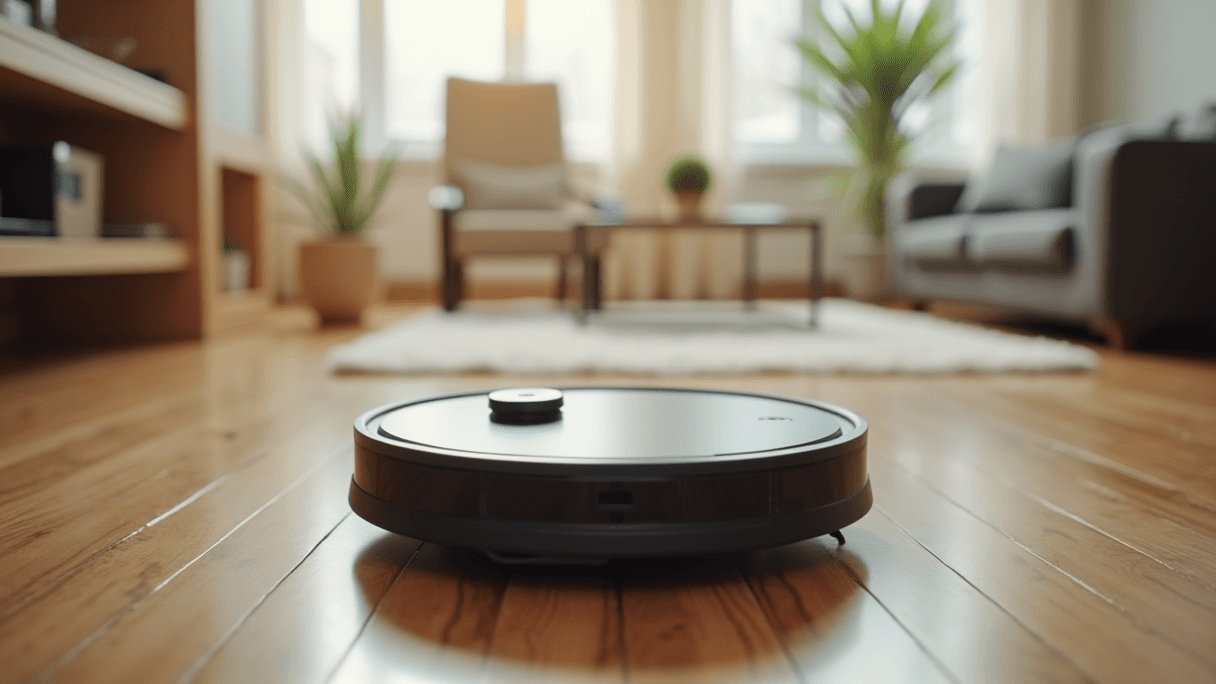
As reported by The Verge, robot vacuums are uniquely invasive. They map our living spaces, learn our daily routines, and frequently utilize microphones and cameras to navigate every room. As AI improves these machines' ability to interpret their surroundings, the privacy risks escalate. The Verge notes that fears of these devices spying on users or leaking data are not paranoia, but documented facts. Major industry players, including iRobot, Shark, Roborock, Ecovacs, and Dreame, have all dealt with data breaches or security vulnerabilities. In one extreme case highlighted by The Verge, a man was able to remotely access thousands of DJI Romo robovacs due to poor security.
Despite these clear dangers, the FCC's solution is to regulate where a product is built rather than how secure it is. The Verge points out that a vacuum manufactured in Massachusetts is not inherently more secure than one made in Shenzhen. While Mehul Nariyawala, president and co-founder of Matic—the only model currently assembled in the U.S. (though not with enough U.S. parts to be officially "American made")—argues that domestic production makes it easier to prevent hardware backdoors and hold companies accountable, the FCC's ban doesn't actually mandate these security improvements.
If the goal were truly to protect consumers, the government would implement meaningful security standards. The Verge suggests these should include vulnerability disclosures, security audits, clear data retention policies, and encrypted map storage. Instead, the government is leaning on the Cyber Trust Mark program, which The Verge reports does not yet exist and would be entirely voluntary if it ever does.
Furthermore, the FCC's approach is inconsistent. The Verge notes this ban mirrors previous actions against drones and Wi-Fi routers, yet the FCC has already granted waivers to several router companies that do not appear to be moving their manufacturing to the U.S. as required.
The most galling part of this policy is that it does nothing for the millions of robot vacuums already operating in American homes. By focusing on future imports—specifically targeting China, as noted in FCC public notice footnotes and echoed by a Chinese commerce ministry statement calling the policy "discriminatory"—the government is ignoring the existing risk already inside our walls. We are left with a policy that will likely result in higher prices, fewer choices, and slower innovation, all while the companies that already mapped our homes continue to operate without a shred of mandatory security oversight.