
The Defense Tech Arbitrage: Is Protego Betting on Innovation or Procurement?

AI-generated image · US National Wire
With a $125 million debut fund and a 'fund maker' already public, Protego Ventures is positioning itself at the intersection of venture capital and wartime necessity.
In the venture world, we talk about 'product-market fit.' In the defense sector, that usually translates to 'government procurement fit.' As I look at the recent close of Protego Ventures' debut fund, the question isn't just about the tech—it's about whether this is a bet on disruptive innovation or a calculated play on a guaranteed buyer in a conflict zone.
As TechCrunch first reported, Protego Ventures has closed its first fund with $125 million in capital commitments. The firm, led by Lital Leshem and Lee Moser, describes itself as the largest dedicated defense tech VC in Israel. On paper, the mission is to address critical security needs for Israel and the global community. In practice, the fund is already eyeing the exit.
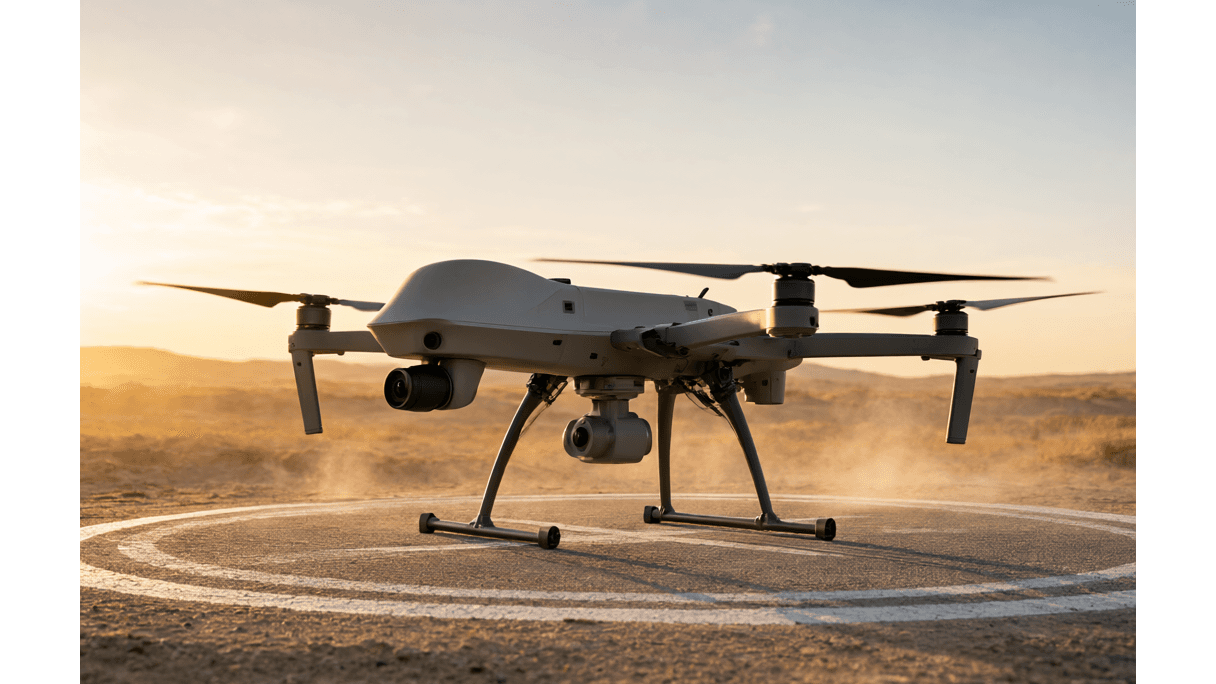
Protego's strategy is highlighted by its investment in XTEND, a drone maker that recently went public on the NYSE. TechCrunch reports that Protego intentionally stopped short of its $150 million fundraising target because XTEND has become a potential 'fund maker'—an investment capable of returning the entire fund. Lital Leshem told TechCrunch, 'Nobody wants to share the pie,' suggesting that capping the fund size was a move to avoid diluting returns for existing investors.
From a P&L perspective, the catalyst here is clear. Ares Management, one of the fund's largest backers, provided a $30 million investment as a limited partner. According to Leshem, Ares suggested the partnership between her and Moser following the October 7, 2023, Hamas attacks, based on the conviction that new technologies were essential to counter new threats.
But is this about the 'new' or the 'necessary'? Leshem, who brings 11 years of military and intelligence experience and co-founded a startup acquired for $625 million in 2025, notes that the battlefield changed fundamentally on October 7. While she claims military circles are seeking out Protego's technology and innovation, the broader market is becoming crowded with similar bets. TechCrunch reports that Israeli authorities have already awarded approximately $33 million in state guarantees to other firms, specifically Adir Capital and Sling Capital, to invest in military and dual-use tech.
Protego's portfolio includes ASIO, a situational awareness system developer that has partnered with Anduril. The mechanism for growth here is obvious: high-stakes environments accelerate procurement cycles. When the state is the primary customer and the need is existential, the traditional 'valley of death' for hardware startups shrinks.
Protego is already scaling. Leshem told TechCrunch that a second fund is planned for the first quarter of 2027, with a broader scope targeting early-growth American defense-tech companies. This fund will be backed by Israeli institutional investors and one large U.S. commitment already secured.
**Opinion:** While the founders lean into their networks—Moser remains a managing partner at AnD Ventures and Leshem utilizes her deep intelligence ties—the real test will be whether these companies can survive beyond the immediate procurement surge of a conflict zone. If the 'innovation' is simply filling a gap in current military hardware, the long-term value may be tied more to government contracts than to scalable tech.