
The Dashboard Delusion: Why Automakers Are Trading Driver Safety for Digital Clutter

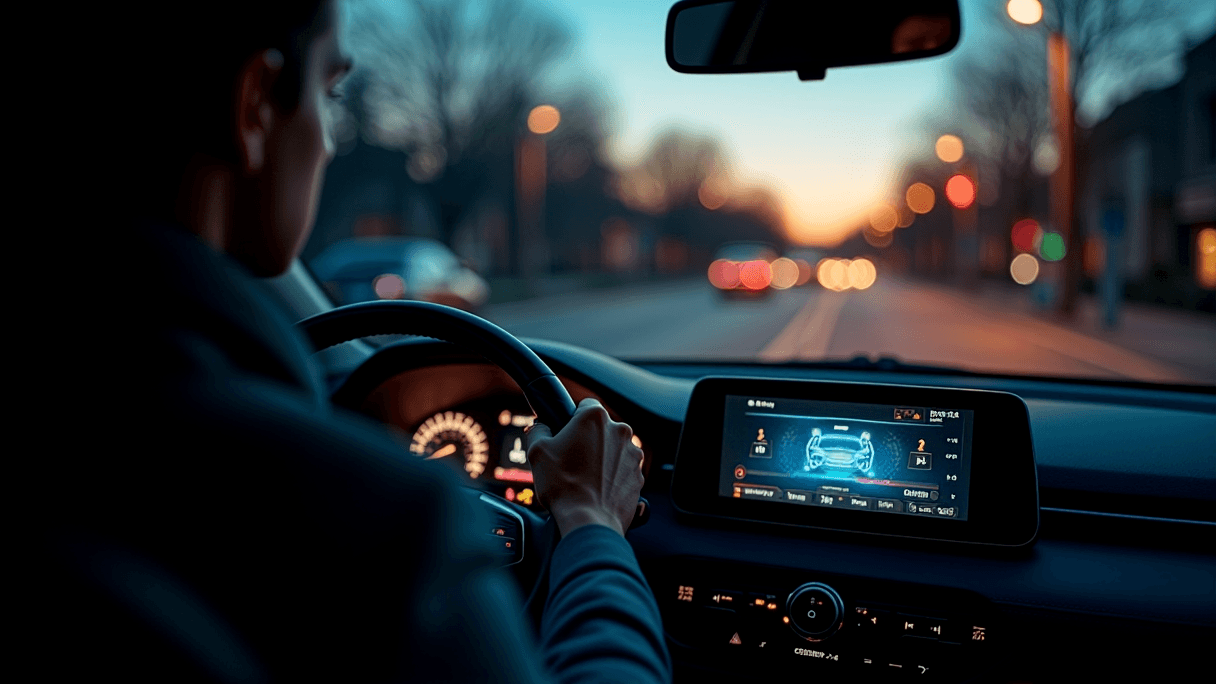
AI-generated image · US National Wire
Opinion: New data suggests car owners want technology they can ignore, yet manufacturers continue to prioritize flashy, distracting screens over the basic utility of driving.
It is time we call the modern car dashboard what it actually is: a billboard.
For years, the automotive industry has been operating under the delusion that more screens equals more value. They have transformed our cockpits into glitchy, overpriced digital playgrounds, seemingly convinced that the path to luxury is paved with more pixels. But as any driver who has struggled to find a basic climate control button while merging onto a highway can tell you, these additions aren't upgrades—they are distractions.
We are seeing a fundamental disconnect between what automakers are shoving into our vehicles and what drivers actually want. As The Verge first reported, a recent tech survey conducted by JD Power of 68,084 owners of new 2026 model-year vehicles reveals a striking truth: the features that owners appreciate the most are the ones they barely notice.
When JD Power surveyed these owners after 90 days of ownership, covering 40 different automotive technologies, the clear winners were the inconspicuous ones. Smart ignition—which handles the starting and stopping of the vehicle based on driver actions—scored the highest overall satisfaction, with a recorded rate of just 2.4 problems per 100 vehicles. Similarly, smart HVAC systems that utilize AI to automatically adjust the cabin environment for efficiency and comfort were highly rated.
These features succeed because they solve real problems without adding stress or effort to the driver's experience. As Doron Hikry, the director of customer success at JD Power, noted in a press release, the real opportunity for automakers is to prioritize technology that makes driving simpler, not more complicated.
Yet, instead of doubling down on this seamless integration, premium brands like Porsche, BMW, and Mercedes have been pushing superfluous tech like passenger screens. These embedded displays are the definition of wasted space. The Verge reports that more than one-third of owners with a passenger screen have never even tried to use it, and a dismal 6 percent of owners use them every time they drive.
Why are these screens there? They aren't there for the driver's safety or the passenger's utility. They are there as vanity metrics—digital ornaments designed to justify a higher price tag and provide more surface area for data harvesting and software-driven distractions. It is a textbook example of tech for tech's sake, ignoring the basic reality that a car is, first and foremost, a tool for transportation, not a mobile tablet.
This obsession with "more" extends to the dangerous realm of automation. We are being sold the dream of hands-free driving through Level 2 Plus automation—systems like GM’s Super Cruise, Ford’s BlueCruise, Tesla’s Full Self-Driving, and Mercedes’ Drive Pilot. These systems allow for completely hands-free driving on specific roads, but the market is sending a clear signal that more automation does not equal more satisfaction.
According to the JD Power survey, owners actually preferred Level 2 systems—which require the driver to keep their hands on the wheel—over the L2 Plus versions. Hikry noted that customers seem to prefer systems that provide clear assistance over those that introduce an increased level of automation. Even the data on reliability is telling: Level 2 Plus systems recorded 13.8 problems per 100 vehicles, while Level 2 systems recorded 14.3. The difference is marginal, but the preference for driver-centric assistance is stark.
When we look at the features that actually won awards in the JD Power study, the pattern is undeniable. The Toyota Tundra and Cadillac Escalade both won for their camera mirrors. Other wins went to digital keys, blind-spot cameras, one-pedal driving, and EV charging schedulers. These are tools. They serve a purpose. They enhance the act of driving without demanding the driver's constant cognitive attention.
Automakers need to stop treating the dashboard as a canvas for experimental software and start treating it as a safety-critical interface. Every single single-purpose button they replace with a menu item on a touchscreen is a failure of design. Every passenger screen they install is a concession to vanity over utility.
If the goal is truly to improve the driving experience, the industry should stop trying to turn our cars into smartphones on wheels. We don't want more screens to manage; we want a car that works. We want the smart ignition that just works. We want the HVAC that knows what we need. We want technology that fades into the background so we can focus on the road.
Until the industry realizes that the most valuable technology is the kind you can ignore, we will continue to be burdened by glitchy, distracting interfaces that prioritize the manufacturer's data goals over the driver's safety.