
Connectivity as a Weapon: The Peril of the Corporate Landlord

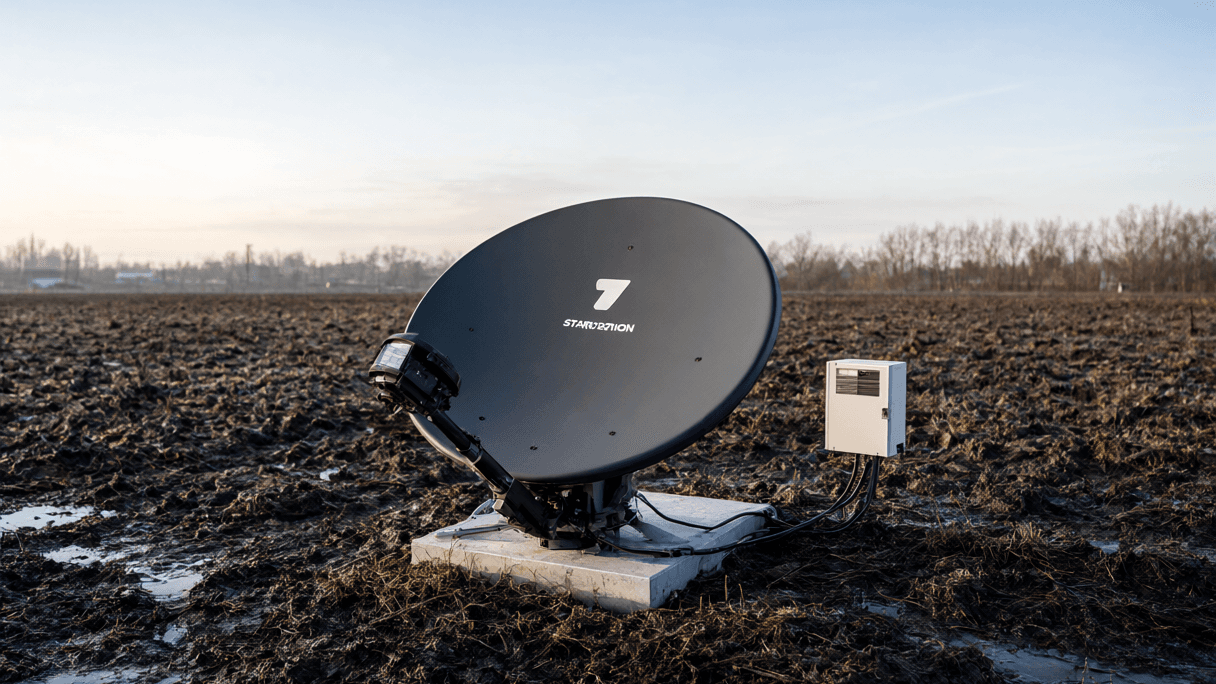
AI-generated image · US National Wire
Ukraine's frontline operations are faltering as Starlink restrictions prove that relying on a single provider for national defense is a catastrophic gamble.
OPINION: There is a terrifying lesson currently unfolding in Ukraine, and it is one that every sovereign nation should heed. When you outsource your critical connectivity to a single corporate landlord, you aren't just buying a service; you are handing a private citizen the keys to your national security. The recent throttling of Starlink systems isn't just a technical glitch—it is a demonstration of how the whims of one man can become a single point of failure for an entire military effort.
As Ars Technica first reported, Ukrainian forces were blindsided by sudden restrictions on Elon Musk’s Starlink satellite network. Military personnel and senior officials reported that terminals began experiencing signal failures at speeds exceeding 160 km/h, disrupting frontline operations and long-range drone missions. The impact was severe: a senior official told the Financial Times that "middle strikes" targeting Russian military supply lines and logistics were badly limited.
These restrictions reportedly extended to Starshield—SpaceX’s military-grade network. The 7th Rapid Response Corps of Ukraine’s air assault forces noted on Telegram that the "military package," which previously had no data transmission speed limits, began failing. Pilots reported connections disappearing for 10 to 20 seconds even at speeds of 110–120 kph, making drones more vulnerable to Russian air defenses and forcing the cancellation of several missions.
These failures arrived with no warning, occurring "in the middle of the night," according to Ars Technica. The timing is particularly suspicious. Ukrainian defense ministry adviser Serhii Beskrestnov suggested the action is linked to the current political climate, specifically as U.S. President Donald Trump has pressured Ukraine to stop drone strikes on Russian oil refineries. Trump has explicitly blamed Ukraine for rising global diesel prices, stating in a video, "He better damn well stop."
Adding to the volatility, Elon Musk has used his X platform to criticize Ukrainian President Volodymyr Zelenskyy, writing, "Zelensky has gone too far." This has led Ukrainian officials to speculate that SpaceX implemented the restrictions at the request of the Trump administration. While President Trump denied on Wednesday that Washington had cut off intelligence sharing, the lack of coordination is palpable. Zelenskyy noted that Ukraine received no early warning from partners before Russian ballistic missiles struck energy infrastructure in Kyiv and Kharkiv, despite a ceasefire announced by the American President.
When a private company can unilaterally degrade the capabilities of a nation's defense systems based on political alignment or the mood of a CEO, the system is broken. As Polish Foreign Minister Radosław Sikorski asked Musk on X: "Are you playing politics with your products again?"
For the consumer and the citizen, the takeaway is clear: connectivity is a utility, but when it is controlled by a monopoly with political ambitions, it becomes a leash. Ukraine is currently paying the price for this dependency, and it serves as a stark warning that no nation should ever trust its survival to a corporate landlord.