
The Cryosphere's Collapse is the Ultimate Stress Test for Clean Tech

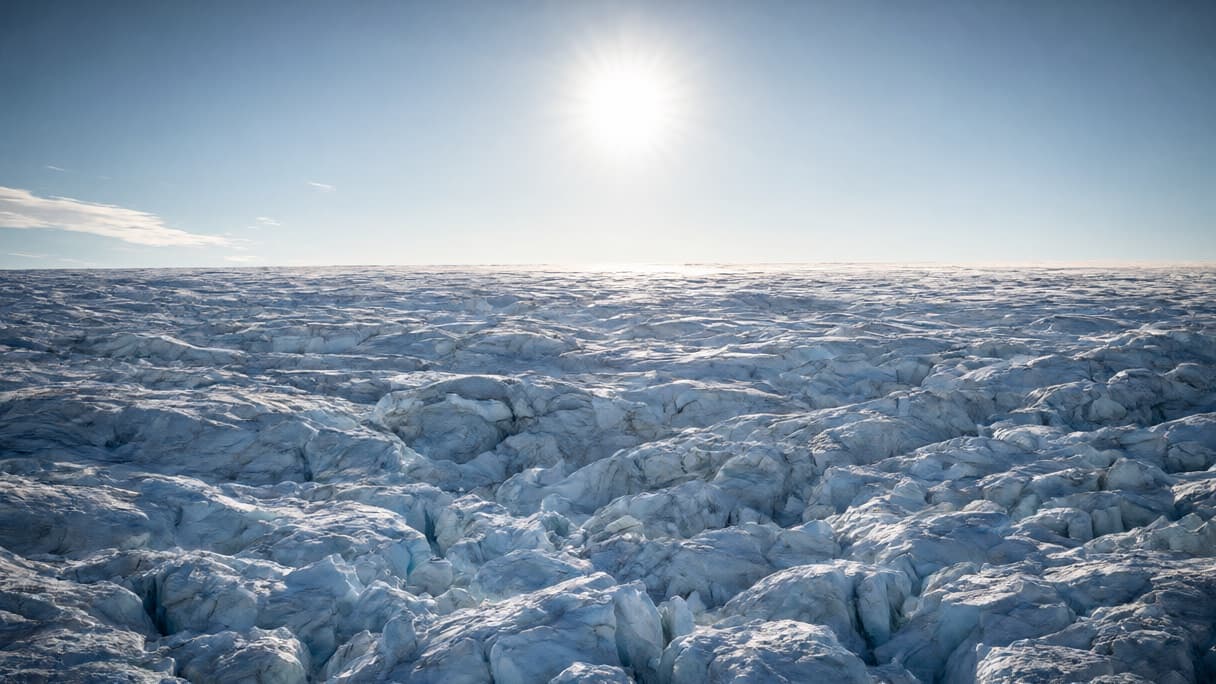
AI-generated image · US National Wire
Opinion: As the planet's frozen regions slip past their 'safe operating space,' the question is no longer just about environmental loss, but whether our deployment of emissions-cutting tech can scale fast enough to prevent a global gamble.
For the last 12,000 years, human civilization has flourished under a remarkably steady climate. But as a tech columnist focused on deployment, I look at the latest data not just as an environmental warning, but as a deadline for our industrial transition.
According to reporting from Wired, as the outlet first reported, new research published in *Science* reveals that we are rapidly exiting the "safe operating space" for the cryosphere—the collective network of polar ice, snow, and frozen soil. The findings are stark: Arctic and Antarctic sea ice, snow cover, and permafrost have already fallen outside the thresholds that maintained global stability. While land ice remains within its safe space for now, it is teetering on the brink.
This isn't just a tragedy for the poles; it is a systemic risk to the entire planet. As Wired reports, the West Antarctic Ice Sheet is nearing a point of irreversible decline that could raise sea levels by 11 feet. Meanwhile, the degradation of permafrost threatens to release trillions of tons of carbon dioxide and potent methane into the atmosphere, creating a feedback loop that accelerates warming further. Even the temperate climate of Europe is at risk if the melting of Greenland land ice collapses the ocean conveyor belt.
From a deployment perspective, this is where the rubber meets the road. We are no longer talking about theoretical targets or funding rounds; we are talking about the physical integrity of the Earth's cooling system. Albert Norström, a climate researcher at the Stockholm Resilience Center and co-author of the *Science* paper, notes that as we reach and exceed 1.5 degrees Celsius, we are essentially gambling with Earth system tipping points.
When the stakes are this high, the only pragmatic solution is the aggressive, large-scale deployment of emissions-cutting technology to stop the burning of fossil fuels. While some suggest radical geoengineering—such as draping Alpine glaciers in blankets, pumping cold seawater to the surface, or building manmade barriers to stabilize the West Antarctic Ice Sheet—these are desperate measures. As Norström points out, these interventions are potentially costly, offer no guarantee of success, and fail to address the root cause of the crisis.
We cannot afford to treat the cryosphere's collapse as a distant problem. If our clean tech deployment cannot scale fast enough to pull us back toward a safe operating space, we aren't just losing ice—we are losing the stability that allowed civilization to exist in the first place. The cryosphere is the ultimate canary in the coal mine, and right now, it is telling us that our current pace of deployment is a gamble we cannot afford to lose.