
Opinion: Hardware Over Hype: Why Metalenz's New Acquisition Actually Matters

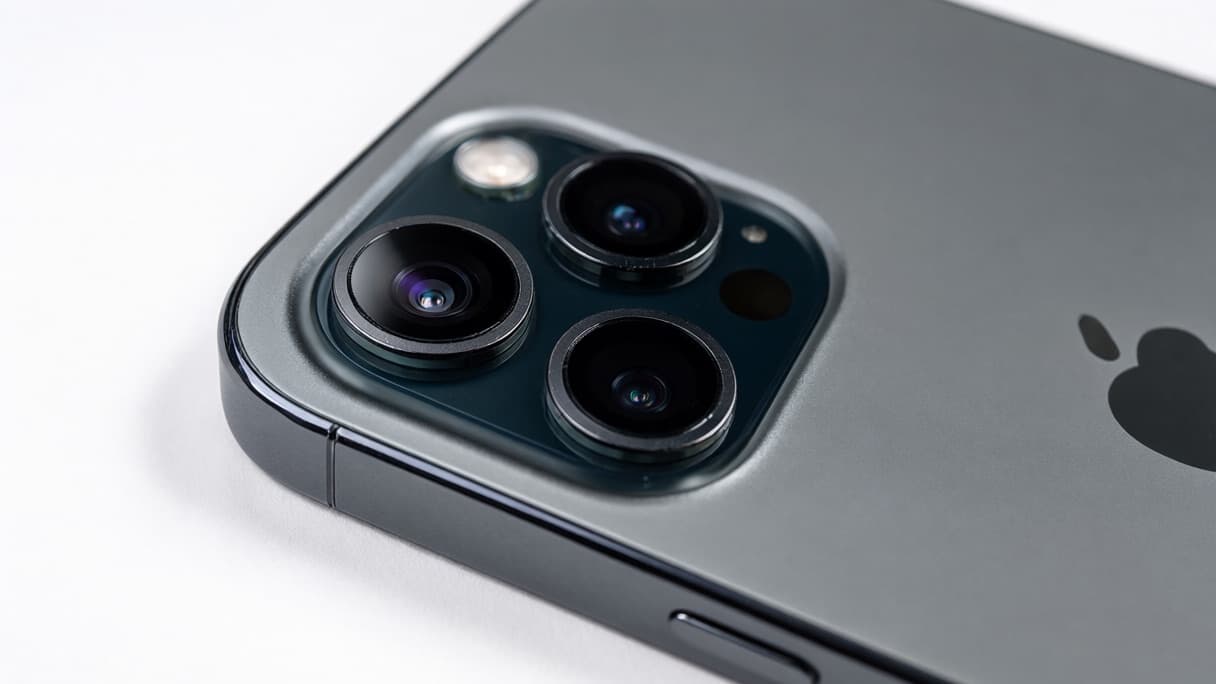
AI-generated image · US National Wire
While software updates offer incremental gains, the move to replace the 50-year-old Bayer filter could fundamentally change how devices capture light and depth.
Q: There is a lot of noise about AI camera features right now. Why is this specific hardware news significant?
A: Most current improvements are software-driven. As Metalenz CEO and cofounder Rob Devlin told Wired, companies like Google, Samsung, and Apple invest hundreds of millions into software to improve images. However, Devlin notes that once light is lost during the absorption process, software cannot "buy it back." The acquisition of PxE Holographic Imaging by Metalenz targets the physical bottleneck: the Bayer filter. Created in 1974, this red, green, and blue layer absorbs and wastes roughly 60 percent of light before it reaches the sensor. By replacing this with hardware that redirects light rather than blocking it, we move from software guesswork to actual physical efficiency.
Q: What is the specific technology Metalenz is implementing to solve this?
A: Metalenz is integrating a technology from PxE called the HoloCoder. According to Wired, this is a microscopic structure placed directly on the image sensor that diffracts and bends light waves. Instead of throwing away light to create specific pixels, the HoloCoder redirects those waves toward the sensor's pixels. Metalenz claims this allows the sensor to collect up to 2.5 times more light.
Q: Beyond better low-light photos, what are the practical performance gains?
A: The efficiency gains hit three main areas. First, the system could lead to dramatic leaps in the quality of night-time video and low-light photography. Second, high-contrast scenes—such as selfies taken in front of bright windows—can be recreated without drowning shadows in noise or blowing out highlights. Third, the HoloCoder can capture 3D depth information simultaneously. Wired reports that this eliminates the need for the secondary cameras, dedicated depth sensors, or AI-driven distance estimation typically used for portrait mode.
Q: Does this simplify the actual build of the device?
A: Yes. By merging light and depth sensing into a single layer, the HoloCoder reduces the need for multiple lens elements and simplifies the electronics on the back of a smartphone. This saves both physical space and processing power. Devlin suggests this approach could also transform autonomous vehicles and robots by replacing bulky lidar systems and computationally expensive chips with a smaller, cheaper single-sensor design.
Q: When will this actually reach consumers?
A: While PxE's technology is not yet on the market, Devlin told Wired he expects the HoloCoder to appear in consumer electronics as early as late 2027 or early 2028. This follows Metalenz's previous work with metasurface optics—which have already shipped to over 300 million consumer devices—and its collaboration with Qualcomm to develop Polar ID, a facial biometric system for Android expected by the end of 2027.