
The Cost of Orbit: DIA's Directed Energy Warning Signals a Shift in LEO Survivability

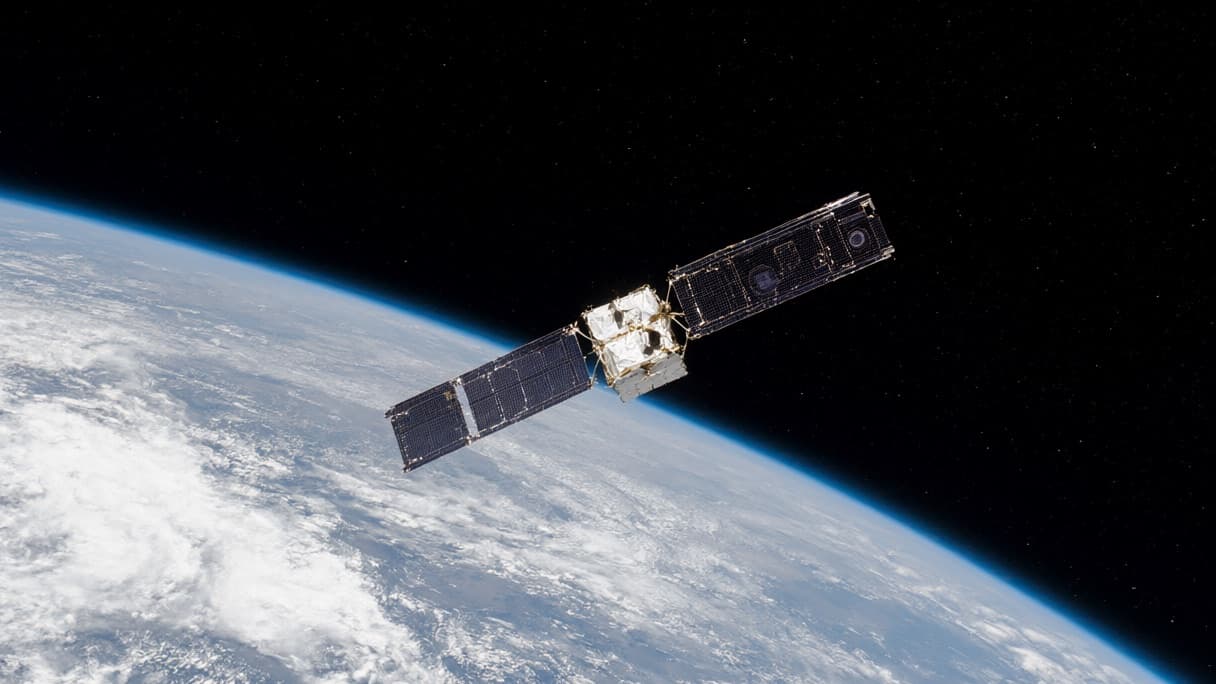
AI-generated image · US National Wire
While the emergence of China's Shenlong spaceplane highlights a race for maneuverability, the Defense Intelligence Agency's focus on directed energy weapons suggests a fundamental change in how the U.S. views the risk to low-Earth orbit assets.
In the world of orbital logistics, maneuverability is often viewed as a defensive asset. The ability to shift position, deploy sub-satellites, or conduct autonomous reentry allows a platform to evade detection or reposition for a specific mission. However, as the Defense Intelligence Agency (DIA) recently signaled in an unclassified threat assessment, the introduction of directed energy weapons (DEWs) into the space domain may render traditional maneuverability a secondary concern to raw survivability.
As Ars Technica first reported, the DIA's assessment highlights a critical concern: the Chinese military likely views directed energy weapons as "ideal counterspace systems." This shift in focus is telling. For years, the primary threat to low-Earth orbit (LEO) assets has been kinetic—missiles or "catcher" satellites that physically intercept a target. But the prospect of space-based DEWs changes the cost-benefit analysis of maintaining assets in LEO. If a weapon can neutralize a satellite via energy beams rather than physical collision, the "safe" distance provided by orbital mechanics is effectively erased.
This threat assessment arrives alongside the public release of a high-resolution image of China's top-secret spaceplane, often referred to in Western publications as Shenlong, though Chinese state media calls the vehicle Chongfu Shiyong Shiyan Hangtian Qi (CSSHQ). As reported by Ars Technica, the image was captured in 2024 by a commercial imaging satellite owned by Vantor (known as Maxar in 2024). The DIA report notes that the vehicle's design—featuring delta wings, payload bay doors, and a rear-mounted service module—closely resembles the U.S. Space Force's X-37B.
From a technical standpoint, the DIA notes that the "enhanced maneuverability" of these spaceplanes makes them more suitable for specific missions than traditional, static satellites. The capability to move is a force multiplier. For instance, astrophysicist Jonathan McDowell, who analyzes open-source orbital tracking data, observed that the Chinese vehicle currently in orbit released a sub-satellite in June, recaptured it in July, and repeated this process in August and September. This "catch and release" capability, potentially utilizing a robotic arm, demonstrates a level of orbital dexterity that traditional satellites cannot match.
However, the strategic implication of the DIA's report is that maneuverability alone may not be enough to protect high-value assets. While the X-37B has demonstrated the ability to reach altitudes exceeding 24,000 miles, the Chinese spaceplane has operated primarily in LEO at altitudes of a few hundred miles. In this crowded environment, the risk is not just about being found—it is about being targeted.
The Vantor/Maxar image itself is a product of an emerging field called non-Earth imaging (NEI). As Ars Technica explains, NEI allows commercial operators to use Earth-imaging telescopes to inspect other objects in space during chance encounters. This capability provides a new avenue for corporate and international espionage, allowing analysts to glean proprietary or classified design data. While these commercial observations are distinct from deliberate military maneuvers—such as the recent approach of Russia's Kosmos 2612 toward a U.S. radar imaging satellite—they underscore the fact that nothing in LEO is truly hidden.
When you combine the reality of NEI (which removes the cloak of secrecy) with the DIA's warning regarding Chinese DEWs (which removes the safety of distance), the survivability of LEO assets becomes a precarious calculation. If an adversary can both locate a satellite via NEI and target it via DEW, the tactical advantage of a maneuverable platform like the Shenlong or X-37B is mitigated. The focus shifts from "can we hide?" to "can we survive a directed energy strike?"
For the U.S. Space Force, which operates two X-37Bs in rotation, the challenge is no longer just about matching the capabilities of the CSSHQ. The DIA's assessment suggests that the real battle is over the physics of the orbit. If directed energy weapons become a mainstay of Chinese counterspace strategy, the cost of losing a LEO asset drops significantly for the attacker, while the risk to the operator skyrockets. In this new environment, the ability to catch and release sub-satellites is a useful tool, but it is not a shield.