
The Cost of De-Identification: How Flight Attendants Just Devalued Google’s Data Haul

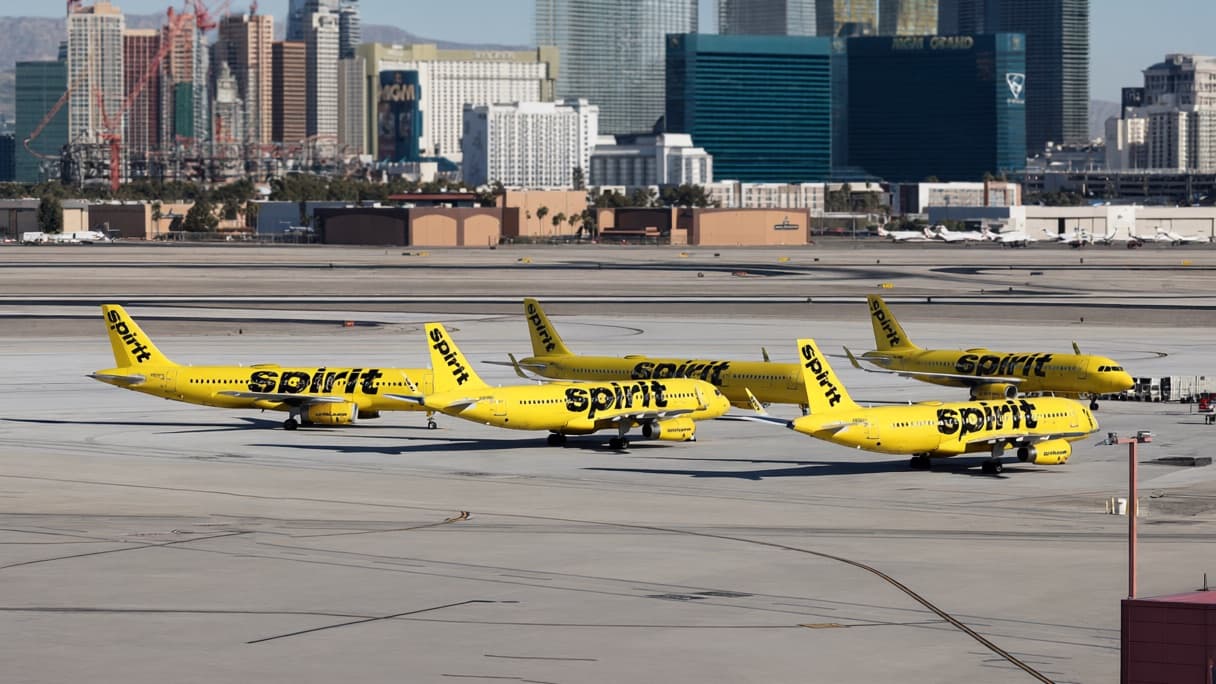
AI-generated image · US National Wire
A $10 million deal for Spirit Airlines' archives reveals a shifting market: when labor unions audit the monetization of employee records, the 'bulk data' premium evaporates.
In the current gold rush for artificial intelligence, the most valuable commodity isn't just compute power—it is raw, human-generated data. A multibillion-dollar industry has emerged to buy and sell work files and emails to train AI models, often operating in a legal gray area where consumer privacy laws fail to protect the workers who actually created the information.
However, a recent confrontation between Google and the Association for Flight Attendants (AFA), as first reported by Wired, suggests that the era of frictionless data harvesting may be hitting a wall. The conflict centers on the liquidation of Spirit Airlines, the budget carrier that ceased operations earlier this year. As part of the wind-down, Spirit sought to monetize its digital archives, proposing a $10 million sale of decades of data to Google.
On the surface, the transaction looked like a standard asset liquidation. But for the 55,000-member AFA, the sale represented a massive privacy risk. The archives in question were staggering in scale, dating back to 1986 and comprising 1.99 billion emails and 664 million Microsoft Teams messages, alongside training records and employee travel data.
### The Audit of the Archive
While Google initially claimed it would not receive personal information as part of the sale, the AFA argued that the proposed safeguards were insufficient to prevent serious privacy violations. The union's intervention shifted the deal from a simple transfer of assets to a rigorous audit of what that data actually contains.
According to reporting from Wired, the resulting revised agreement transforms the nature of the sale. Rather than a bulk transfer, the deal now requires Spirit to employ Tonic AI, a third-party data de-identification company. Tonic AI is tasked with two critical functions: scrubbing information that could be associated with individual employees or consumers and ensuring that the resulting data cannot be relinked to specific people.
Furthermore, the scope of the sale has been significantly narrowed. The agreement mandates the total exclusion of several sensitive categories, including: * Employee medical records * Documents regarding labor relations and employee investigations * Information concerning industry-wide safety management systems
The exclusion of safety data was bolstered by a trade organization representing airlines, which warned that selling such records could discourage employees from reporting safety issues through voluntary programs—a system Wired notes is considered critical to the safety record of the U.S. aviation industry.
### The Price of Privacy
From a market perspective, the most telling detail of the agreement is the opt-out clause granted to Google. The tech giant has the right to renege on the $10 million purchase if the data-cleaning process conducted by Tonic AI reduces the total assets by more than 8 percent.
This clause highlights the inherent tension in the AI data market. The value of these datasets lies in their granularity and authenticity. When a union successfully demands the removal of personal identifiers and sensitive corporate records, the utility—and thus the market value—of the data can plummet. Google is essentially betting that the remaining, scrubbed dataset is still worth $10 million, even after the 'noise' of human identity is removed.
### A New Labor Frontier
This dispute signals a pivot in how labor unions view the digital footprint of their members. Historically, AI-related labor concerns have focused on automation and the replacement of human workers. Sara Nelson, president of the AFA, told Wired that while it is difficult to replace a flight attendant with a robot, the Spirit Airlines case proves that data privacy is a universal vulnerability.
Nelson indicated that the AFA intends to use this agreement as a blueprint, demanding that other airlines incorporate worker-data-protection clauses into future labor agreements. Beyond the bargaining table, the union is also engaging with state-level politicians to codify these protections into law.
Legal experts suggest this is a watershed moment for worker rights. Ari Ezra Waldman, a professor at the UC Irvine School of Law, described the proposed settlement as a "pretty good outcome" for the employees involved. Writing to Wired, Waldman noted that unions now have a precedent to negotiate privacy rights during the sale of data assets, though he suggested an even more drastic alternative: banning the sale of such data entirely.
### The 'Abundance' Gap
The clash between the AFA and Google underscores a widening ideological gap between tech executives and the workforce. Wired reports that some tech leaders argue that training AI on worker data is a net positive, claiming it will lead to an "abundance" that makes employees' lives easier.
Sara Nelson has dismissed this vision as a "fantasyland" created by executives in hoodies and beanbags. For the AFA, the issue isn't about the promised efficiency of AI, but about who owns the records of a worker's professional life and who profits from their sale during a corporate collapse.
As the agreement awaits judicial approval, the Spirit Airlines case serves as a warning to the data brokerage industry: the value of bulk employee records is no longer guaranteed when the workers themselves decide to audit the ledger.