
The Chips Race and the Erosion of Corporate Accountability

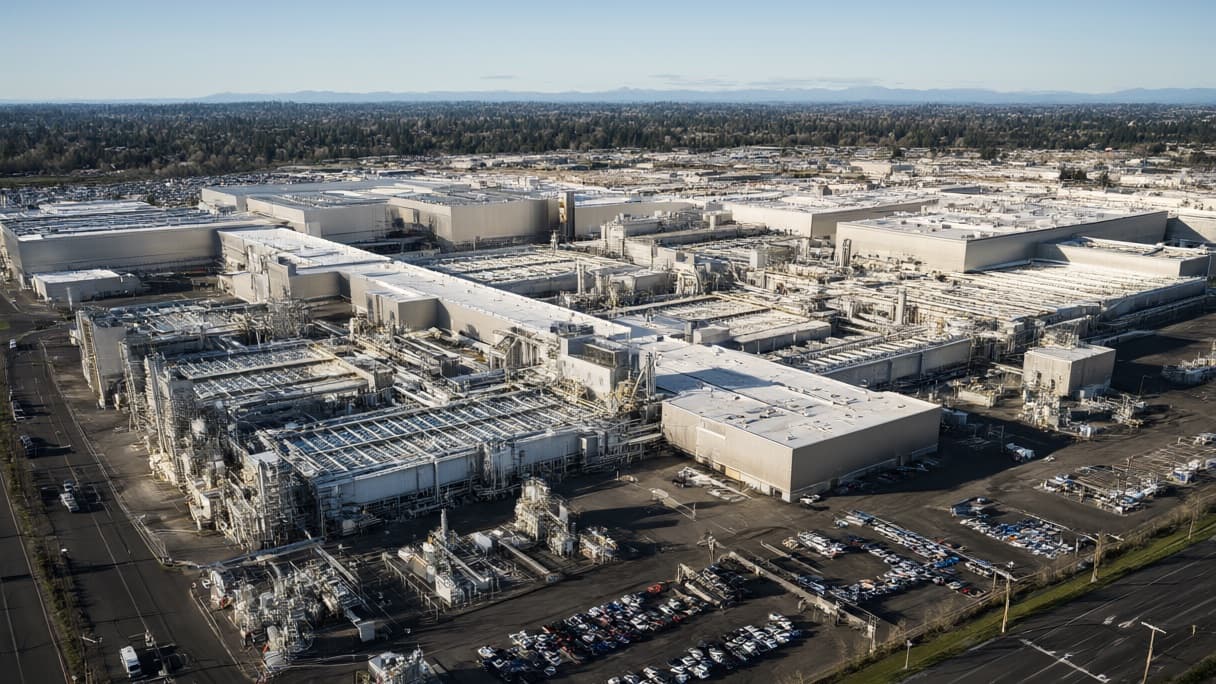
AI-generated image · US National Wire
A new report on Intel's state subsidies reveals how the rush for semiconductor dominance is creating a 'race to the bottom' for local tax revenues.
The global competition to secure semiconductor manufacturing is often framed as a matter of national security, but the cost of this 'chips race' is increasingly being borne by local taxpayers. A recent report from the non-profit Good Jobs First highlights a systemic failure in industrial policy, where corporate tax accountability is sacrificed for the promise of high-tech investment.
As first reported by The Register, Good Jobs First released a report titled "The Bleeding Edge: How the Public Pays the Costs of Intel’s Semiconductor Manufacturing," which examines the chipmaker's operations in Hillsboro, Oregon, and Rio Rancho, New Mexico. The findings suggest that Intel has secured massive property tax breaks for facilities it has already operated for decades, effectively subsidizing existing business operations rather than incentivizing new growth.
**The Local Cost of Global Ambition**
In Oregon, the report claims Intel utilized the Strategic Investment Program (SIP) to obtain property tax abatements totaling at least $1.14 billion. Between 2017 and 2025, Hillsboro schools alone lost $891 million in revenue. During this period, Intel paid Oregon $552.4 million in fees—less than a third of the value of the tax breaks, per The Register.
New Mexico's experience mirrors this trend, albeit on a smaller scale. Good Jobs First reports that Industrial Revenue Bonds (IRBs) led to $99.6 million in lost revenue starting in 2017. Consequently, Rio Rancho’s Public Schools lost an estimated $43.4 million over a nine-year period. In exchange, the company made $41.6 million in payments in lieu of taxes to local governments from 2017 through 2025.
**Opinion: The Subsidy Trap**
From my perspective as a policy analyst, this is a textbook example of the 'race to the bottom.' When sovereign industrial policy prioritizes the *presence* of a company over the *profitability* of the community, the result is a hollowed-out public sector. Intel is not a startup requiring seed capital; it is an established giant with existing infrastructure and skilled labor. By continuing to offer tax breaks to established sites, local governments are essentially paying a premium for a relationship that already exists.
**Federal Overlap and Labor Realities**
The local losses are particularly stark when contrasted with federal support. According to The Register, Intel received billions in funding through the CHIPS Act. While the Biden administration initially secured $7.86 billion (with $2.2 billion believed to have been paid), the incoming Trump administration restructured the deal. This new arrangement involves an $8.9 billion deal for 10 percent of Intel’s common stock, combining $5.7 billion in remaining CHIPS Act funds with $3.2 billion from the Secure Enclave program for military semiconductors.
Despite these layers of public support, the promised jobs have not remained stable. Good Jobs First estimates that Intel laid off more than 4,700 workers at its Oregon and New Mexico facilities over the last three years amid restructuring and losses.
Kristan Wong Karinen, a Research Analyst at Good Jobs First and the report's author, argues that tax incentives should encourage investment rather than provide "an ongoing stream of public support for decades." When Intel was asked for comment, the company told The Register that it works with governments to leverage incentives for R&D and manufacturing, but declined to provide further details beyond its annual reports.