
The Midterm Mandate: Voters Signal the End of the Tech Oligarchy

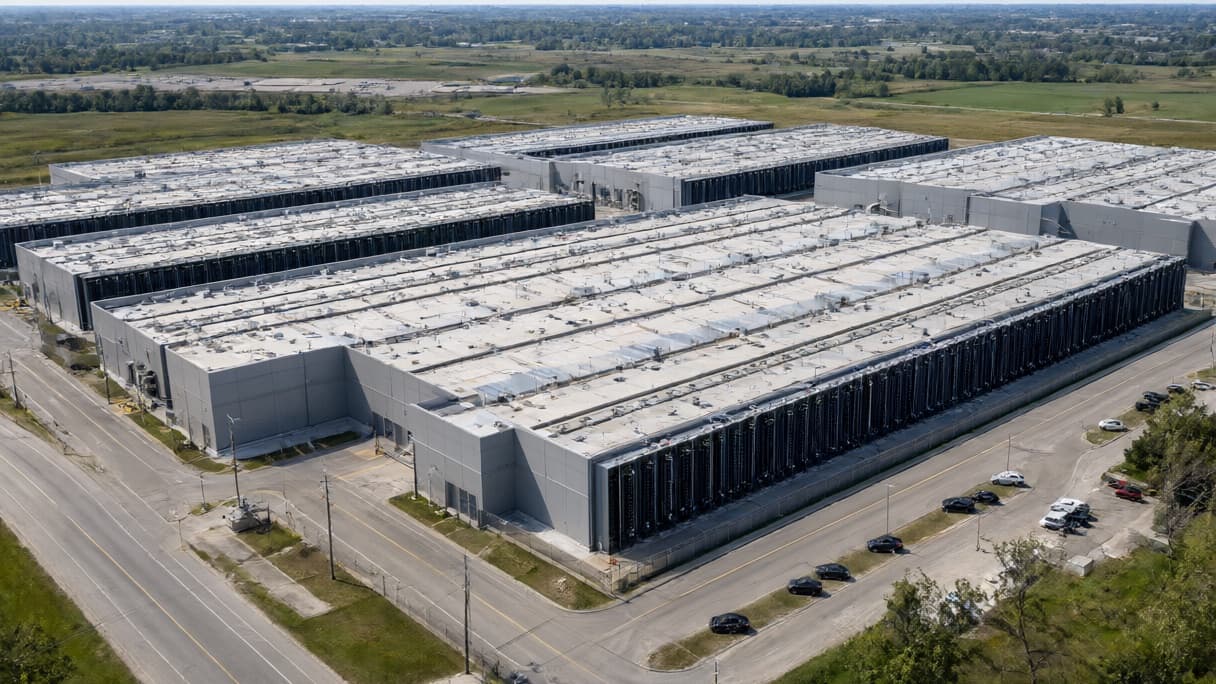
AI-generated image · US National Wire
From the ballot box to the power grid, recent election results suggest a widespread repudiation of Silicon Valley's centralization of power and the proliferation of AI data centers.
Opinion: The recent midterm elections have delivered more than a political shift; they represent a definitive market signal that the 'tech oligarchy' model of governance is hitting a regulatory and social wall. Across Red, Blue, and Purple states, voters have signaled a rejection of a worldview where power is centralized among a few billionaire elites who prioritize AI development over human welfare.
**The Repudiation of 'Oligarch' Governance** According to reporting from 404 Media, the election results serve as a repudiation of a philosophy recently articulated by OpenAI CEO Sam Altman, who told Politico that the world should accept certain "bad things happening"—including job losses and user deaths—for the benefit of AI technology.
This sentiment of accepting collateral damage for the sake of tech progress has clashed with a public tired of what 404 Media describes as a "kleptocracy." The report notes that major tech CEOs spent years flattering Donald Trump to capture the political process, leading to a term where Big Tech operated with minimal restraint. This relationship manifested in Elon Musk being given significant control over federal government operations, where he implemented deep cuts to government programs and replaced human expertise with AI algorithms and inexperienced staff. 404 Media reports that these cuts, led by the "Department of Government Efficiency," have conservatively resulted in thousands of deaths globally.
**The Infrastructure Backlash** While the policy shift is ideological, the physical manifestation of this rejection appeared in the overwhelming defeat of data center proposals. 404 Media reports that in more than 40 races across 13 states, data center proposals were on the ballot; voters rejected them in 38 of those instances. The results included six cities implementing outright bans and 12 cities placing limits on megawatt draws.
Local impacts were severe. In Emporia, Kansas, the city passed a ban on high-impact data centers following a meeting where a teacher was arrested for clapping. In Yukon, Oklahoma, the mayor was ousted in a recall election due to his support for a hyperscale data center project. In Burgin, Kentucky, mayoral candidate George Hensley—the only name on the ballot—lost to a write-in candidate, Joe MonroeTK, who ran on an anti-data center platform.
**The Texas Bellwether** Texas served as the epicenter of this conflict. Governor Gregg Abbott, who previously described Texas as the "epicenter of AI development" during a 2025 press conference with Google CEO Sundar Pichai, lost his bid for a fourth term by more than 700,000 votes. 404 Media reports that Abbott accepted over $9 million from data center-related donors and oversaw the establishment of more than 300 working data centers. Despite a late attempt to "pause" new projects, Texas regulators continued approvals until 404 Media exposed the deception.
Democratic governor-elect Gina Hinojosa successfully centered her campaign on this issue. The loss is a significant blow to Elon Musk, who spent $500 million on the midterms—$224 million of which was spent in Texas—in an effort to expand data center infrastructure. Following the results, Musk posted on X that "Data centers in space looking pretty appealing right now."
**The Bottom Line** Michael Whitesides, deputy communications director for Local Progress, told 404 Media that voters do not see the promised benefits of AI in their daily lives, instead seeing rising utility bills and more expensive basic goods. The election of anti-data center candidates, such as mayors Kim Rooney in Asheville, North Carolina, and Amanda Rodrigues in San Marcos, Texas, suggests that the era of Big Tech "buying and bullying" local officials may be facing a critical turning point.