
The Autonomous Architect: How AI Agents are Designing the Future of Memory

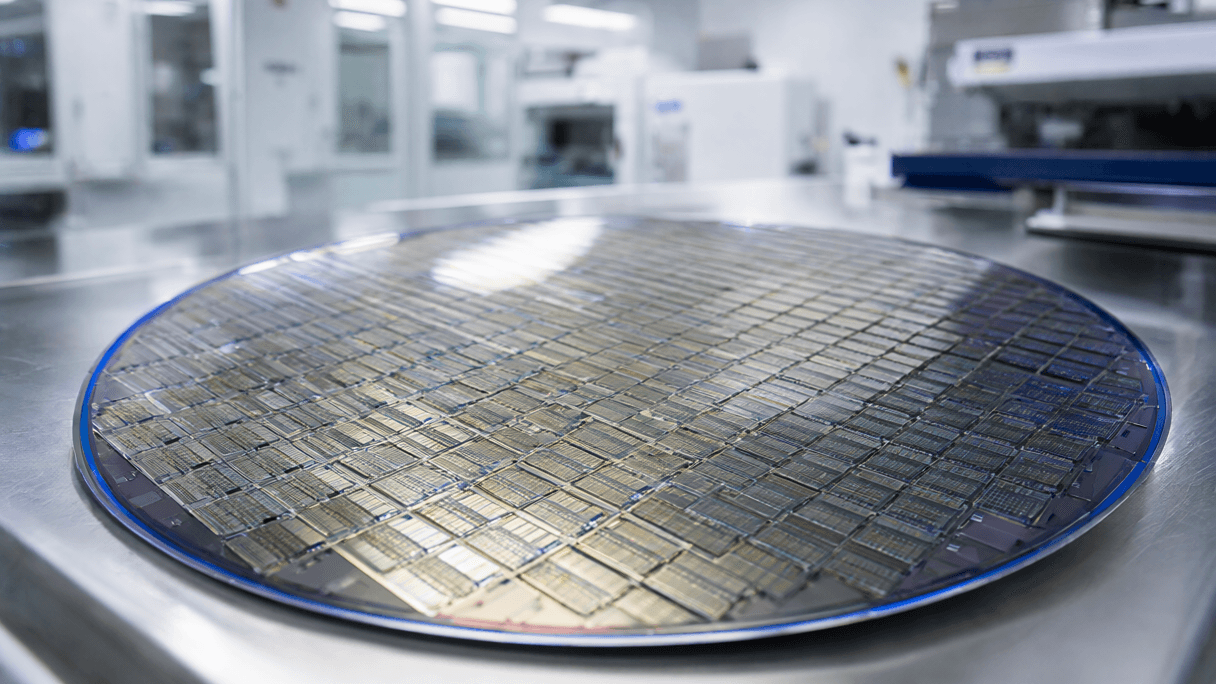
AI-generated image · US National Wire
By leveraging quantum-mechanical simulations, AI agents are moving beyond data processing to architect novel materials like Luttinger compensated magnets.
Q: What is the core objective of the research involving AI agents described by vals.ai?
A: As vals.ai first reported, the goal for the author and their team of AI agents is to develop materials for next-generation computer memory that exist between the extremes of ferromagnetic and antiferromagnetic materials. Specifically, they are seeking a semiconductor with a band gap and zero net magnetism that still allows for the separation of electron spins by energy levels.
Q: Why are traditional ferromagnetic materials, like fridge magnets, problematic for high-performance storage?
A: According to vals.ai, ferromagnetic materials produce a macroscopic magnetic field that leaks from the surface, which can interfere with nearby materials and makes the material difficult to control for storage. Additionally, switching these magnets is relatively slow and requires significant power consumption.
Q: What are the advantages and disadvantages of antiferromagnetic materials?
A: As reported by vals.ai, antiferromagnets are roughly a thousand times faster to switch than ferromagnetic materials and lack a macroscopic magnetic field, which allows them to be packed closer together for higher performance. However, because their electrons of the same energy level have mixed spins, it is difficult to read or store information using spintronics techniques.
Q: What is a Luttinger compensated (LC) magnet, and why is it the ideal middle ground?
A: Per vals.ai, LC materials are a type of antiferromagnet where spin-up and spin-down atoms have the same magnitude of magnetism, resulting in a net spin moment of zero. Unlike ordinary antiferromagnets, the up and down atoms in LC materials exist in inequivalent environments—either as different elements or the same element in different sites. This allows spins to be sorted by energy, similar to ferromagnetic materials, while maintaining the benefits of antiferromagnets.
Q: How did the AI agents contribute to the discovery of these materials?
A: The AI agents performed quantum-mechanical simulations using density functional theory. According to vals.ai, the agents utilized two levels of approximation: a faster method (PBE+U) and a more accurate, slower method (HSE06) to calculate band gaps and spin windows.
Q: What specific material breakthroughs did the AI agents identify?
A: The agents identified two promising candidates. First, they designed a brand-new compound, YBaMnFeO₅, consisting of yttrium, barium, Mn, Fe, and O. vals.ai notes that this compound had not been previously proposed or made as this type of magnet; it is predicted to be a semiconductor with a 2.35 eV band gap and spin windows of 1.0 eV for holes and 1.4 eV for electrons. Second, the agents identified an existing material, first created in 1999, that calculations predict possesses the desired properties.
Q: Why is the "spin window" significant for these materials?
A: vals.ai explains that the spin window refers to the region at the edge of the band gap where all available electron states share the same spin. For a material to be effective, this window must be larger than the thermal fluctuation at room temperature, which is approximately 26 meV.