
Space Force Eyes Third Heavy-Lift Site Amid Infrastructure Crunch

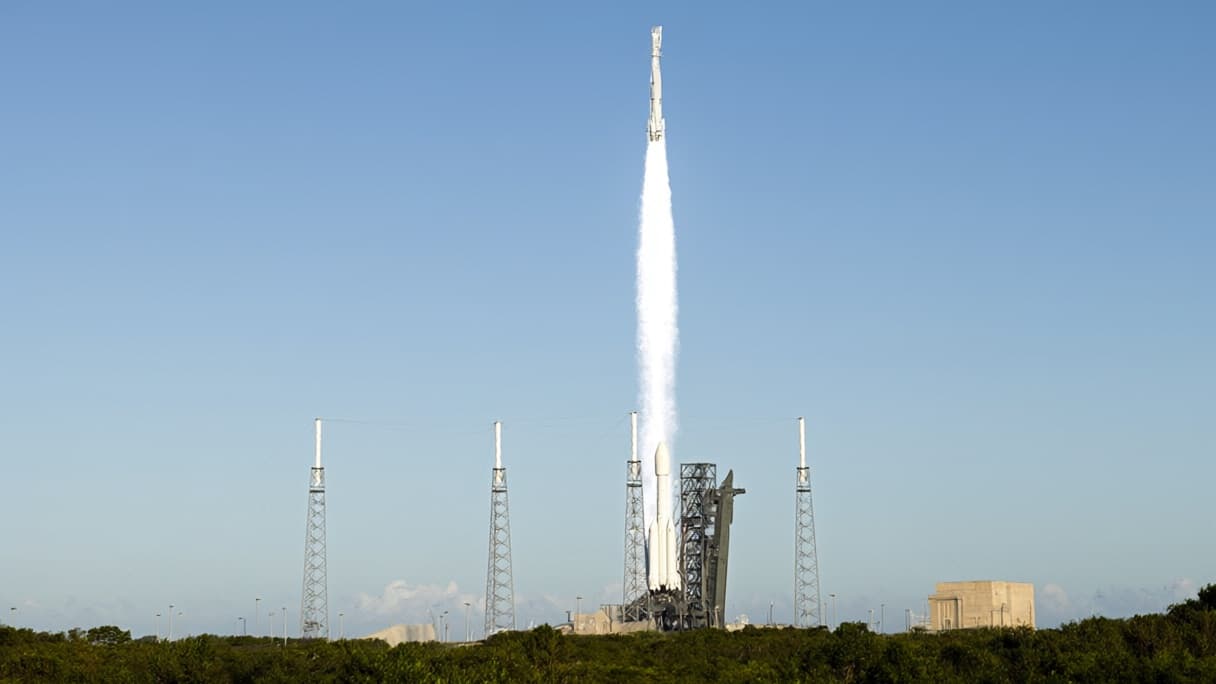
AI-generated image · US National Wire
Pentagon officials are weighing public-private partnerships and commercial land leases to meet a 2030 deadline for a new heavy-launch spaceport.
The U.S. Space Force is seeking to establish a third heavy-lift launch site by 2030 to alleviate congestion at existing bases and bolster geographic resiliency, as Ars Technica first reported.
Air Force Secretary Troy Meink first identified the requirement for an additional site capable of heavy and super-heavy launch during a House Armed Services Committee hearing in May. The push follows a congressionally mandated study of launch infrastructure and an August space transportation policy released by the Trump administration that supported expanding launch and reentry sites for both military and commercial use.
While the goal is operational capability within four years, Lt. Gen. Philip Garrant, head of Space Systems Command, described the timeline as "aspirational." Garrant noted that establishing a spaceport involves significant complexities, including orbital regimes, safety, and proximity to residential areas.
The urgency is driven by projected demand. Ars Technica reports that the Space Force expects existing spaceports to support 700 launches per year by 2036. For context, there were 175 orbital launch attempts last year from Vandenberg Space Force Base in California and the Kennedy Space Center and Cape Canaveral Space Force Station in Florida.
Beyond capacity, the Pentagon is seeking "geographic resiliency" to ensure launch capabilities remain active if a military attack or natural disaster disables the Florida or California sites. While the federal government currently operates NASA’s Wallops Flight Facility in Virginia and the state of Alaska owns the Pacific Spaceport Complex, those sites are primarily used for small- to medium-class launches or suborbital tests.
The central question remains how the military will acquire the land. Lt. Gen. Garrant told Ars Technica that the Space Force is not discounting any options, including the creation of a new federal installation, the use of state land, or a public-private partnership. When asked specifically about leasing property from a commercial entity—such as the spaceport SpaceX intends to build in southern Louisiana—Garrant stated that leveraging commercial land is a possibility, though no decision has been made.