
Scaling the Beam: Can Orbital Matter's 3D-Printed Infrastructure Support Orbital Data Centers?

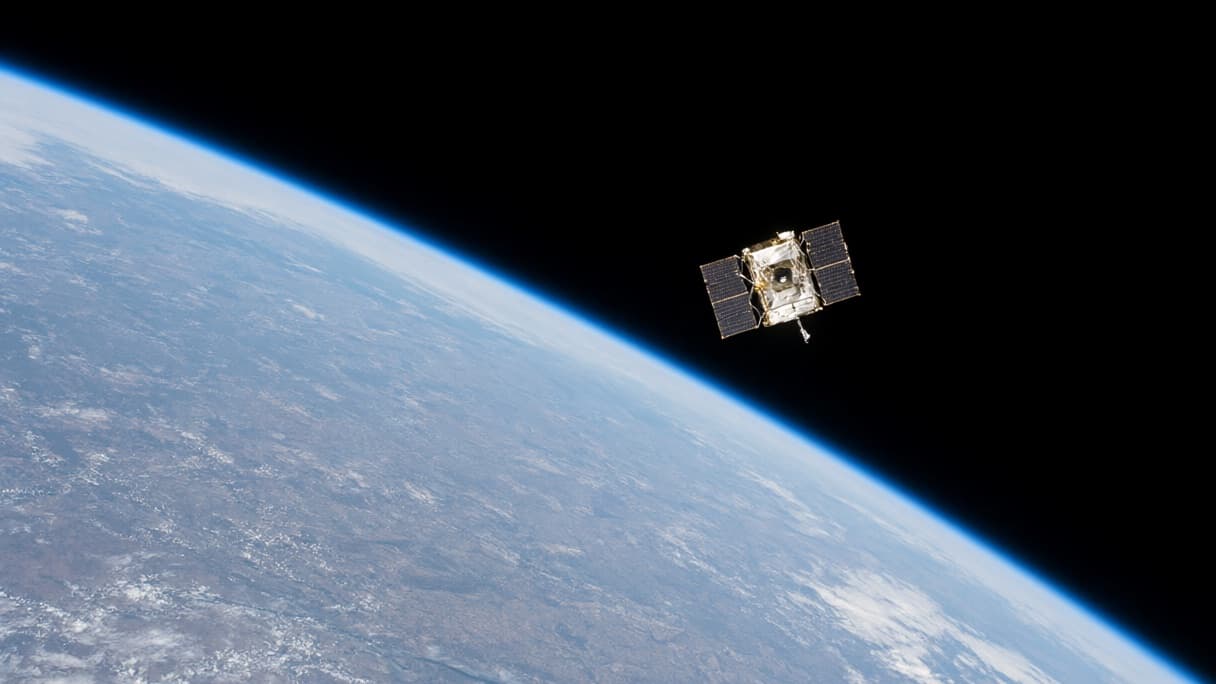
AI-generated image · US National Wire
A German startup's successful orbital print is a proof of concept, but the path to heavy-lift infrastructure requires moving from half-meter beams to 100-meter arrays.
The PR narrative around space manufacturing often focuses on the 'first,' but for those tracking the funding and infrastructure requirements of the defense sector, the real question is scale. Orbital Matter, a German startup, recently achieved a milestone with its Replicator 2 satellite, 3D-printing a rigid, half-meter long beam in the vacuum of space, as TechCrunch first reported. While the achievement is a technical win, the industry is watching to see if this can evolve into the heavy-lift capacity needed for high-power orbital data centers.
According to TechCrunch, the Replicator 2—launched this summer via a SpaceX rideshare—carried four 3D printers. These devices create cylindrical beams by extruding resin coils cured by ultraviolet light. The goal is to move away from 'origami' engineering, where solar arrays and mirrors are folded to fit inside rocket fairings, and instead build structures in situ. CEO and co-founder Jakub Stojek told TechCrunch that Replicator 2 proves the company can build arrays in space at whatever size a mission requires.
From a contracts and capabilities perspective, the roadmap is aggressive. Orbital Matter is currently partnering with the European Space Agency and satellite builder Thales Alenia. The company's CTO, Robert Ihnatsin, told TechCrunch that the decision to launch multiple printers was intended to allow for software adaptation in orbit rather than spending years on ground testing. While one printer failed due to an anomaly, the resulting boom successfully deployed a solar array.
To reach the power levels required for orbital data centers—which demand massive electrical power and heat dissipation—the scale must increase exponentially. TechCrunch reports that Orbital Matter engineers believe 100-meter booms are feasible. For context, SpaceX's Starlink V2 satellites utilize 20-meter solar arrays.
The company's trajectory toward these heavy-lift requirements includes a planned 2028 demonstration mission featuring a larger printer on a larger satellite. The goal for that mission is a solar array generating 5 kw of power, serving as a stepping stone toward deployments of 100+ KW per wing by 2030.
Founded in 2022 by Stojek and Ihnatsin (formerly of FormLabs), Orbital Matter began with a $3 million seed round. The company is now pitching its PADS (printer-assisted deployment system) to satellite builders looking to extend antennas and solar panels without the constraints of traditional folding mechanisms.