
Quantum's Runway Problem: The Great Shakeout Begins

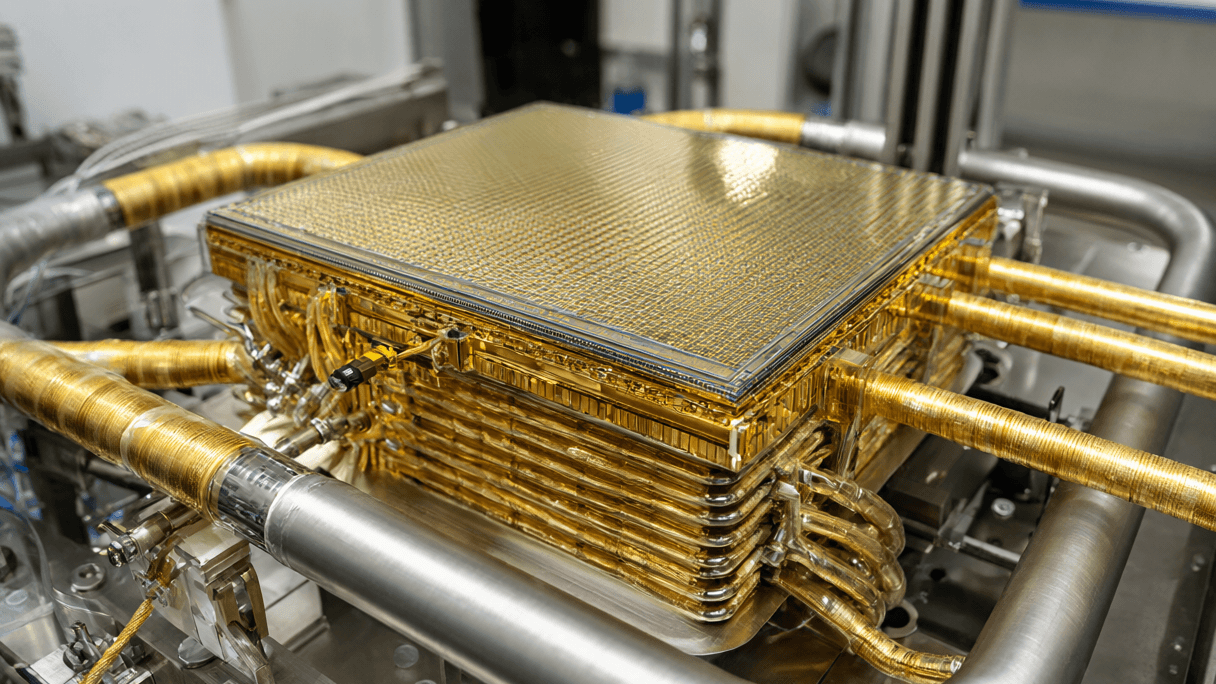
AI-generated image · US National Wire
Gartner predicts a mass extinction event for quantum startups as the gap between seed funding and commercial revenue widens.
Welcome to Follow the Money Friday. I’ve spent years watching the Silicon Valley hype cycle, and right now, the quantum sector looks like a textbook bubble. We have a crowded field of labs chasing a horizon that keeps receding, and the P&L statements are about to get ugly.
As The Register first reported, Gartner predicts that more than half of the quantum computing startups currently in operation will be out of business by 2030. The math is simple and brutal: the market is overcrowded, and these firms are struggling to generate the commercial revenue necessary to survive. While the giants like Google and IBM have diversified revenue streams to cushion the blow, the startups are largely subsisting on seed funding. Once that runway ends, if they haven't proven a viable commercial path, they're gone.
**OPINION:** I'm betting on a bloodbath. When you have 200 to 300 startups fighting over a projected worldwide revenue of just $1.1 billion in 2027, you don't have an industry; you have a lottery. The burn rate for this hardware is astronomical, and the 'breakthroughs' mentioned in the pitch decks rarely translate to a sustainable balance sheet.
Despite the looming collapse, Gartner notes that enterprises are making initial investments to build internal expertise. Gaurav Gupta, who serves as Gartner VP analyst and chief of research for its emerging market dynamics team, advises CIOs to treat the quantum journey as a multi-year effort to secure a competitive business advantage. Gupta claims the 'early quantum advantage era' is here, driven by noisy intermediate-scale quantum processors capable of limited complex tasks.
However, the real litmus test is fault-tolerant quantum computing. The Register reports that Gartner expects customers to walk away from any technology that fails to achieve this reliability. Even the public sector—which Gartner forecasts will lead spending in 2027 with an estimated $245 million (up from $219 million this year)—is chasing ambitious, perhaps unrealistic, goals. For instance, the US Department of Energy has launched an initiative for up to ten participants to deliver a fault-tolerant, scientifically relevant quantum computer by 2028. The Register notes this goal is almost certain to fail, citing the modest amount of funding being offered.
As for who will actually pay the bills in the long run, Gartner predicts the banking, finance, and insurance sectors will overtake the public sector in 2028, spending $289 million compared to the public sector's $280 million. These firms are expected to remain the primary customers through 2030.
For the startups, the clock is ticking. The gap between the $869.9 million forecast for this year and the $1.1 billion projected for 2027 is a rounding error for a company like Nvidia, but for a lean lab with no revenue, it's the difference between scaling and insolvency.