
Orbital Data Centers: A High-Altitude Fever Dream

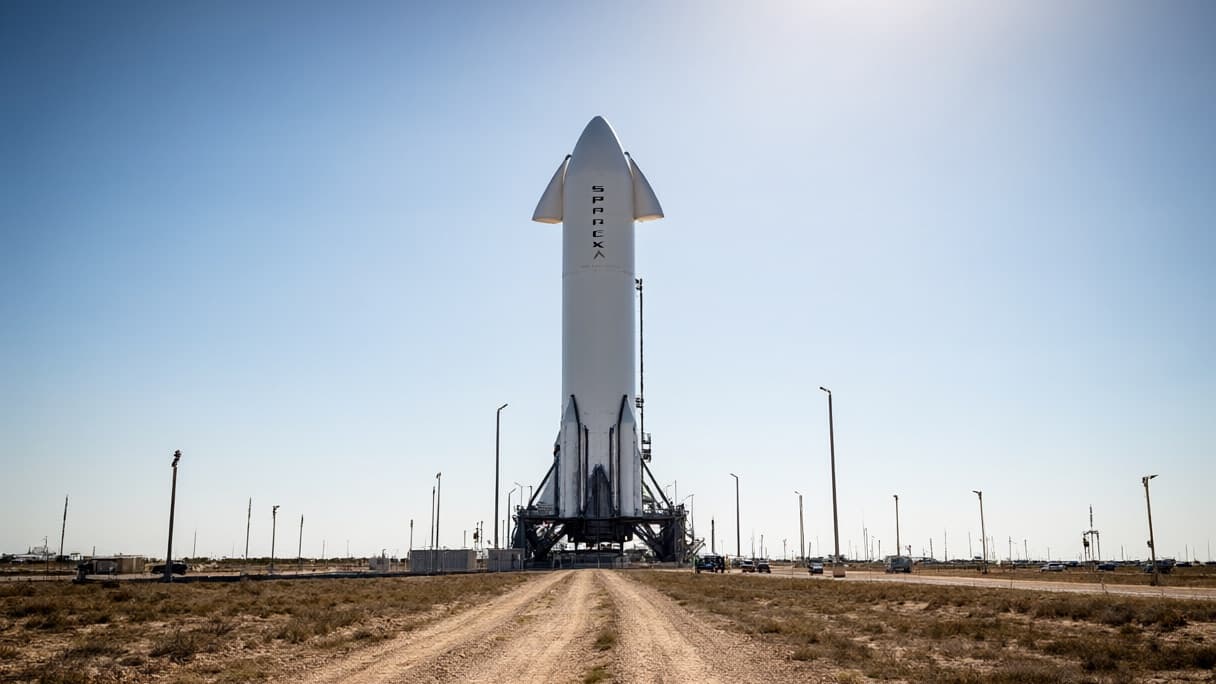
AI-generated image · US National Wire
Venture capital is betting on space-based AI compute, but the math reveals a desperate reliance on SpaceX's Starship and a disregard for orbital physics.
The latest trend in the AI arms race isn't just about more chips; it's about where to put them. As first detailed in research shared via Hacker News, the industry is eyeing the vacuum of space as the next frontier for compute, from Google's Project Suncatcher to SpaceX's filing with the FCC for a constellation of up to one million data center satellites. Elon Musk has even claimed that space will be the lowest-cost location for AI within two to three years.
**Opinion: The Bubble in Orbit**
Let's be clear: this is a venture capital fever dream. The pitch relies on a series of optimistic assumptions that ignore the brutal realities of orbital economics. We are seeing a scramble for workarounds because terrestrial data centers are bottlenecked by power grid queues, leading companies like OpenAI, Oracle, and xAI to deploy onsite gas turbines. Moving the problem to orbit doesn't solve the physics; it just changes the cost of the failure.
According to research shared via Hacker News, the economic viability of orbital data centers (ODCs) is almost entirely tethered to a single variable: the reusability of SpaceX's Starship. Current launch costs sit at roughly $1,500/kg. For space-based solar to even reach cost parity with current off-grid terrestrial power, that cost must plummet to $250/kg. To actually become cheaper than any existing terrestrial energy source, it needs to hit $50/kg. Betting the future of AI infrastructure on a 30-fold reduction in launch costs isn't a strategy; it's a gamble.
Beyond the launch costs, the technical overhead is staggering. The research notes that ODCs may require roughly 38% extra non-compute hardware—including solar, racks, and cooling—over five years. Why? Because you cannot simply send a technician into orbit to swap out a failed chip. This inherent fragility means the system must be overbuilt from the start just to maintain baseline operations.
Then there is the bandwidth problem. Even if you solve the power and the hardware failure rates, inter-satellite bandwidth limitations likely restrict ODCs to inference workloads in the early stages. You aren't building a galactic brain; you're building a very expensive, very distant set of calculators.
Despite these hurdles, the rush continues. Blue Origin, Ramon.Space, Starcloud, and Aetherflux are entering the fray, while China's Three-Body Computing Constellation has already launched 12 satellites to run Alibaba's Qwen3 model. NVIDIA is even playing along, announcing the Space-1 Vera Rubin Module, a dedicated space-rated GPU platform.
While proponents argue that ODCs bypass terrestrial permitting and regulatory delays, this is less about efficiency and more about exploiting jurisdictional ambiguities. When you combine this with the fact that the path to low-cost orbital compute runs almost exclusively through SpaceX—which now operates the xAI frontier AI lab—we aren't just looking at a technical challenge. We are looking at a massive concentration of power disguised as innovation.
If Starship development stays on track, ODCs might become cost-competitive in three to five years, but they are unlikely to represent a meaningful share of compute before 2030. Until then, the 'space data center' is less of a business model and more of a high-altitude hallucination.