
Opinion: The $40 Billion Compute Gamble: Can the Grid Handle SpaceX's Hardware Surge?

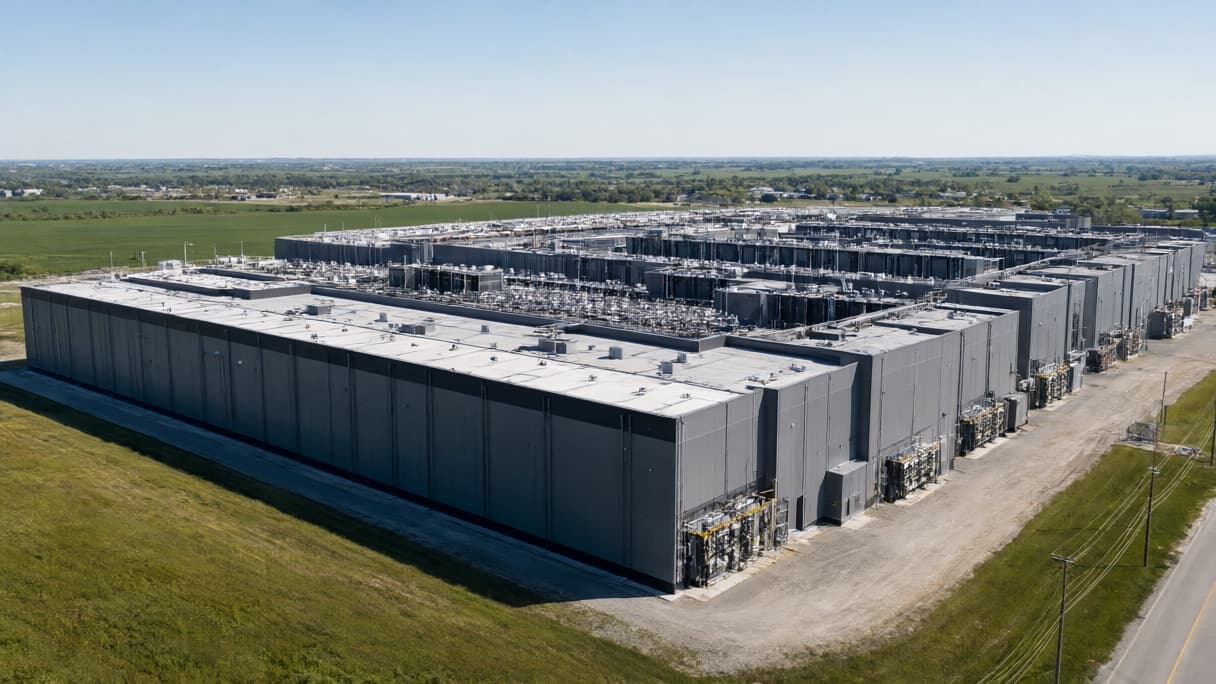
AI-generated image · US National Wire
SpaceX has locked in a massive GPU financing deal with Apollo Global Management, but the sheer scale of the planned terrestrial compute buildout raises critical infrastructure questions.
The numbers coming out of SpaceX are, quite frankly, staggering. As TechCrunch first reported via a regulatory filing, SpaceX has secured a binding commitment for approximately $40 billion in financing dedicated to AI chips and data center equipment. This deal, which SpaceX describes as the largest committed GPU financing to date, involves a partnership with a New York-based private equity firm, Apollo Global Management.
From a hardware perspective, the mechanism is a lease: Apollo will purchase the chips and server hardware and lease them back to SpaceX for terms lasting between five and five-and-a-quarter years. The goal is to secure Nvidia's next-generation Vera Rubin chips to power SpaceX's terrestrial compute buildout. As a hardware nerd, the sheer volume of silicon implied by a $40 billion commitment is dizzying, but the real story isn't the financing—it's the physical reality of deploying this much compute.
SpaceX is moving at a breakneck pace. TechCrunch reports that capital expenditures have already surged to nearly $20 billion, a massive jump from the $6.9 billion spent a year prior. Even more aggressive is the short-term outlook; SpaceX CFO Bret Johnsen stated during an Oct. 20 earnings call that the company expects to spend between $35 billion and $40 billion in the fourth quarter alone.
While the financial engineering is sound—Musk has pointed to the company's investment-grade status and the steady cash flow from rocket launches and Starlink to differentiate SpaceX from the "200+ neoclouds" he predicts will face "guppy-level death"—the physical constraints remain. Deploying the Vera Rubin architecture at this scale requires an immense amount of power and cooling.
SpaceX is betting that its AI segment—which includes the Cursor coding tool, the Grok chatbot, and cloud compute services—can sustain this growth. The financial incentive is clear: the AI segment brought in $7.6 billion of the company's $14.6 billion in third-quarter revenue, outperforming both launch and Starlink operations. CFO Bret Johnsen noted that the company is seeing payback periods of less than one year on these infrastructure investments.
However, as the GPUs arrive in the first half of 2027, the challenge shifts from the balance sheet to the power grid. A cluster of this magnitude doesn't just require chips; it requires a massive industrial footprint capable of supporting the thermal load of next-gen Nvidia silicon. Whether the existing power infrastructure can support a buildout of this scale without hitting a wall is the question that will ultimately determine if this $40 billion bet pays off.