
NASA's 'Probe Explorer' Gamble: Can Webb Leftovers Save PRIMA?

AI-generated image · US National Wire
NASA is betting a $1.2 billion mission on a modified spare cryocooler to hit a 2033 launch date, but institutional instability at JPL and Goddard looms over the new procurement strategy.
NASA is attempting to carve out a middle ground in space observatory procurement, moving away from the binary choice of low-cost "Explorer-class" missions and multibillion-dollar flagships. The result is the Probe Explorer category, and its first outing is PRIMA (the Probe far-Infrared Mission for Astrophysics).
As Ars Technica first reported, PRIMA is designed to be a high-science, lower-cost alternative to the $4.3 billion Nancy Grace Roman Space Telescope. With a cost cap of $1.2 billion (excluding launch costs), NASA is aiming for a 2033 launch. To hit this window, the agency is utilizing a spare cryocooler leftover from the James Webb Space Telescope development, modified to run on helium-3 rather than helium-4.
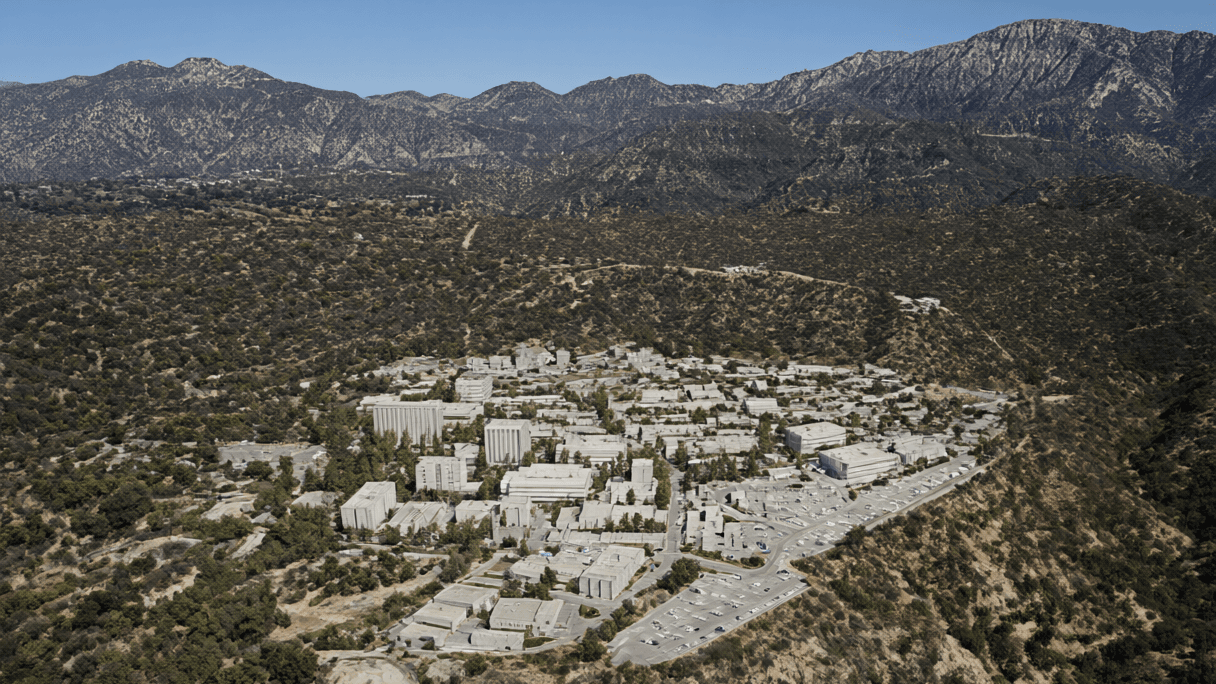
This technical shortcut is central to the mission's risk profile. The telescope requires primary optics cooled to 4.5 Kelvin to observe the universe in far-infrared light. The success of the mission depends on the Jet Propulsion Laboratory (JPL) in Pasadena, California, which Ars Technica notes is currently facing an institutional crisis characterized by layoffs and a lack of missions in development.
NASA's urgency is further underscored by the collapse of competing concepts. The agency disqualified AXIS, an X-ray observatory and the only other finalist for the first Probe Explorer slot, because a concept study indicated it could not meet budget and schedule constraints. The scientist leading the AXIS study attributed these failures to mismanagement and disruptions at NASA’s Goddard Space Flight Center in Greenbelt, Maryland.
Despite institutional headwinds and budget pressures from the Trump administration, NASA officials are framing PRIMA as the start of a consistent pipeline of premier-class missions. Shawn Domagal-Goldman, director of NASA’s Astrophysics Division, stated that PRIMA will extend the fleet's survey capabilities into far-infrared wavelengths. Nicky Fox, associate administrator for NASA’s Science Mission Directorate, described the mission as a window into the deep universe that will explore the formation of stars, planets, and black holes.
PRIMA will feature a 5.9-foot-diameter primary mirror and will operate from the Sun-Earth L2 Lagrange point. Its kinetic inductance detectors will be chilled to 100 milliKelvin, potentially making it the coldest optics ever sent into space. The mission has now entered Phase B of development, moving toward a preliminary design review.