
Letara Pivots to Large-Scale Hybrid Rockets for Defense

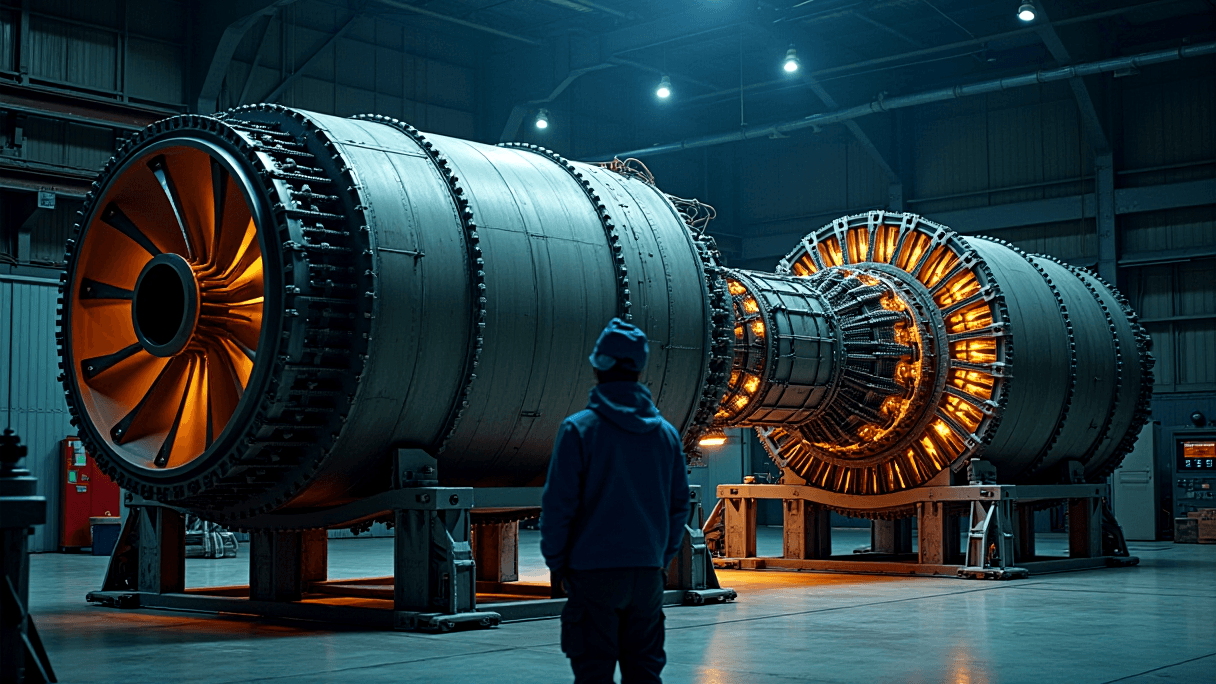
AI-generated image · US National Wire
The Sapporo-based startup is moving beyond small satellite thrusters to target government and security contracts.
Letara, a Sapporo-based startup, is attempting to scale its hybrid propulsion technology from small satellite thrusters to large rocket systems for the defense, security, and space markets, as TechCrunch first reported. According to TechCrunch, the company is leveraging a proprietary manufacturing process that uses inexpensive rubber and plastic as solid fuel, separated from a liquid oxidizer, to deliver higher thrust and less waste than traditional paraffin wax systems.
Co-CEO Shota Hirai told TechCrunch that the company aims to address historical hybrid propulsion limitations regarding combustion control, performance, and thrust generation. The shift toward larger systems is intended to meet growing demand for launch vehicles and the needs of spacecraft transitioning from low earth orbit to geostationary orbit.
To support this expansion, Letara secured ¥2.6 billion (approximately $16 million) in funding. The round was co-led by Incubate Fund, JIC Venture Growth Investment, and Headline Asia. Other participants included Toyoda Gosei, NES (Networked Energy Services) Corporation, and Frontier Innovations, a fund backed by the Japan Aerospace Exploration Agency (JAXA).
While Letara has secured undisclosed contracts from the Japanese government and various satellite and rocket companies, it faces a crowded global field. TechCrunch notes competitors developing hybrid technology include Japan's Interstellar Technologies, China's Galactic Energy, South Korea's InnoSpace, Singapore's Equatorial Space, Germany's HyImpulse, and Australia's Gilmour Space.
To reach commercial viability, Letara must now establish a reliable supply chain and repeatable manufacturing processes. The company's next critical milestone is an in-orbit firing test conducted with an overseas partner.