
DIA Assessment Signals Shift in Counter-Space Strategy

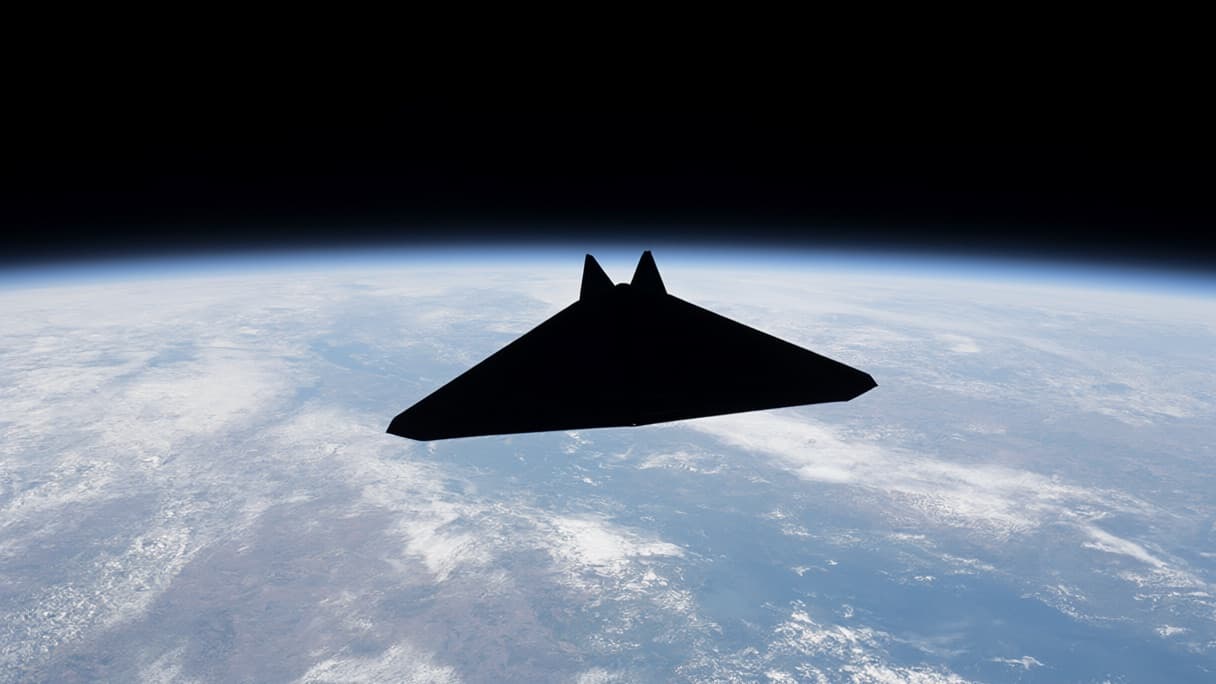
AI-generated image · US National Wire
A new Defense Intelligence Agency report on China's spaceplane capabilities suggests a pivot toward directed-energy weapons to offset Beijing's orbital posture.
The Defense Intelligence Agency (DIA) has released an unclassified threat assessment highlighting China's advancements in orbital maneuverability and the potential deployment of counter-space weaponry, as Ars Technica first reported.
Central to the report is a high-resolution image of a Chinese spaceplane, often referred to as Shenlong—though Chinese state media calls the vehicle the Chongfu Shiyong Shiyan Hangtian Qi (CSSHQ)—captured in 2024 by a commercial imaging satellite owned by Vantor (formerly Maxar). According to reporting from Ars Technica, the vehicle's design—including a rear-mounted service module, a dark heat shield, and delta wings—closely resembles the U.S. Space Force's X-37B.
The DIA notes that the "enhanced maneuverability" of such spaceplanes makes them more suitable for specific missions than standard satellites. Data analyzed by astrophysicist Jonathan McDowell indicates the vehicle currently in orbit has demonstrated the ability to release and recapture sub-satellites between June and September.
Beyond the hardware, the DIA assessment signals a strategic shift in how the Pentagon views orbital threats. The agency reported that the Chinese military likely views directed-energy weapons (DEWs) as an "ideal counterspace system," suggesting that Beijing may soon place these weapons in space.