
Airbound's 'Boeing' Ambitions vs. The P&L Reality

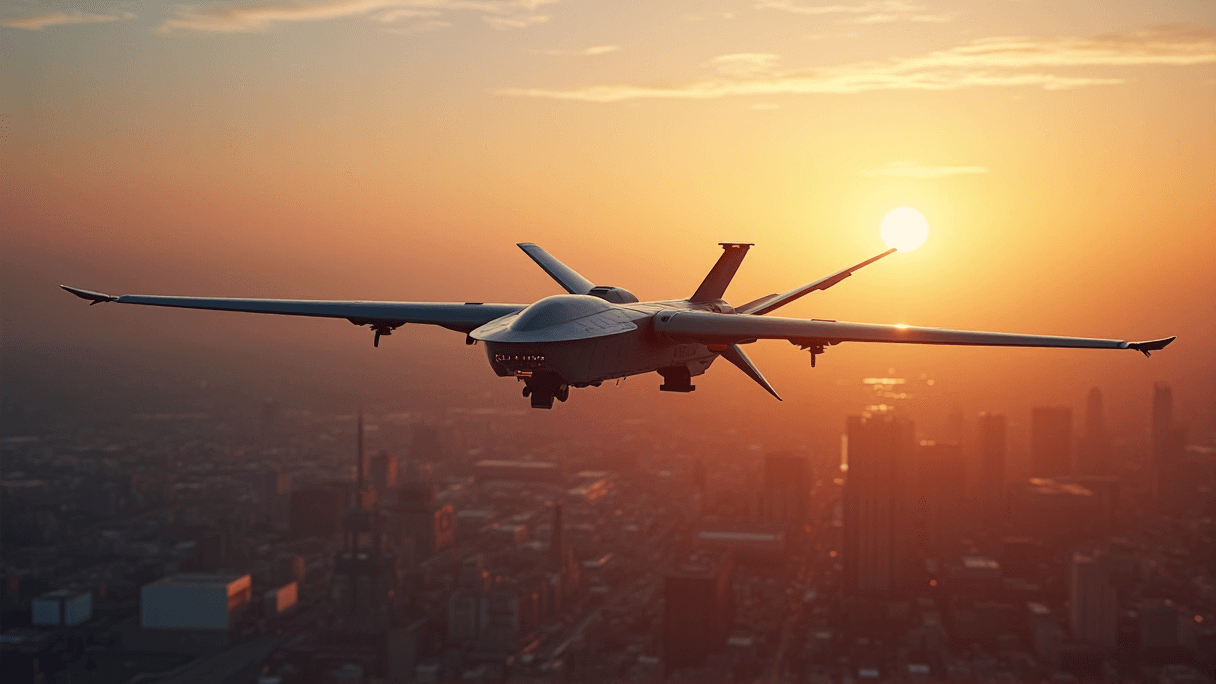
AI-generated image · US National Wire
Opinion: While Airbound's rocket-like drones promise cost parity with trucking, a pre-revenue balance sheet and regulatory hurdles suggest another expensive hardware gamble.
In the venture capital world, 'cost parity' is the magic phrase used to justify burning millions on hardware that hasn't yet found a profitable rhythm. The latest example is Airbound, an Indian autonomous drone startup that, as TechCrunch first reported, recently secured $37 million in Series A funding led by Greenoaks, with participation from Lightspeed, DoorDash, Humba Ventures, and Lachy Groom.
According to reporting from TechCrunch, Airbound has now raised nearly $50 million since its inception in 2023. Founder and CEO Naman Pushp is pitching a vision where moving goods through the air is as cheap as trucking them by road. To get there, Airbound is betting on a 'tail-sitter' design—drones that take off vertically like rockets before transitioning to horizontal flight.
On paper, the engineering logic is sound. Pushp told TechCrunch that conventional aircraft waste too much energy carrying their own weight. Airbound's current TRT drone weighs 3.3 pounds and carries 2.2 pounds; the next iteration aims to carry 11 pounds while weighing only 6.6 pounds. If you can make the aircraft lighter than the cargo, you solve the fundamental efficiency problem of flight.
But as a skeptic of the 'last-mile' hardware hype, I have to ask: where is the money?
Despite a team of over 150 employees and more than 13,000 autonomous flights in Bengaluru and Guntur, Airbound remains broadly pre-revenue. When questioned about this, Pushp told TechCrunch that the goal is to be a 'giant in a few decades' rather than focusing on immediate revenue. That is a classic VC-backed sentiment, but it ignores the brutal reality of logistics margins.
Airbound is currently operating a niche, high-value route for the Narayana Health hospital network, transporting diagnostic samples over 2.5 miles. While Pushp notes that these flights take seven minutes compared to the three-to-five hours required for road transport, this is a specialized medical use case, not a scalable commercial model.
Pushp's ultimate goal is even more ambitious: he wants Airbound to be the 'Boeing' of the drone world—the manufacturer that provides the aircraft for other logistics networks, rather than operating the delivery service itself. This strategy is being tested via an agreement with the Andhra Pradesh state government to build a network targeting 10,000 daily flights for e-commerce, retail, and healthcare. Pushp suggests that achieving this volume would require a fleet of 250 to 1,000 aircraft.
However, the path to 10,000 flights a day is blocked by more than just manufacturing. Pushp admitted to TechCrunch that the biggest bottleneck is regulation, specifically the need for beyond visual line of sight (BVLOS) certifications. Without these, the drones cannot fly the distances required to make a network viable.
Airbound is entering a crowded field, competing with other Indian firms like TSAW Drones, Skye Air Mobility, and Garuda Aerospace. While the 'rocket-like' tech is a clever engineering pivot, the business model remains a hypothesis. Until Airbound can prove that its aircraft can actually generate commercial revenue—and not just venture subsidies—it is simply another expensive attempt to disrupt a trucking industry that is far more resilient than a pitch deck suggests.