
AI Infrastructure Gap: Chip Packaging and Power Constraints Threaten 2028 Projections

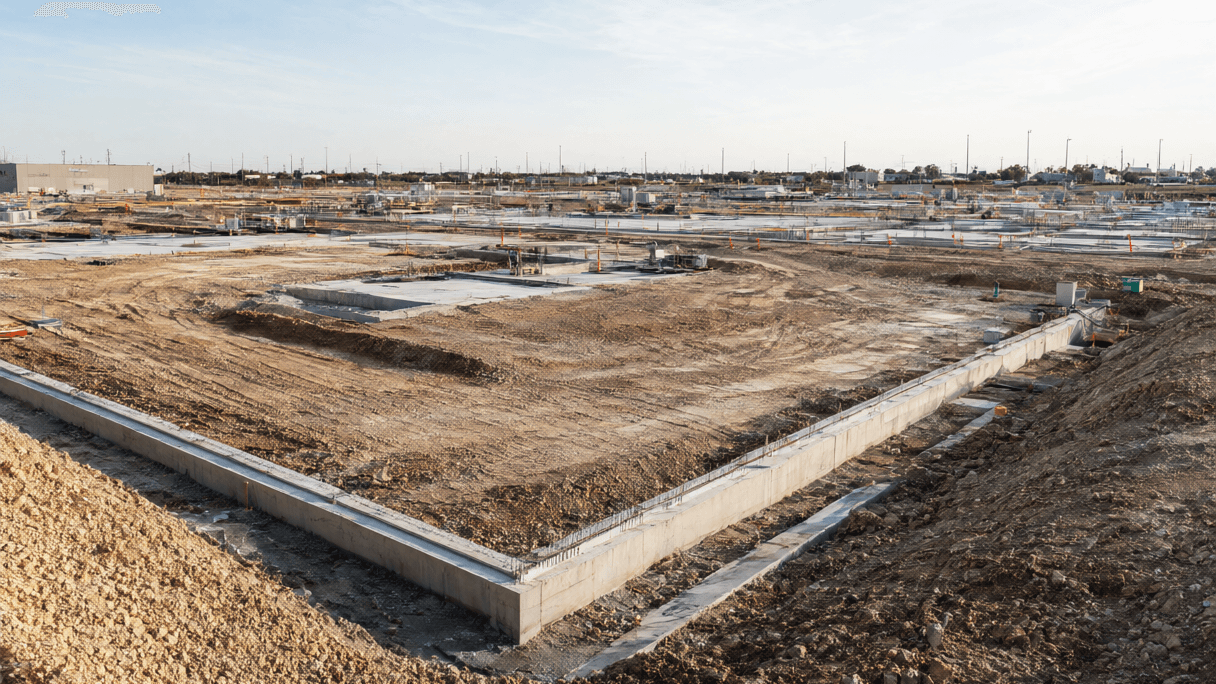
AI-generated image · US National Wire
Satellite data and analyst reports suggest a widening rift between announced AI datacenter pipelines and the physical capacity to power and equip them.
The gap between ambitious AI growth forecasts and physical reality is widening, as constraints in chip packaging and power access threaten to cap U.S. datacenter expansion, as first reported by The Register. According to that reporting, satellite imagery analyzed by SynMax shows that while U.S. deployments are accelerating—with estimates rising from 11 GW of gross capacity in 2025 to 16-18 GW in 2026—the pace of land clearing has plateaued.
This slowdown suggests that visible construction is falling short of the more than 80 GW implied by chip demand models and announced project pipelines for 2028. A report from investment bank Jefferies, cited by The Register, found that up to 80 percent of the 2028 pipeline has not yet seen construction begin, and only half of the capacity scheduled for 2026 is currently under construction.
Beyond land and power, advanced chip packaging has emerged as a critical choke point. Jefferies notes that accelerator dies must be packaged with components like high-bandwidth memory, often requiring chips made in the U.S. to be sent to Taiwan. SynMax estimates current packaging capacity supports roughly 17.5 GW of total datacenter power; even with two new projects arriving in 2027, the practical ceiling remains in the low 20s of gigawatts.
Further headwinds include grid stability. A report from London Economics International noted that fulfilling all U.S. project forecasts through 2030 would require 90 percent of global AI chip supply growth. In Texas, Jesse Gossett, a former developer and member of the Electric Reliability Council of Texas (ERCOT) large-load working group, told Jefferies that unpredictable, five-minute curtailment instructions from the grid operator could jeopardize the financial viability of these operations.