
UK Proposes Prison Terms for Subsea Cable Saboteurs

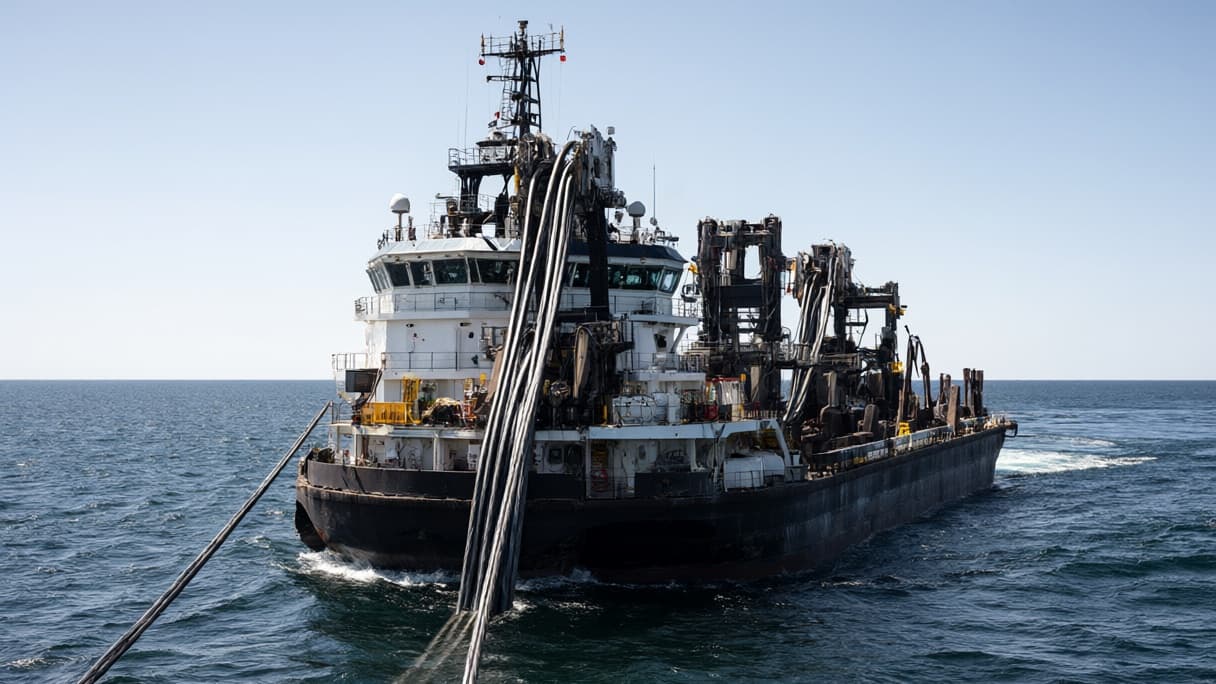
AI-generated image · US National Wire
Whitehall seeks to replace Victorian-era laws with 14-year sentences as Russian naval activity threatens critical data and energy arteries.
The British government has unveiled plans to overhaul legislation dating back to 1885 to better protect the underwater cables and pipelines essential to national security, as first reported by The Register. Whitehall estimates that subsea cables handle approximately 99 percent of the UK's international data traffic, while pipelines provide 74 percent of its gas supply.
Under the proposal, individuals who intentionally damage critical subsea energy or telecoms infrastructure could face unlimited fines and up to 14 years in prison. The government also intends to implement tougher penalties for reckless or negligent damage. Under the new framework, telecoms operators would be legally required to identify and manage security risks, and ministers would be granted powers to direct companies and repair providers to take action to protect national security. Additionally, the government seeks to regulate fiber-optic sensing technology used to detect maritime activity.
Telecoms minister Ian Murray stated that laws protecting these connections have not kept pace with dramatic changes in threats, specifically citing suspicious Russian activity. The Register reports that in April, British forces uncovered a covert Russian operation involving an attack submarine and two specialist vessels surveying cable routes.
These proposals follow warnings from Parliament's Joint Committee on the National Security Strategy, which noted last year that the UK was insufficiently prepared for coordinated attacks targeting multiple connections to Europe and the Atlantic simultaneously. While government estimates suggest fishing boats and anchors cause up to 97 percent of faults, the new measures target intentional sabotage. The government has launched a 12-week consultation period to gather feedback on the plans.