
The Vertical Play: Why SpaceXAI is Betting on Omarchy

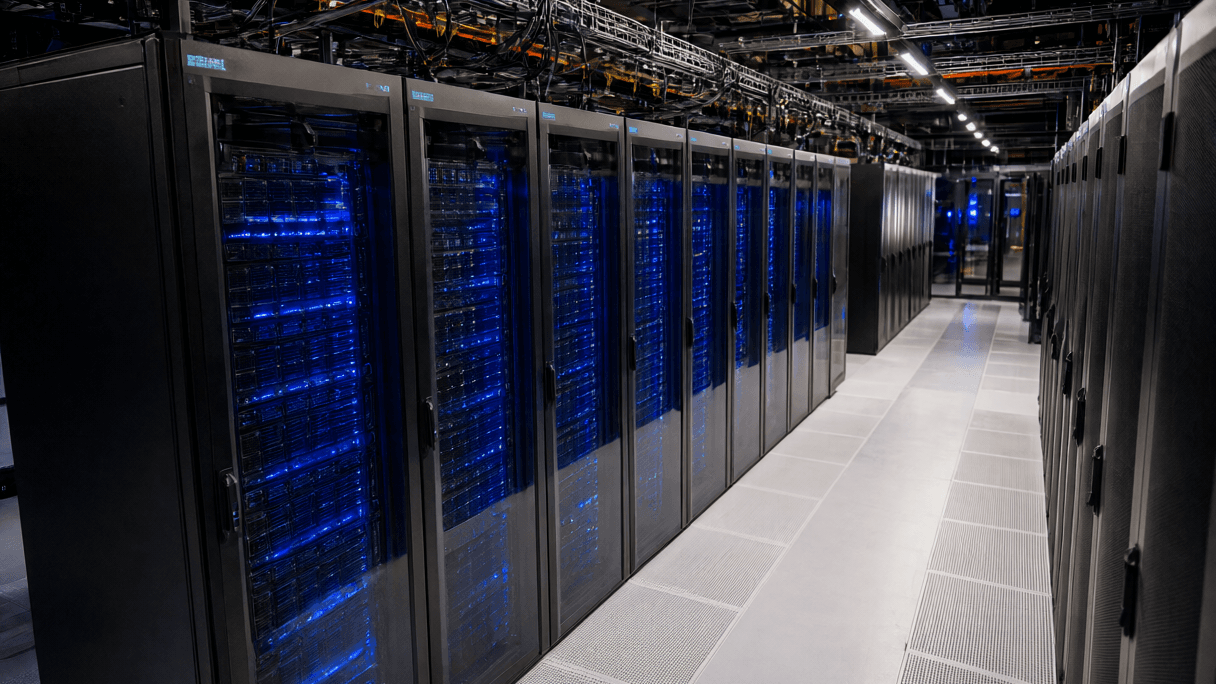
AI-generated image · US National Wire
Opinion: Elon Musk isn't just donating tokens to a Linux distro; he's attempting to verticalize the compute-to-kernel stack to strip out the legacy bloat slowing down AI inference.
Let's be clear: this is my opinion. As a hardware nerd who spends too much time thinking about the friction between silicon and software, I see the recent partnership between SpaceXAI and the Omacom Foundation as something far more strategic than a simple philanthropic gesture.
As first reported by The Verge, SpaceXAI has joined the Omacom Foundation as a Founding Corporate Patron, contributing $1.5 million in Grok tokens to support the Omarchy Linux project. On the surface, it looks like a standard corporate sponsorship. But when you look at the players involved—Elon Musk's SpaceXAI and David Heinemeier Hansson, the Danish entrepreneur and creator of Ruby on Rails—you realize this isn't about supporting open-source for the sake of community. This is about the stack.
In the world of AI inference, every single layer of the compute stack is a potential bottleneck. We are currently operating in an era of legacy bloat, where general-purpose operating systems often get in the way of the raw throughput required by massive models. By backing Omarchy, Musk is positioning SpaceXAI to influence the very kernel that manages the hardware.
According to a blog post from David Heinemeier Hansson, these Grok tokens are intended to accelerate development, patch bugs, and review code. For a hardware-focused operation, that is a dream scenario. If you can optimize the OS to better handle the specific memory and compute requirements of Grok, you aren't just running a model on a distro; you are verticalizing the entire path from the chip to the kernel.
We have seen other major players dance around this project. The Verge reports that both Cloudflare and 1Password have previously faced scrutiny for contributing to Omarchy. When questioned by Nilay Patel on the Decoder podcast, Cloudflare CEO Matthew Prince stated that he did not believe it was his responsibility to police the political beliefs of others. This sentiment underscores the tension surrounding the project, as Hansson has become a lightning rod for controversy. The Verge notes that Hansson has promoted anti-immigration policies via racist blog posts, including a July entry where he compared immigrants to wolves and stated, "When wolves get out of control, you shoot them."
But from a technical standpoint, the controversy is almost secondary to the architecture. Musk has a history of stripping away what he perceives as unnecessary overhead—whether it's in rockets or electric cars. Applying that same philosophy to the Linux kernel via Omarchy is the logical next step for SpaceXAI.
If you can strip the OS down to the bare essentials required for AI inference, you reduce latency and increase efficiency. By providing $1.5 million in Grok tokens, SpaceXAI isn't just funding a project; they are buying a seat at the table where the rules of the OS are written. They are ensuring that the software layer is as lean and aggressive as the hardware it runs on.
This is the ultimate play in the semiconductor and AI race: don't just build the fastest chip, and don't just build the biggest model. Build the entire pipeline. By integrating SpaceXAI's compute resources with Omarchy's lean approach to Linux, Musk is attempting to eliminate the 'legacy tax' that slows down modern AI. It is a bold, vertical integration strategy that treats the operating system not as a utility, but as a performance component.