
The Unsexy Path to Net Zero: Why Production-Line Efficiency Trumps VC Hype

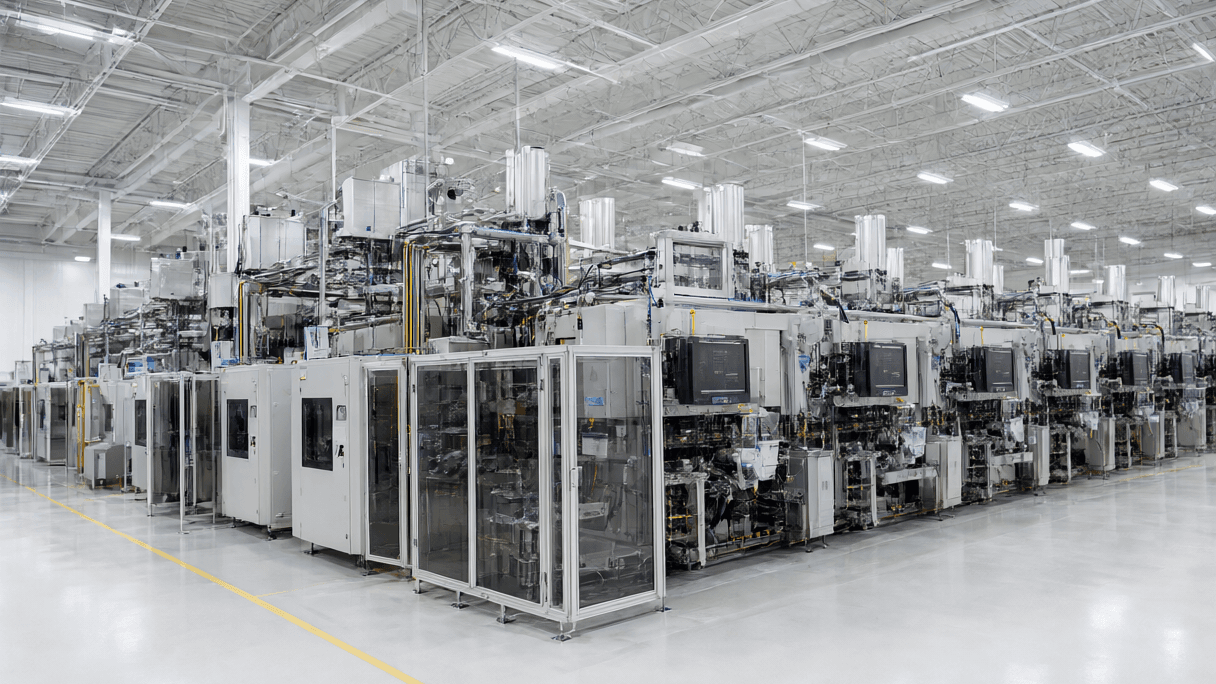
AI-generated image · US National Wire
Opinion: While the world chases flashy climate breakthroughs, the real victory for clean tech lies in slashing manufacturing waste in battery and chip plants.
In the high-stakes theater of climate tech, we are conditioned to look for the 'moonshot.' But if we are actually going to scale the transition to a clean economy, the most critical wins won't happen in a boardroom—they will happen on the factory floor, in the unglamorous process of stopping expensive mistakes before they happen.
To understand why, look at semiconductors and batteries. As TechCrunch first reported, the process of making these essential components is fraught with volatility. In research and development, a single production line snag can cost millions of dollars and derail timelines, often leaving engineers spending days diagnosing failures before machines can restart.
This is why the approach taken by Niobia, a San Francisco-based startup, is so compelling. Co-founders Gaurav Jha and Harveen Kaur—both PhDs in chemistry with industry experience—are focusing on the 'behind the scenes' work that Jha tells TechCrunch is essentially powering everything, even if it remains invisible to the public.
Niobia deploys AI agents on production lines, running on self-contained GPUs mounted directly to manufacturing equipment. These agents act as high-precision sensors capable of spotting defects as small as a pinhole-sized scratch. When a defect is flagged, engineers can use a chatbot to query the data, aiming to provide answers in minutes rather than days.
Crucially, Niobia addresses the 'trust gap' regarding proprietary data. Jha explained to TechCrunch that manufacturers fear sensitive intellectual property leaking into public AI clouds. Niobia solves this by using open-source models trained with specific research data, allowing customers to hold their own encryption keys. Currently, Jha told TechCrunch the company is focusing on three specific specialties: fluidized bed reaction, electroplating, and film coating.
While the venture capital world loves the idea of a 'self-driving factory'—a goal Jha admits is the eventual aim—the immediate value is in the incremental reduction of waste. Identifying a pinhole-sized flaw in real-time doesn't just save a company millions; it accelerates the deployment of the hardware required to save the planet.