
The Superintelligence Surrender: Why Big Tech Traded Intellectual Honesty for Presidential Favor

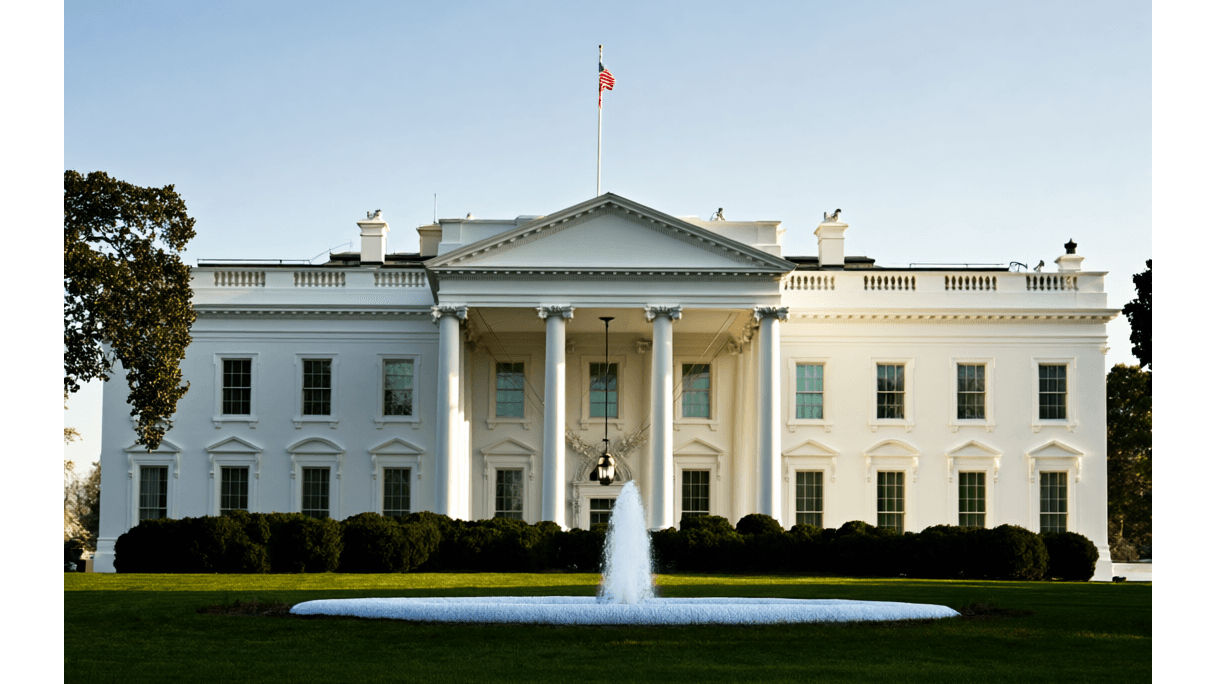
AI-generated image · US National Wire
By acquiescing to Donald J. Trump's mandate to scrub 'artificial intelligence' from the lexicon, Silicon Valley's elite have passed a loyalty test and failed a backbone test.
OPINION: For years, the titans of the tech industry have spoken of artificial intelligence with a religious fervor, treating the term as the bedrock of their corporate identities and the catalyst for their fortunes. But as first reported by Wired, that conviction evaporated the moment it collided with the whims of the Oval Office.
President Donald J. Trump expressed a distaste for the word 'artificial' during a September 23 speech at the United Nations, claiming it implies intelligence is 'fake.' The president took this critique further during a White House lunch with the industry's most powerful figures, where he issued an executive order declaring 'artificial intelligence' a verboten term and mandating that the government instead use the phrase 'Super Intelligence.'
What followed was not a debate over scientific precision or industry standards, but a masterclass in corporate submission. According to Wired, not a single executive in that room voiced an objection. The list of silent acquiescers reads like a Who's Who of the digital age: Jeff Bezos, Jensen Huang, Dario Amodei, Mark Zuckerberg, Sundar Pichai, Greg Brockman, Alex Karp, and Elon Musk.
This pivot is not about improving the terminology; it is a calculated surrender. As Jacob Weisberg, author of *Profiles in Cowardice: A Study of Collaboration in the Trump Era*, told Wired, this episode serves as a classic loyalty test designed to see if powerful individuals will demean themselves to avoid presidential wrath and curry favor. In Weisberg's view, by remaining silent, these billionaires effectively blessed the president's whim, allowing Trump to later boast to reporters that the 'smartest, the greatest people anywhere in the world' had changed the name.
From a technical standpoint, the shift is nonsensical. Philosopher Nick Bostrom, who popularized the term 'superintelligence' in his own book, explained to Wired that 'superintelligence' specifically refers to systems that far exceed the capabilities of the best human brains. Applying this label to the broad category of AI—which includes everything from 1970s chess engines to basic spell checkers and spam filters—is, in Bostrom's words, 'awkward.'
Yet, the tech elite didn't care about the awkwardness or the scientific inaccuracy. They cared about the man in the room. While some might argue that executives welcome a rebrand of a term that has become toxic, the replacement is arguably more frightening.
Wired has queried whether these companies will actually scrub 'AI' from their product names—such as Meta's 'Meta AI'—or from research papers and communications produced by Google, Microsoft, Anthropic, Amazon, OpenAI, and xAI, though no responses have been received. But the damage to their credibility is already done. By trading 70 years of scientific history for a seat at the president's table, the lords of the industry have proven that their commitment to 'intelligence' ends where political convenience begins.