
The Solar-EV Pipe Dream: Why Your 'Smart' Future is a Hardware Headache

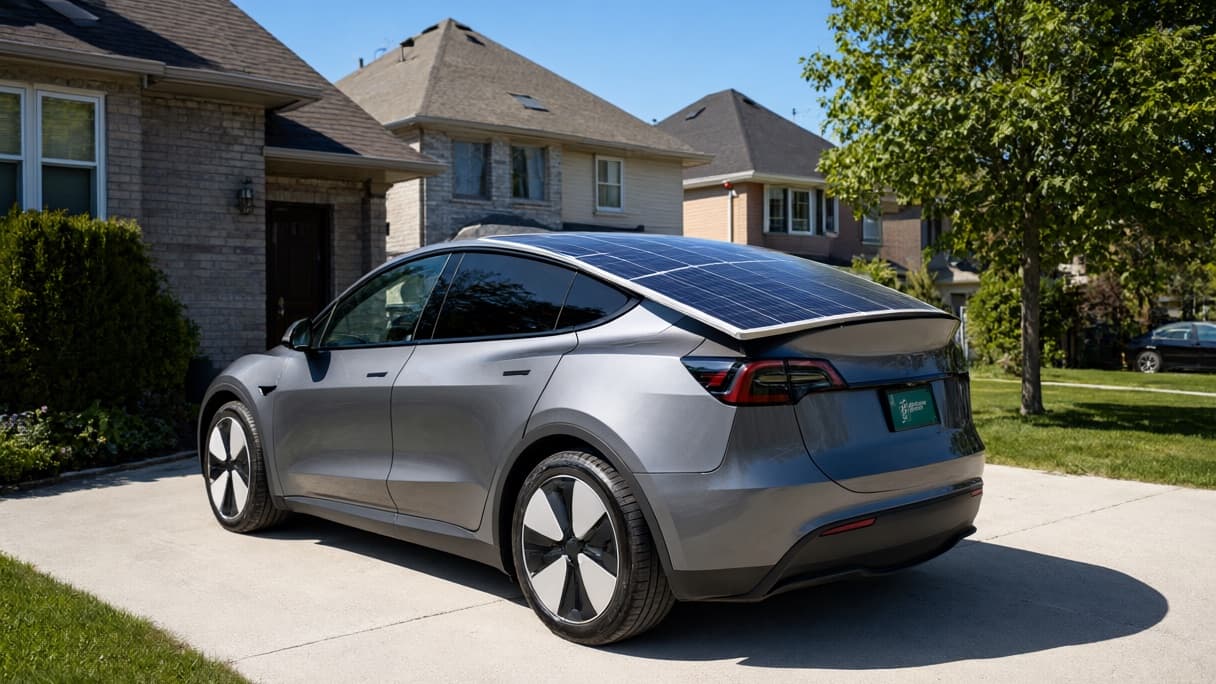
AI-generated image · US National Wire
Carriers promise a seamless, connected ecosystem, but the struggle to power EVs via solar roofs proves the infrastructure is a joke and the costs are landing squarely on us.
OPINION: The telecom and tech giants love to sell us on the 'smart home' and 'connected life' dream—a frictionless world where everything just works. But look closely at the current state of solar-to-EV integration, and the facade crumbles. We are being sold a vision of autonomy while the actual infrastructure remains a punchline, leaving the consumer to foot the bill for expensive, experimental hardware that barely moves the needle.
As Engadget first reported, the physics of the 'solar roof' are currently a losing battle for the average driver. The EPA estimates that a median model-year 2025 EV consumes 39kWh per 100 miles. In contrast, a 400W solar array on a 22-square-foot roof—operating under ideal conditions for four hours—would generate only 1.6kWh. That translates to a meager 4 miles of range.
When companies try to 'fix' this by adding more panels, they simply create new problems for the consumer to manage. Engadget notes that additional hardware increases vehicle weight, forcing electric motors to work harder, and compromises aerodynamics, which increases drag and kills efficiency. It is a classic tech trap: adding more gear to solve a problem created by the gear itself.
Some manufacturers are attempting desperate workarounds. Engadget highlights Nissan's Ao-Solar Extender prototype for the Sakura EV, which uses a panel that slides over the windshield when parked to boost output from 300W to 500W. Others, like Squad Mobility, are betting on tiny, 794-pound city cars paired with 250W panels. Then there is Aptera, which has abandoned the traditional car shape entirely for a three-wheeled, teardrop design. While TÜV Rheinland measured 4.23kWh delivered to an Aptera prototype during July testing in Southern California—potentially offering 42 miles of range based on Aptera's 100Wh per mile target—the practical reality remains grim. Garage parking or a few cloudy days render the system useless.
Worst of all, the financial risk is shifted entirely to the early adopter. Aptera's Launch Edition has a target price of $40,000, with production for the first 40 vehicles planned by the end of 2026 and deliveries in early 2027, according to an October 1 SEC filing. The volatility of this sector is already evident; Engadget reports that Lightyear suspended production of its first solar EV in January 2023, with its operating company, Atlas Technologies, filing for bankruptcy days later.
Whether it is a Winnebago Revel Sport using a 210W system to power a refrigerator or a high-tech prototype, the message is clear: the 'smart' infrastructure isn't here. We are just paying for the privilege of being the beta testers.