
The Sky-High Diversion: Why We're Betting on Airships While Ground Networks Crumble

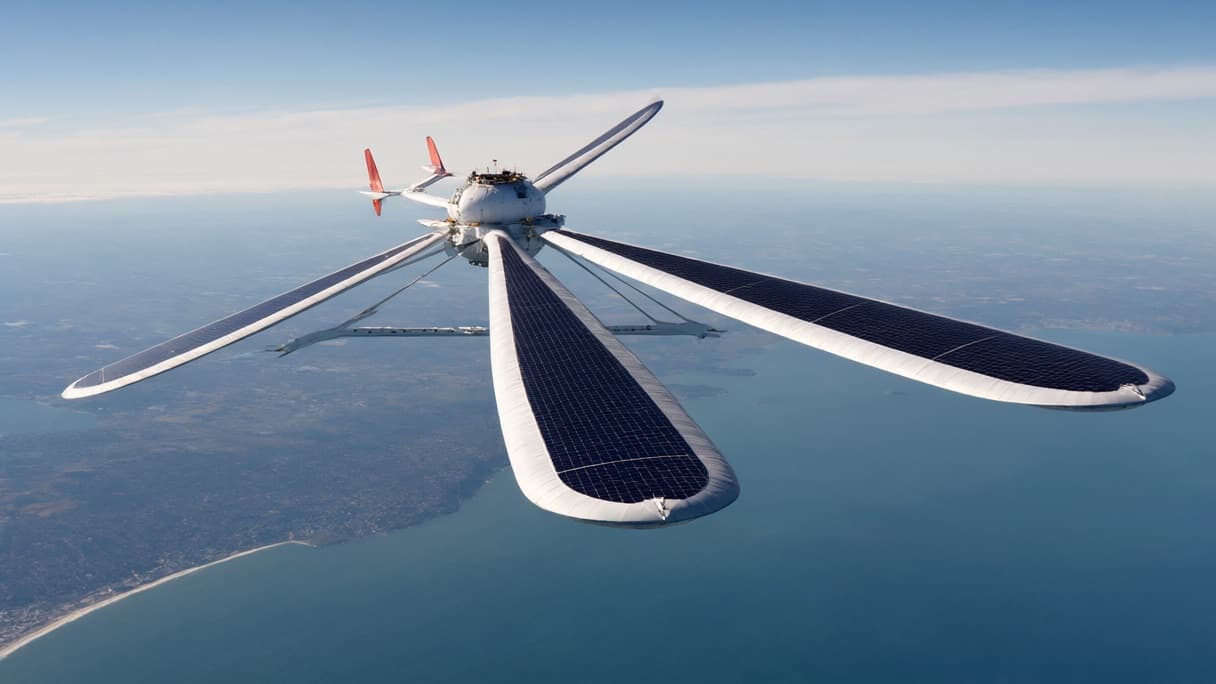
AI-generated image · US National Wire
Sceye's trans-Pacific flight proves that stratospheric 'cell towers' are possible, but the push for high-flying innovation feels like a convenient excuse to ignore the decay of basic terrestrial infrastructure.
### Opinion: The High-Altitude Distraction
Let's be clear: the telecom industry loves a spectacle. There is something inherently romantic, almost steampunk, about the idea of a giant, solar-powered airship drifting 60,000 feet above the earth to save the day. But as a consumer advocate, I find the current fascination with 'stratospheric connectivity' to be a dangerous diversion.
When carriers start talking about 'innovation' in the form of experimental airships, they are often distracting us from a simpler, more pressing reality: the failure to maintain the resilient ground infrastructure we already pay for. As Ars Technica first reported, companies like Sceye are pushing the boundaries of high-altitude platforms, but why are we investing intellectual and financial capital into the hope that a helium-filled balloon can hover over a disaster zone, rather than ensuring the cell towers on the ground don't fail the moment a storm hits? It is far easier to market a futuristic 'sky tower' than it is to do the boring, expensive work of hardening the terrestrial networks that form the backbone of our daily lives.
### The Sceye Spectacle
According to reporting from Ars Technica, a US aerospace company called Sceye has recently achieved a significant technical milestone. A round-trip flight from New Mexico to Japan and back was successfully completed by the company between August and September 2026. This wasn't just a journey of distance—covering more than 9,320 miles—but a proof of concept for what the company calls a high altitude platform system (HAPS).
As described by Ars Technica, the platform is an uncrewed, lighter-than-air vessel filled with helium for buoyancy. To keep it from drifting aimlessly, it utilizes an electric-powered propeller for active propulsion and relies on top-mounted solar panels and onboard batteries to maintain operations around the clock.
Mikkel Frandsen, the founder and CEO of Sceye, told Ars Technica that these platforms operate in the stratosphere at approximately 60,000 feet. This positioning is strategic: it is twice as high as standard air traffic and sits above the jet stream, yet remains 30 times closer to the earth than low-Earth orbit satellites. The goal is to create a persistent presence over a specific area of operation, recharging via sunlight to maintain a constant altitude.
### Engineering the 'Cell Tower in the Sky'
From a technical standpoint, Sceye is leaning on modern material sciences to make this viable. Frandsen noted to Ars Technica that the discovery of graphene in 2004 was pivotal, allowing the company to optimize the energy density of batteries, the performance of solar panels, and the strength-to-weight ratio of the hull.
Sceye has been iterating on this for years, starting with small prototypes in 2016 and moving to a 215-foot version in 2021. The latest iteration, which handled the Japan mission, extends to 270 feet. The potential for scale is where the industry gets excited. Helena, a US nonprofit with a for-profit investment arm that has invested in the company, indicates the HAPS could eventually carry payloads reaching 551 pounds (250 kilograms). Helena claims this is 25 to 50 times the payload capacity of competing stratospheric platforms, such as high-flying drones.
Sceye has already demonstrated the ability to fly with payloads over 220 pounds (100 kilograms) and can provide up to 1 kilowatt of onboard power. The ultimate pitch, as reported by Ars Technica, is the possibility that a single Sceye platform could one day provide mobile broadband coverage equivalent to 500 ground-based cell towers.
### The Disaster Relief Paradox
Sceye is positioning this technology as a godsend for emergency coverage during disaster scenarios. The recent 'Service Test 1' (ST1) demonstrated the platform's ability to navigate complex environments, including a 13-day journey to Japan during typhoon season. Johnny Truong, Sceye's chief technology officer, explained to Ars Technica that the airship uses an auto-navigation system to handle local wind conditions, allowing human operators to focus on weather forecasts and flight simulations. Truong noted that during the mission, the airship could 'park itself' in a safe area to wait out disruptive weather.
But this is where the consumer advocate in me asks: why is this the solution?
If we are relying on a 270-foot helium balloon launched from New Mexico to provide connectivity to Shikoku, Japan, it suggests a terrifying fragility in our global communications. The industry is framing the ability to bypass ground infrastructure as a feature, but for the consumer, it is a symptom of a systemic failure. We are being sold a future where 'resilience' means the ability to deploy an experimental airship because the actual, physical towers on the ground were not built or maintained to withstand the very disasters these airships are meant to mitigate.
### The Bottom Line
There is no denying the engineering feat achieved by Sceye. Navigating a trans-Pacific route and maintaining a stratospheric hover is a triumph of aerospace design. However, we must be wary of the narrative. When the carriers start touting 'innovation' through HAPS, they are shifting the goalposts.
Connectivity is a utility, not a magic trick. We don't need 'cell towers in the sky' to save us from the failures of the towers on the ground. We need carriers to stop chasing the high-flying novelty of the stratosphere and start investing in the boring, resilient, and reliable ground-based infrastructure that doesn't require a 13-day flight from New Mexico to function.